10.08.2026
3Q 2026 Market Insights
This video is a recording of a live webinar held October 22 by Marquette’s research team analyzing the third quarter…


New jobless claims fell from a peak of 6.9 million for the week ending March 27th to 3.2 million for the week ending May 1st (according to data released yesterday, May 7th), shown in the left chart. However, the measure remains at an extraordinarily high level due to the devastating impact of the COVID-19 pandemic. In contrast, the highest that claims reached during the Global Financial Crisis (“GFC”) was only 665,000 for the week ending March 27th, 2009. Since the middle of March this year when the nationwide lockdowns began, there have been 33 million new jobless claims in total. In just one and a half months, we are already closing in on the 50 million new claims that were processed in the two years spanning all of 2008 and 2009 for the GFC.
To pour more salt on the wound, jobless claims underestimate unemployment as the measure does not count individuals who are not working and have not yet filed a claim. In contrast, the unemployment rate is based on household surveys and counts those who are not working even if they have not filed an unemployment claim. The unemployment rate reached a shocking 14.7% at the end of April (data that was just released today, May 8th), also shown in the left chart. This rate, which translates to 20.5 million¹ American jobs lost in just the month of April alone, is not as high as the consensus forecast of 16% nor the 25% reached in 1933 during the Great Depression but is well above the 10% peak unemployment rate reached during the GFC in October of 2009. Yesterday the S&P 500 gained 1% while the 10-year Treasury fell from 0.72% to 0.63%; this morning the S&P 500 is up roughly 1% just after the opening bell.
From a bigger picture perspective, what is the outlook for the economy and employment? As new COVID-19 infections have started to decline in many regions of the developed world, we expect governments to continue experimenting with reopening. Further volatility is likely as there may be bouts of rising new infections followed by reclosures and resumed openings until governments, businesses, and households establish an interim balance for returning to workplaces, restaurants, and stores while still keeping the spread of the virus at bay. Meanwhile, vaccine, antiviral, and antibody development appears to be on a positive trajectory. The FDA approved Moderna’s coronavirus vaccine for Phase II trials yesterday, which means that there are two candidates now in Phase II, with Phase III potentially within reach in the second half of this year. Some of the other 70 vaccine candidates have also shown promise and are set to enter Phase I in the coming weeks. Moreover, government stimulus remains steadfast.
Nonetheless, the damage from the shelter-in-place orders to the U.S. consumer has been immediate and that rapidity has also been felt in the energy sector, shown in the sharp decline in active oil drilling rigs in the right chart. But U.S. corporations across the broader spectrum have generally held up well as many have strong balance sheets to sustain a prolonged recession. We are seeing the beginnings of more serious damage for U.S. corporations, however, as the Bloomberg bankruptcy index — a measure of both the number of and dollar amount of bankruptcies — is just starting to rise, also shown in the right chart. The recent bankruptcies of Neiman Marcus and J. Crew hint at more coronavirus casualties to come. Both companies filed for Chapter 11 restructuring, rather than Chapter 7 liquidation, so there may be potential for re-emergence depending on how long this coronavirus crisis lasts.
Despite the rise in bankruptcies, the gradual reopening of various economies coupled with encouraging vaccine progress and government stimulus has driven the equity markets higher since March, and spreads have generally tightened across fixed income sectors. All things considered, we expect volatility to remain elevated but equity and credit markets to continue their gradual recovery. However, we remain diligent about key risks, particularly a second wave of infections later this year and swelling U.S.-China tensions. Weekly jobless claims and the unemployment rate will likely remain high while rig counts remain low until the economy begins to open up more broadly. A current working paper by economists at the Federal Reserve Bank of San Francisco forecasts a worst-case scenario wherein if progress is not made and a burst of hiring later in 2020 and in 2021 does not materialize then double-digit unemployment may still be expected through 2021. However, they estimate that if the lockdowns are lifted and businesses hire from the large group of ready workers then by mid-next year the rate may fall back to the pre-pandemic 4%.² The bankruptcy index is a lagging indicator, however, and we would expect bankruptcies to continue to upsurge for the short to medium term even as employment, rig counts, and the markets progressively return to normal. At this point there appear to be more positive signs of a recovery than risks of worsening conditions, but much of this is predicated on further slowing of the outbreak. Conditions are still rapidly changing and we will share updates on the market and economy as appropriate.
Print PDF > Declining Jobless Claims When Unemployment is 14.7%?
¹ This 20.5 million jobs lost figure is based on household surveys and is lower than the 33 million new jobless claims mentioned above because of any combination of the following: (1) the Paycheck Protection Program rehires as the government loans resulted in rehiring after claims were processed but before the April survey was taken, (2) standard survey error as the normal course of business from the Bureau of Labor Statistics, (3) individuals filing jobless claims while still employed.
² Petrosky-Nadeau, Nicolas, and Robert G. Valletta. May 2020. “Unemployment Paths in a Pandemic Economy,” Federal Reserve Bank of San Francisco Working Paper 2020-18. Available at https://doi.org/10.24148/wp2020-18.
The opinions expressed herein are those of Marquette Associates, Inc. (“Marquette”), and are subject to change without notice. This material is not financial advice or an offer to purchase or sell any product. Marquette reserves the right to modify its current investment strategies and techniques based on changing market dynamics or client needs.

10.08.2026
This video is a recording of a live webinar held October 22 by Marquette’s research team analyzing the third quarter…

10.22.2026
Anyone who has run a marathon knows the last six miles are brutal — no matter how well the first…
10.19.2026
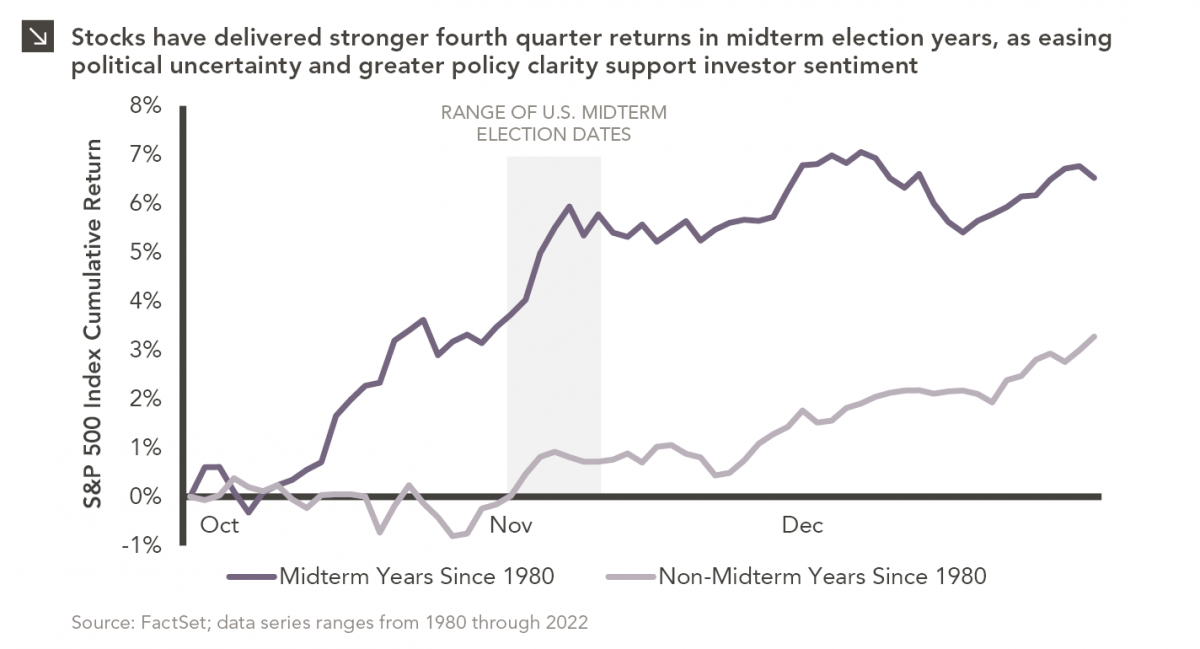
Since 1980, the S&P 500 Index has generally performed well in the weeks surrounding U.S. midterm elections. Specifically, the index…
10.12.2026
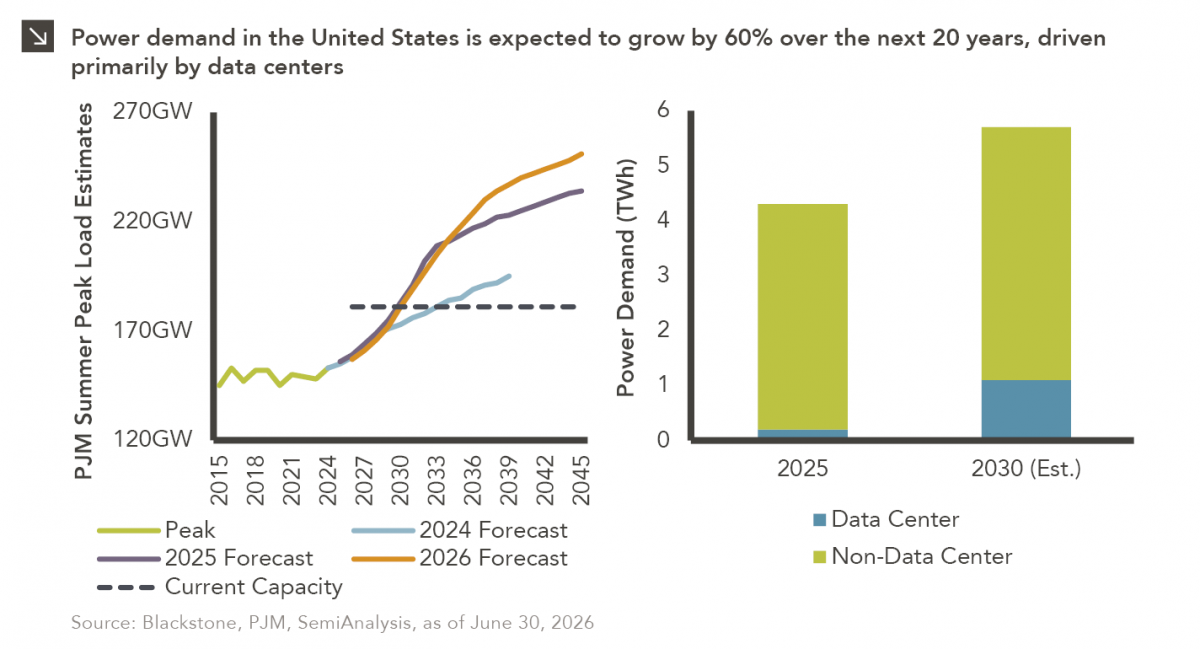
This week’s chart highlights the accelerating growth of electricity demand in the U.S., which has been driven primarily by the…
10.05.2026
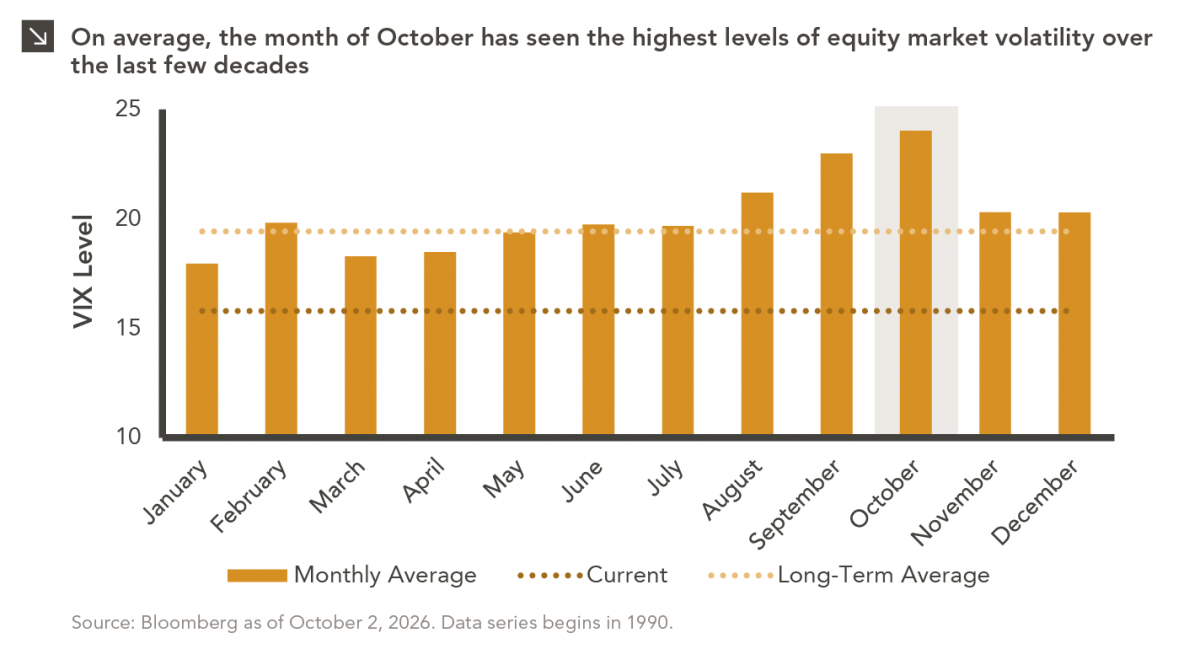
For investors, the spookiest thing about October might not be the ghosts and monsters that are bound to show up…
09.28.2026
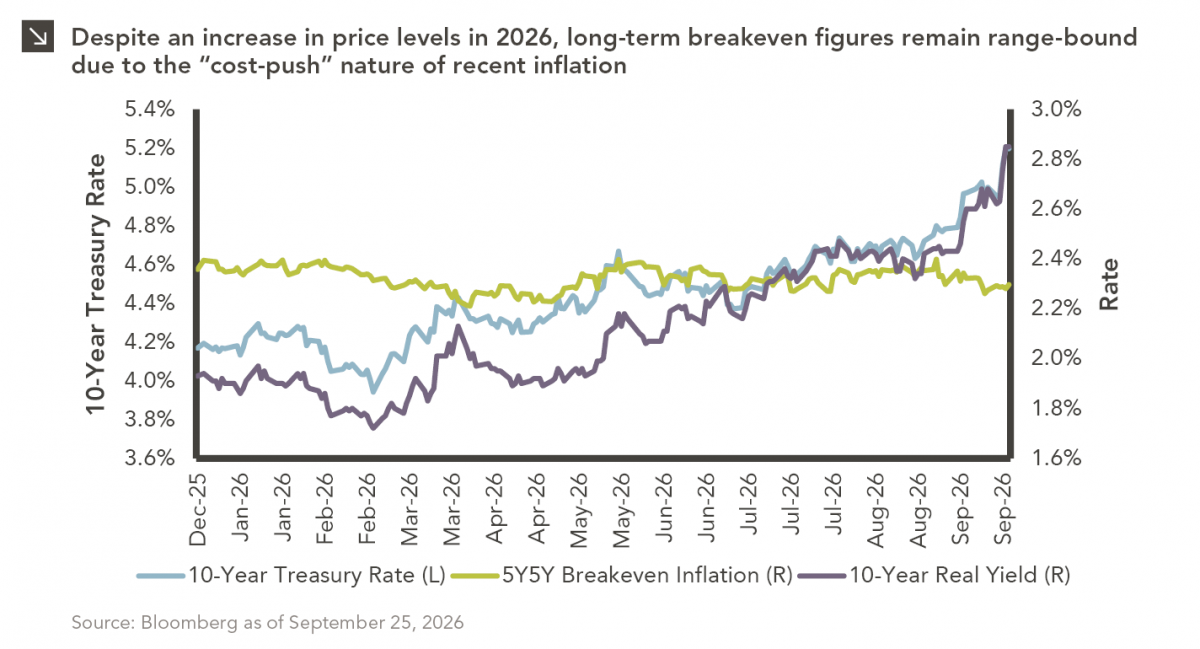
The phrase “expectations of higher inflation” has become a staple in financial news to explain the increase in nominal U.S….
Research alerts keep you updated on our latest research publications. Simply enter your contact information, choose the research alerts you would like to receive and click Subscribe. Alerts will be sent as research is published.
We respect your privacy. We will never share or sell your information.
If you have questions or need further information, please contact us directly and we will respond to your inquiry within 24 hours.
Contact Us >