10.22.2026
Will Higher Rates Cramp the Markets?
Anyone who has run a marathon knows the last six miles are brutal — no matter how well the first…


During election seasons we are frequently asked about what will happen to the market if a particular candidate or party wins, or whether certain years of the presidential cycle are better for investors. While there are numerous opinions about how differing public policies can affect the economy and financial markets — which goes well beyond the scope of this Chart of the Week — we can observe some trends from history. Since 1926, the first year of a presidential term on average is the weakest, while the third year generally performs well. The election year itself tends to be fairly average. Additionally, the market has generally performed better while a Democrat was sitting president, with an average return of 15% compared to 8.6% for Republican presidents.
While these trends seem interesting, it would be imprudent to make any market predictions based on this data. The historical data is extremely limited and undoubtedly a case of random patterns in a small data set rather than a legitimate correlation. For instance, an investor who only invested in the stock market when the NFC won the super bowl would significantly outperform one that invested when the AFC won (14.6% compared to 8.2%). Similar results can also be seen when investing in only odd years, or years that end with a certain digit (3, 5, etc). In order to be statistically significant, one would need over 2,000 election year data points to achieve a meaningful significance level. While there may or may not be particular reasons behind these realized returns patterns, from a statistical standpoint it would be unwise to base any investment decisions off of them.
The opinions expressed herein are those of Marquette Associates, Inc. (“Marquette”), and are subject to change without notice. This material is not financial advice or an offer to purchase or sell any product. Marquette reserves the right to modify its current investment strategies and techniques based on changing market dynamics or client needs.

10.22.2026
Anyone who has run a marathon knows the last six miles are brutal — no matter how well the first…
10.19.2026
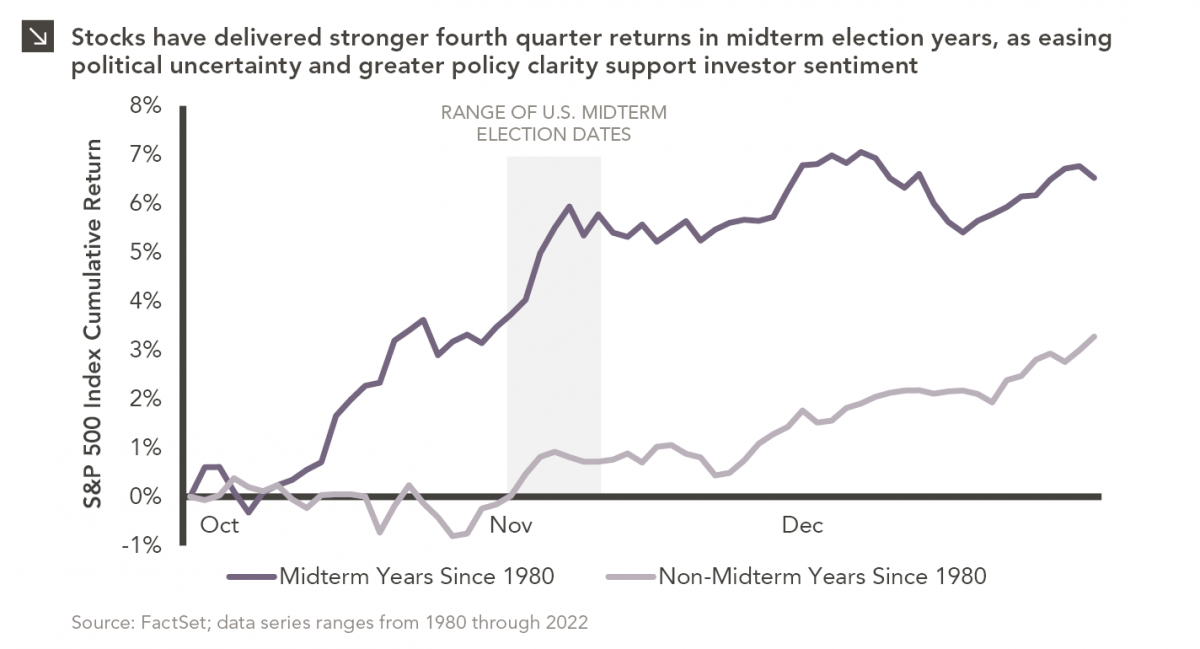
Since 1980, the S&P 500 Index has generally performed well in the weeks surrounding U.S. midterm elections. Specifically, the index…
10.12.2026
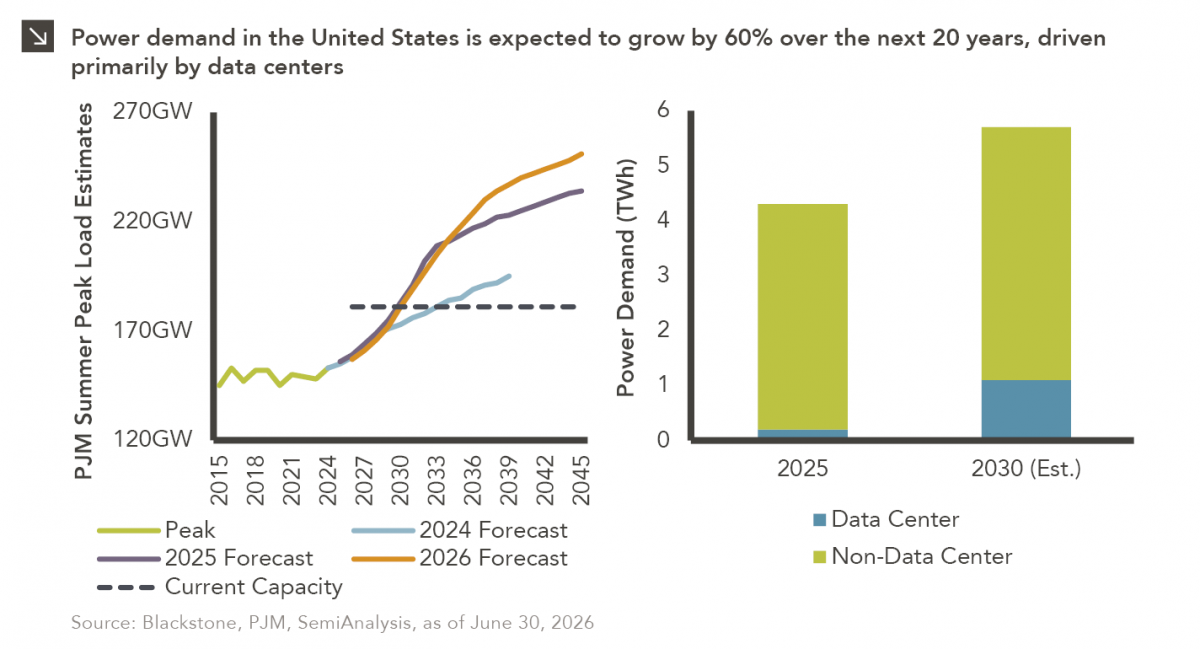
This week’s chart highlights the accelerating growth of electricity demand in the U.S., which has been driven primarily by the…

10.08.2026
LIVE WEBINAR — OCTOBER 22 Please join Marquette’s research team for our 3Q 2026 Market Insights Webinar…
10.05.2026
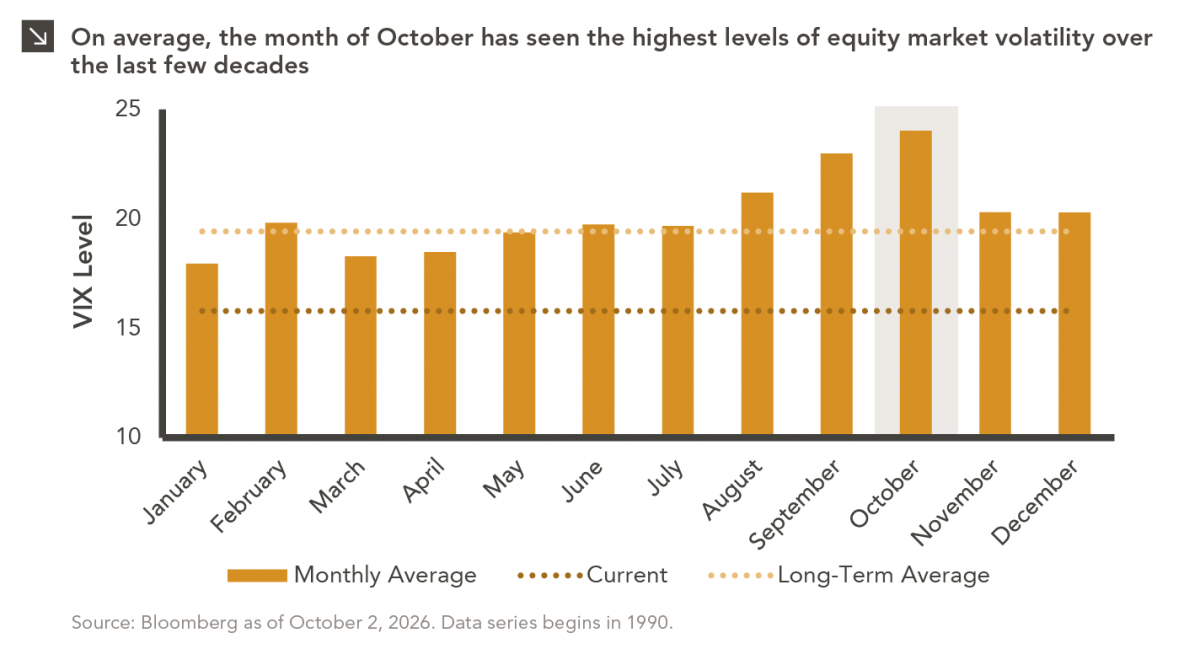
For investors, the spookiest thing about October might not be the ghosts and monsters that are bound to show up…
09.28.2026
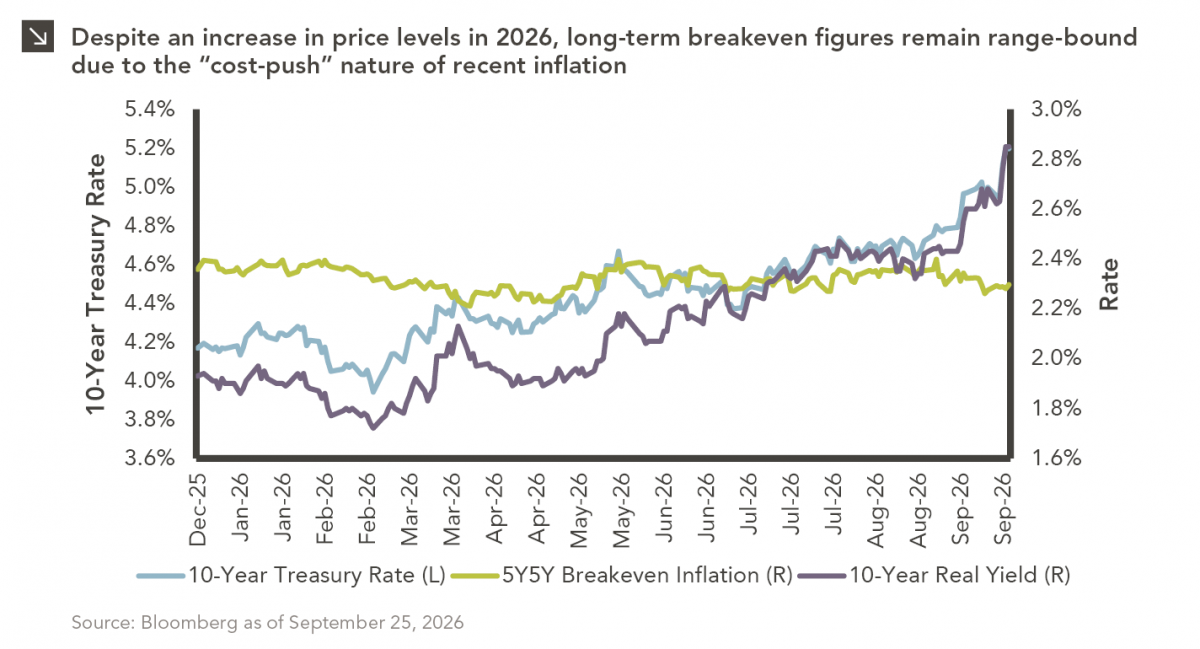
The phrase “expectations of higher inflation” has become a staple in financial news to explain the increase in nominal U.S….
Research alerts keep you updated on our latest research publications. Simply enter your contact information, choose the research alerts you would like to receive and click Subscribe. Alerts will be sent as research is published.
We respect your privacy. We will never share or sell your information.
If you have questions or need further information, please contact us directly and we will respond to your inquiry within 24 hours.
Contact Us >