The FTC vs. M&A

July 21, 2023 | Chad Sheaffer, CFA, CAIA, Associate Director of Private Credit

This chart description is for illustrative purposes only and its accuracy cannot be guaranteed. Please see full disclosures at end of PDF document in the web post. General description: Three-line chart showing M&A Volume. Chart subtitle: Completed M&A deal volumes have declined significantly under the current FTC, while pending deals continue to build amid increased regulatory scrutiny. Chart source: Source: Refinitiv as of June 30, 2023. Data includes all deals in North America, including net debt of the target company being acquired. Chart visual description: Data is quarterly, from 2Q13 through 2Q23. Y-axis is labeled “M&A Volume” and ranges from $0B to $700B. X-axis is labeled in Q1 YYYY format, in two-quarter increments from Q2 2013 to Q2 2023. Lina Khan FTC Regime is highlighted in light green on chart, from Q2 2021 to present. Completed Deals is plotted in blue line, Pending Deals is plotted in dotted purple line, and Withdrawn Deals is plotted in dark orange. Chart data description: Since Khan’s appointment, Completed Deals have plummeted and Pending Deals have increased. Withdrawn Deals generally have remained low compared to period shown. Please contact us for the full data set. End chart description. See disclosures at end of document.

Higher interest rates have broadly impacted capital markets, including M&A deal flow given the significant increase in financing costs. Along with that, elevated regulatory risk has been another headwind for the space.

Since her appointment as Chair of the Federal Trade Commission (FTC) in June 2021, Lina Khan has emerged as one of the most aggressive anti-trust leaders the U.S. and Wall Street have seen in some time. For large corporations seeking growth via M&A, the regulatory requirements for FTC approval have increased significantly. Deals that would likely have been approved with ease in prior administrations now face costly lawsuits, injunctions, and other challenges by the Commission. Coupled with higher financing costs, the FTC’s aggressive agenda has significantly prolonged the timeline for deals to close. In the second quarter of 2023, completed M&A deal volumes came in at mere $95 billion, just above the $83 billion of deals closed at the height of COVID in the second quarter 2022. At the same time, the volume of pending deals awaiting regulatory approval has substantially increased, reaching $183 billion in the second quarter.

The FTC’s actions have had a clear impact on the M&A environment, leading to significantly wider deal spreads in 2023 amid increased uncertainty. This is both an opportunity and a risk for hedge funds specializing in merger arbitrage. While deal spreads appear attractive, they come with heightened risks that require expertise to successfully navigate. For investors, selecting experienced managers with a proven track record of success across different regulatory regimes is critical to achieving favorable risk-adjusted returns.

Print PDF > The FTC vs. M&A


The opinions expressed herein are those of Marquette Associates, Inc. (“Marquette”), and are subject to change without notice. This material is not financial advice or an offer to purchase or sell any product. Marquette reserves the right to modify its current investment strategies and techniques based on changing market dynamics or client needs.

Chad Sheaffer, CFA, CAIA
Associate Director of Private Credit

Get to Know Chad

The opinions expressed herein are those of Marquette Associates, Inc. (“Marquette”), and are subject to change without notice. This material is not financial advice or an offer to purchase or sell any product. Marquette reserves the right to modify its current investment strategies and techniques based on changing market dynamics or client needs.
Related Content

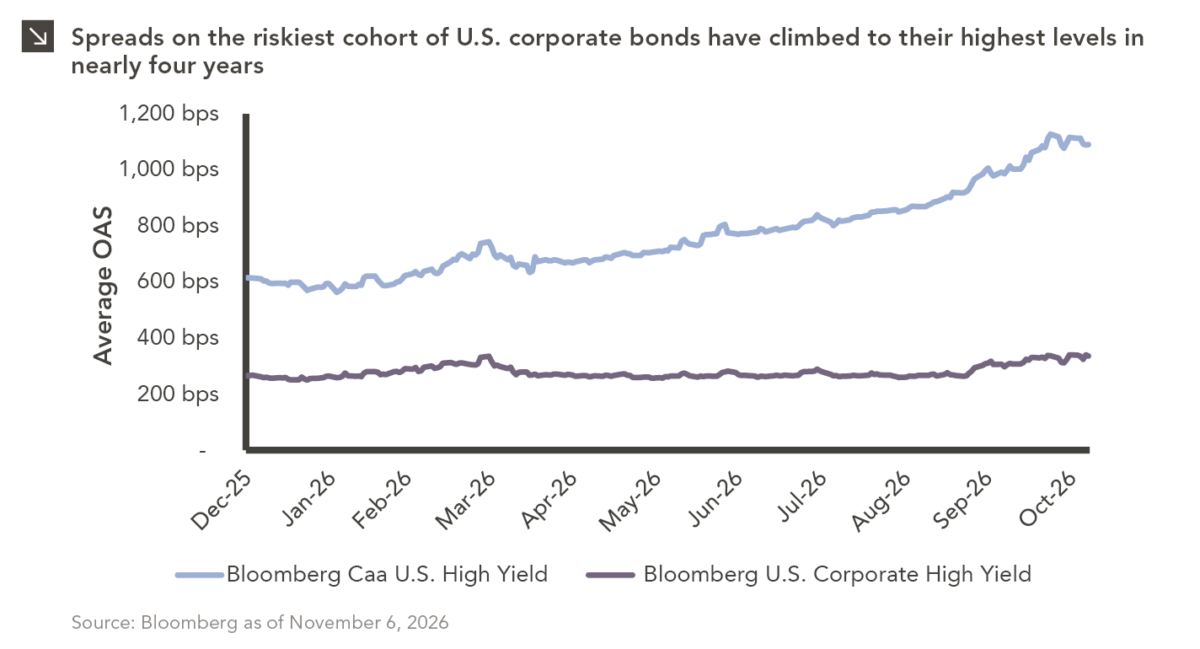
Line chart showing average option-adjusted spreads (OAS), in basis points, on Bloomberg CCC U.S. High Yield and Bloomberg U.S. Corporate High Yield bonds from December 2025 through October 2026. CCC-rated high yield spreads increased from approximately 600 bps to 1,100 bps, reaching their highest levels in nearly four years, while broader U.S. corporate high yield spreads remained relatively stable, increasing from approximately 260 bps to 330 bps. Source: Bloomberg as of November 6, 2026. For full dataset, please contact marquettemarketing@marquetteassociates.com.

11.09.2026

C’s Get Degrees (of Pain)

The U.S. distressed debt market is showing increasingly pronounced signs of stress. As of this writing, option-adjusted spreads on CCC-rated…
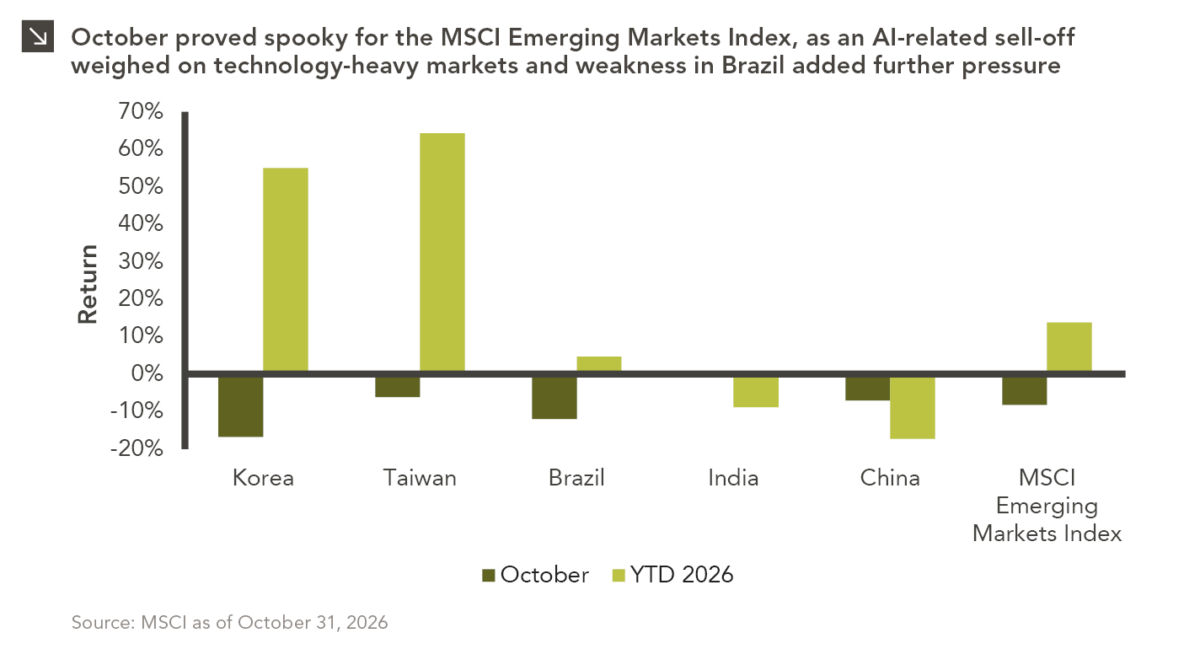
Bar chart comparing October and year-to-date 2026 returns for Korea, Taiwan, Brazil, India, China, and the MSCI Emerging Markets Index. October returns are below zero for most markets, while year-to-date returns range from negative to positive. For full dataset, please contact marquettemarketing@marquetteassociates.com.

11.02.2026

The Haunting of Emerging Markets

Emerging markets faced a challenging October, with the space declining by around 8.3% amid renewed concerns over the sustainability of…
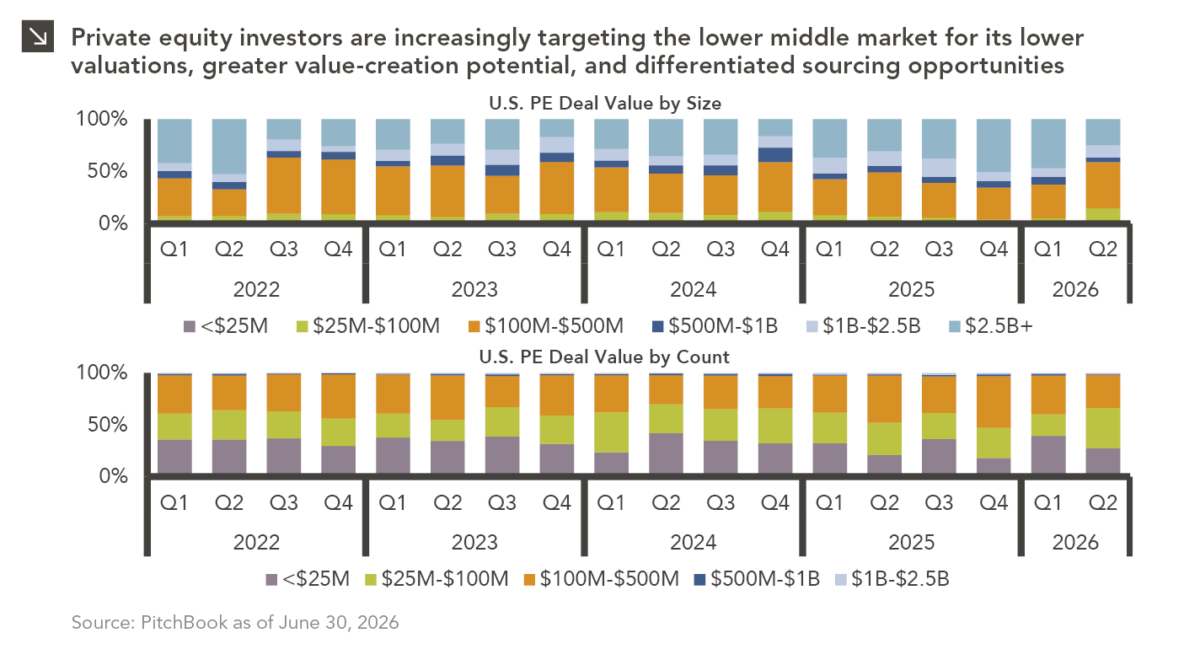
Stacked bar chart showing U.S. private equity deal value by deal size from Q1 2022 through Q2 2026. The y-axis shows percentage of total deal value from 0% to 100%, and the x-axis shows quarters by year. Stacked bar chart showing the percentage of U.S. private equity deal count by deal size from Q1 2022 through Q2 2026. The y-axis ranges from 0% to 100%, and the x-axis shows quarters by year. For full dataset, please contact marquettemarketing@marquetteassociates.com.

10.26.2026

Smaller Deals, Larger Appeal

Private equity activity is increasingly shifting toward smaller transactions, with total deal value for transactions of $100 million or less…

10.08.2026

3Q 2026 Market Insights

This video is a recording of a live webinar held October 22 by Marquette’s research team analyzing the third quarter…

10.22.2026

Will Higher Rates Cramp the Markets?

Anyone who has run a marathon knows the last six miles are brutal — no matter how well the first…
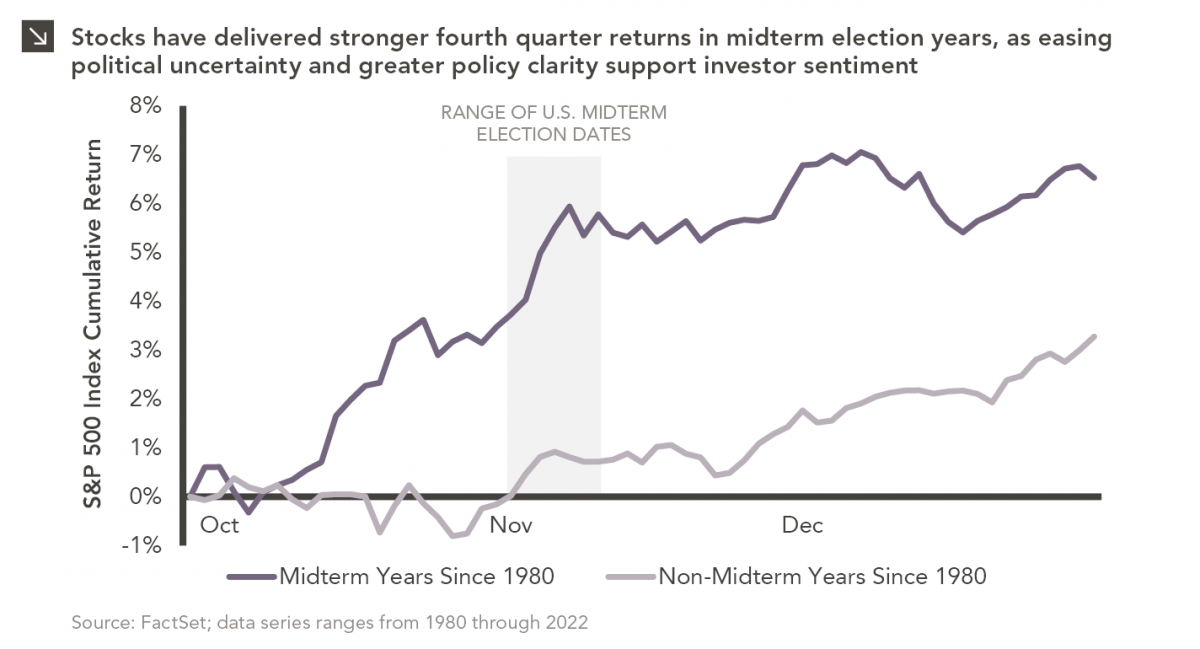
Line chart comparing S&P 500 Index cumulative returns for midterm and non-midterm election years since 1980. The x-axis shows October through December, and the y-axis shows S&P 500 Index cumulative return, ranging from -1% to 8%. For full dataset, please contact marquettemarketing@marquetteassociates.com.

10.19.2026

Divided We Rise?

Since 1980, the S&P 500 Index has generally performed well in the weeks surrounding U.S. midterm elections. Specifically, the index…

More articles

Subscribe to Research Email Alerts

Research Email Alert Subscription

Research alerts keep you updated on our latest research publications. Simply enter your contact information, choose the research alerts you would like to receive and click Subscribe. Alerts will be sent as research is published.

We respect your privacy. We will never share or sell your information.

Thank You

We appreciate your interest in Marquette Associates.

If you have questions or need further information, please contact us directly and we will respond to your inquiry within 24 hours.

Contact Us >