Thomas Neuhardt
Associate Research Analyst
Get to Know Thomas


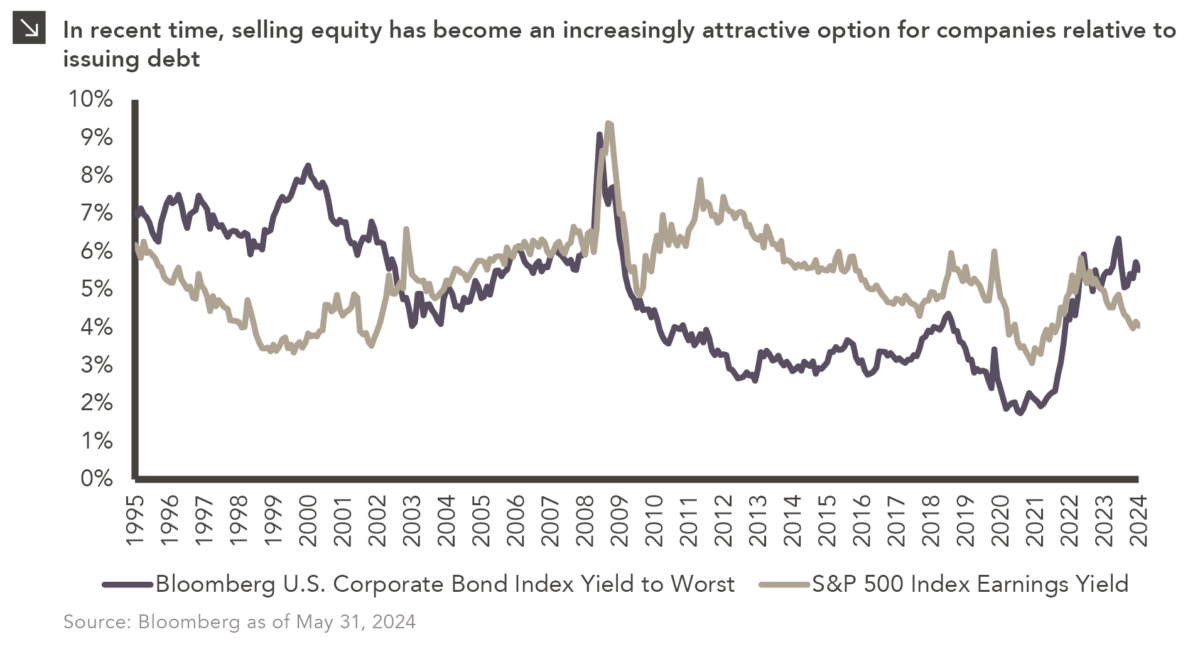
In the years following the Global Financial Crisis, issuing new debt was an easy decision for companies looking to raise capital given an environment of historically low interest rates. That said, decisions related to the composition of corporate capital structures are now less straightforward due to seismic shifts in monetary policy that have taken place in recent time. To that point, this week’s chart compares the yield-to-worst of the Bloomberg U.S. Corporate Bond Index, a proxy for the cost of debt, to the earnings yield of the S&P 500 Index. The earnings yield is calculated by dividing earnings-per-share by the price of the index and is used as a proxy to determine the costs companies face when it comes to new equity share issuance (i.e., the lower the earnings yield, the cheaper it is to sell shares and vice versa). As readers can observe in the chart above, this yield now sits below the yield-to-worst of the fixed income index.
Companies generally prefer issuing debt over equity due to the tax shield associated with this financing (i.e., interest expenses are typically tax-deductible), which still renders debt the more cost-efficient option for many companies in the current environment. Further, equity issuance is often viewed negatively by market participants due to the dilution of per-share earnings that arises as a result. There are, of course, additional factors beyond the costs of debt and equity that CFOs must consider when making decisions related to capital structure dynamics. That said, in light of the trends outlined above, many companies may begin to view equity issuance as a more attractive option when it comes to raising capital.
Print PDF
The opinions expressed herein are those of Marquette Associates, Inc. (“Marquette”), and are subject to change without notice. This material is not financial advice or an offer to purchase or sell any product. Marquette reserves the right to modify its current investment strategies and techniques based on changing market dynamics or client needs.
10.12.2026
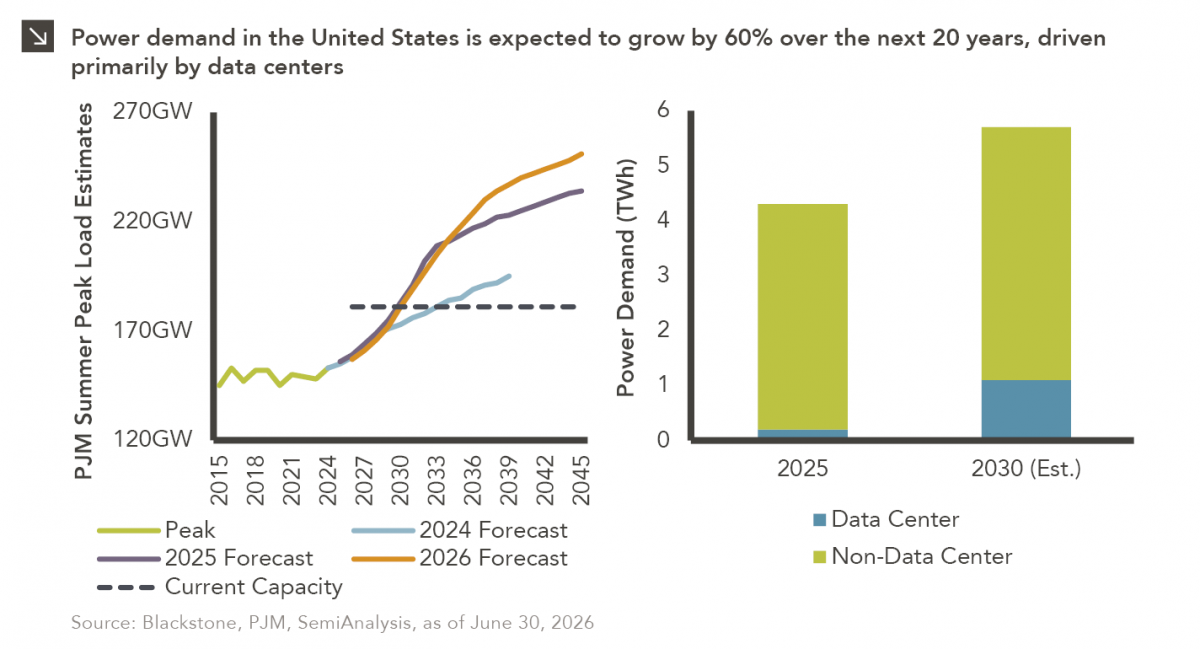
This week’s chart highlights the accelerating growth of electricity demand in the U.S., which has been driven primarily by the…

10.08.2026
LIVE WEBINAR — OCTOBER 22 Please join Marquette’s research team for our 3Q 2026 Market Insights Webinar…
10.05.2026
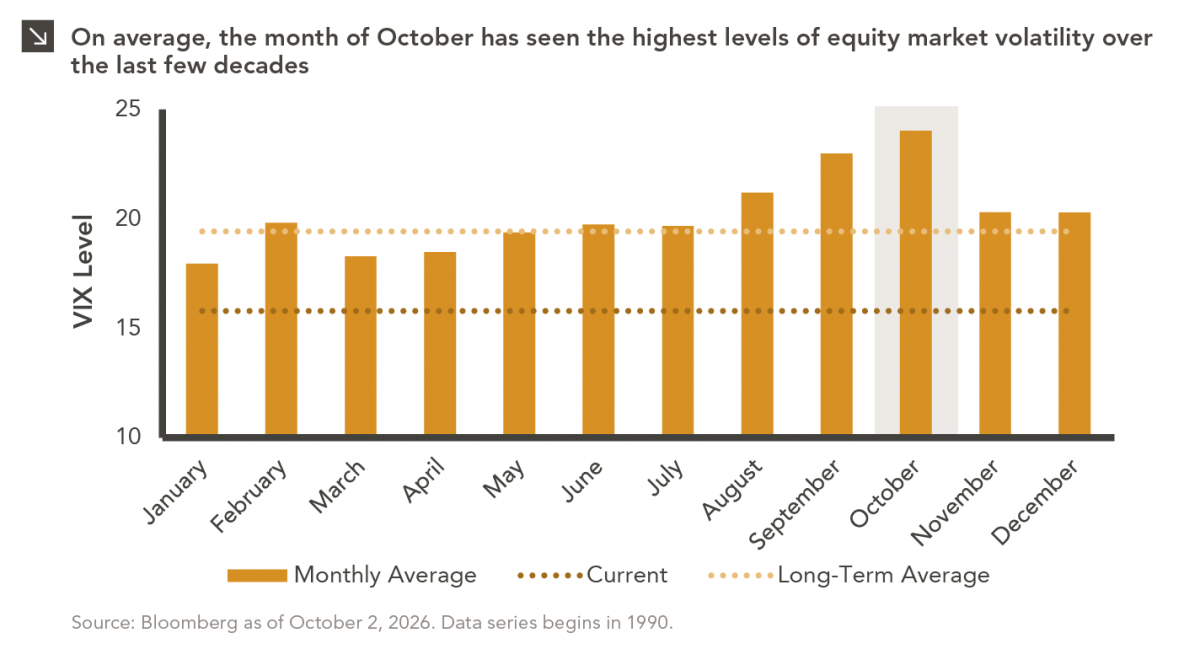
For investors, the spookiest thing about October might not be the ghosts and monsters that are bound to show up…
09.28.2026
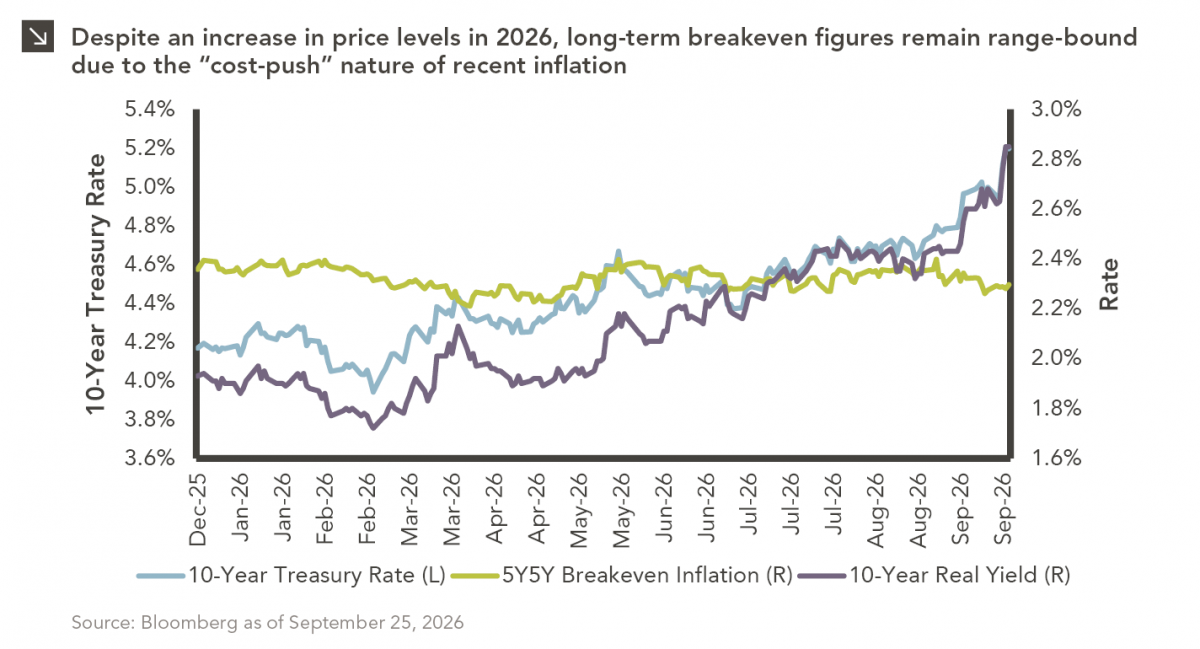
The phrase “expectations of higher inflation” has become a staple in financial news to explain the increase in nominal U.S….
09.21.2026
For much of the past several years, the conventional view has been that higher interest rates and stretched valuations would…
09.14.2026
There are many great things about working at Marquette Associates, but “Free Lunch Tuesday” is right at the top of…
Research alerts keep you updated on our latest research publications. Simply enter your contact information, choose the research alerts you would like to receive and click Subscribe. Alerts will be sent as research is published.
We respect your privacy. We will never share or sell your information.
If you have questions or need further information, please contact us directly and we will respond to your inquiry within 24 hours.
Contact Us >