10.08.2026
3Q 2026 Market Insights
This video is a recording of a live webinar held October 22 by Marquette’s research team analyzing the third quarter…


U.S. equity markets began last week on a volatile note, with the S&P 500 Index experiencing its biggest daily drop (-3%) since 2022. The factors behind this sharp decline were outlined in last week’s publication, “Volatility Pops as Equities Drop.” In recent days, however, investors appear to have been appeased by more favorable economic data and carry trade exposures that are now much less significant. To that point, the S&P 500 experienced its largest daily gain since 2022 just a few days after Monday’s drop, rising 2.3% last Thursday, August 8. This week’s chart illustrates the most significant daily changes in the S&P 500 since 2020 in an attempt to compare recent market swings to those of previous years. Based on the information above, it is clear that last Monday’s 3% decline was much less severe than the most extreme daily losses exhibited by the index in 2020 and 2022. Interestingly, the largest daily loss of 12% for the S&P 500 in 2020, which came in response to the COVID-19 outbreak, was followed later that same week by the benchmark’s largest daily gain for the year (+9%).
The significant price movements within equity markets exhibited last week and more broadly illustrate two important points. First, market action can sometimes be driven by “animal spirits,” a term popularized by economist John Maynard Keynes that describes the emotional factors that occasionally supersede logic in investment decision making. Animal spirits are important for investors to keep in mind, as they help explain that many market swings are not indicative of a permanent shift in the economic landscape, but rather stem from human emotions such as fear or hope, which can be fickle. The second point is that adverse reactions to market selloffs can result in even more pain for investors since significant daily losses are often followed closely by large gains. To that point, an investor who allocated to the S&P 500 Index in the 1990s and missed the five best days of index performance would have seen a roughly 37% reduction in their final investment value relative to one who missed zero days (through the end of last week). Put simply, keeping calm and carrying on is often the best prescription for bouts of market turmoil.
Print PDFThe opinions expressed herein are those of Marquette Associates, Inc. (“Marquette”), and are subject to change without notice. This material is not financial advice or an offer to purchase or sell any product. Marquette reserves the right to modify its current investment strategies and techniques based on changing market dynamics or client needs.

10.08.2026
This video is a recording of a live webinar held October 22 by Marquette’s research team analyzing the third quarter…

10.22.2026
Anyone who has run a marathon knows the last six miles are brutal — no matter how well the first…
10.19.2026
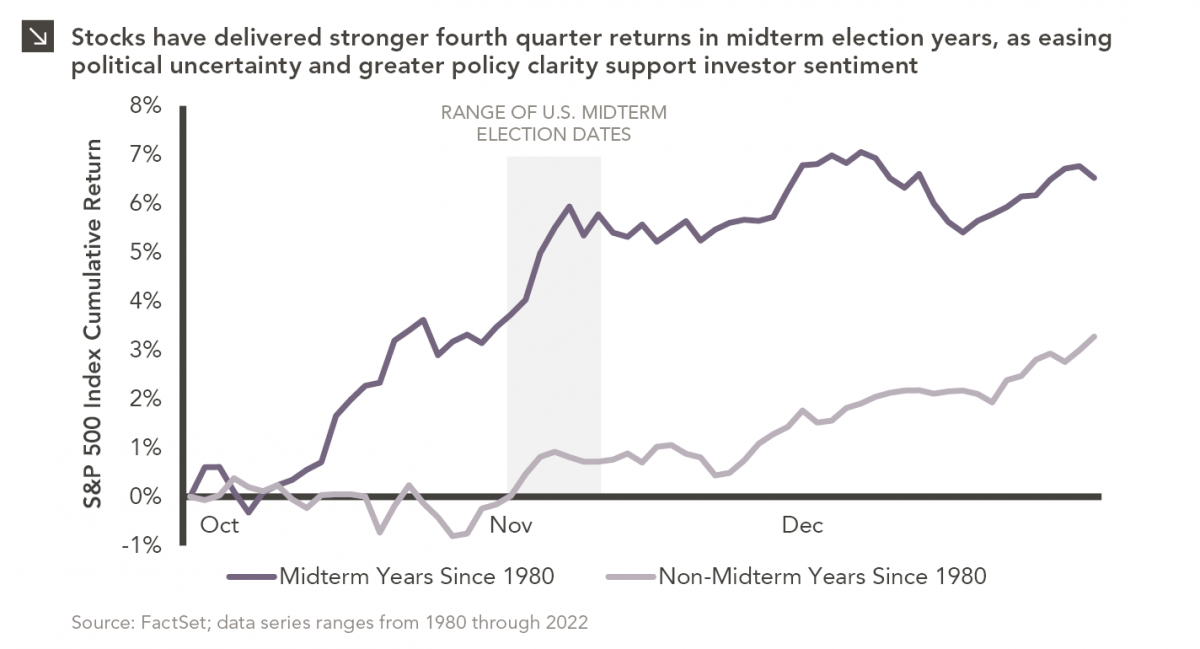
Since 1980, the S&P 500 Index has generally performed well in the weeks surrounding U.S. midterm elections. Specifically, the index…
10.12.2026
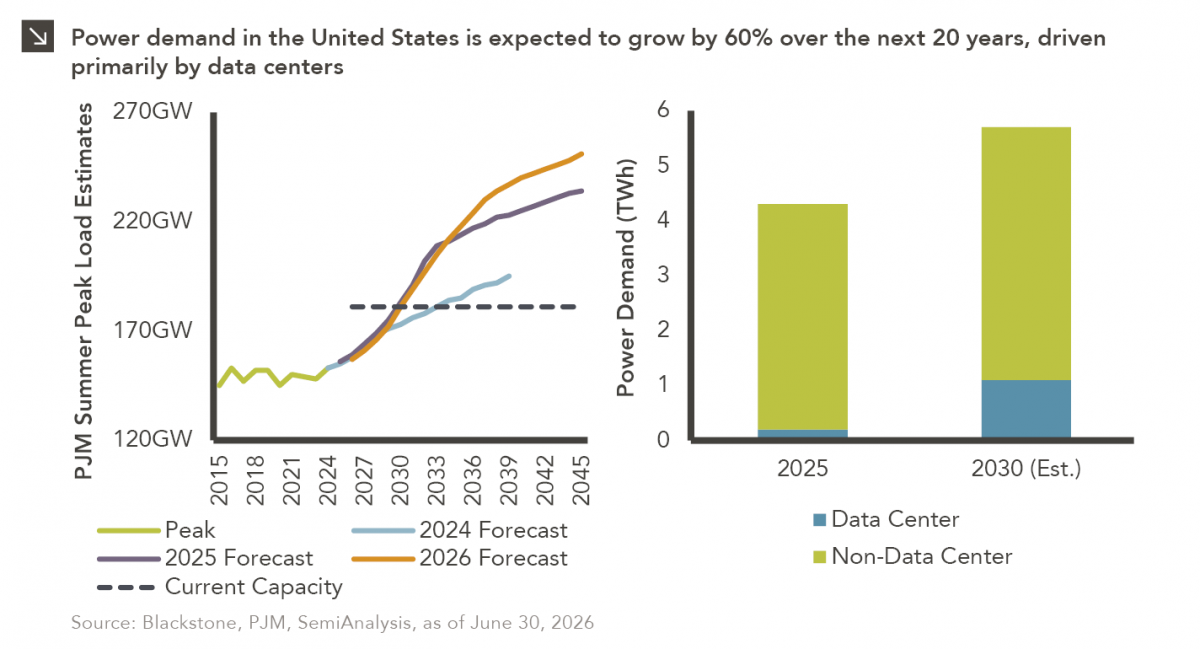
This week’s chart highlights the accelerating growth of electricity demand in the U.S., which has been driven primarily by the…
10.05.2026
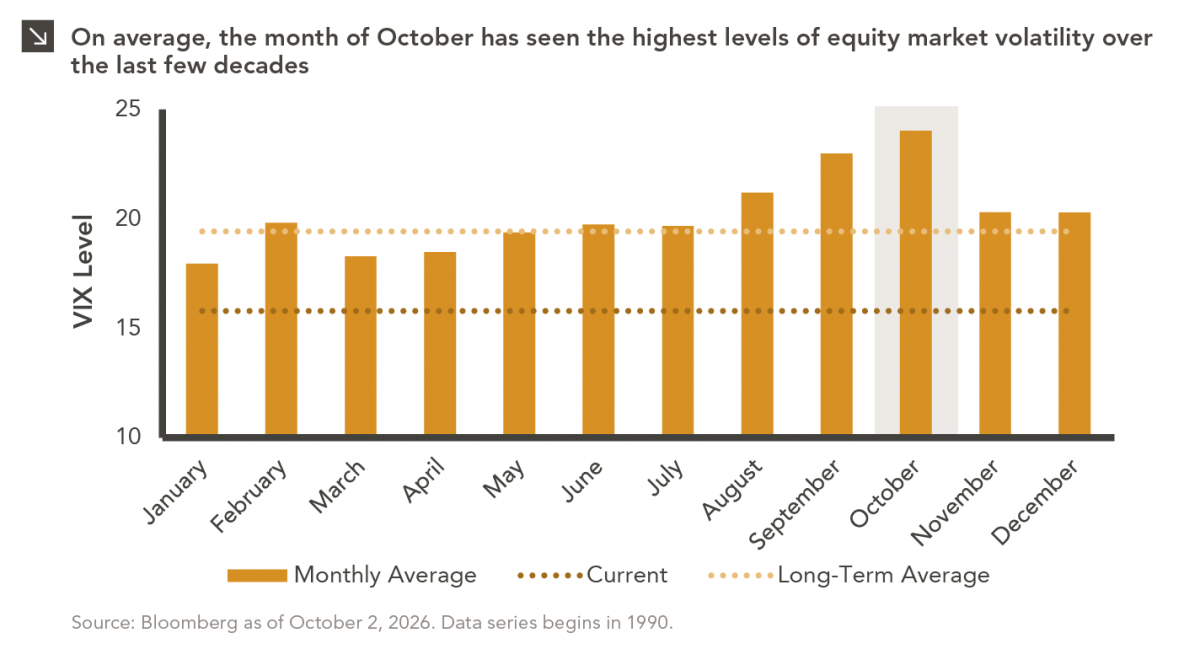
For investors, the spookiest thing about October might not be the ghosts and monsters that are bound to show up…
09.28.2026
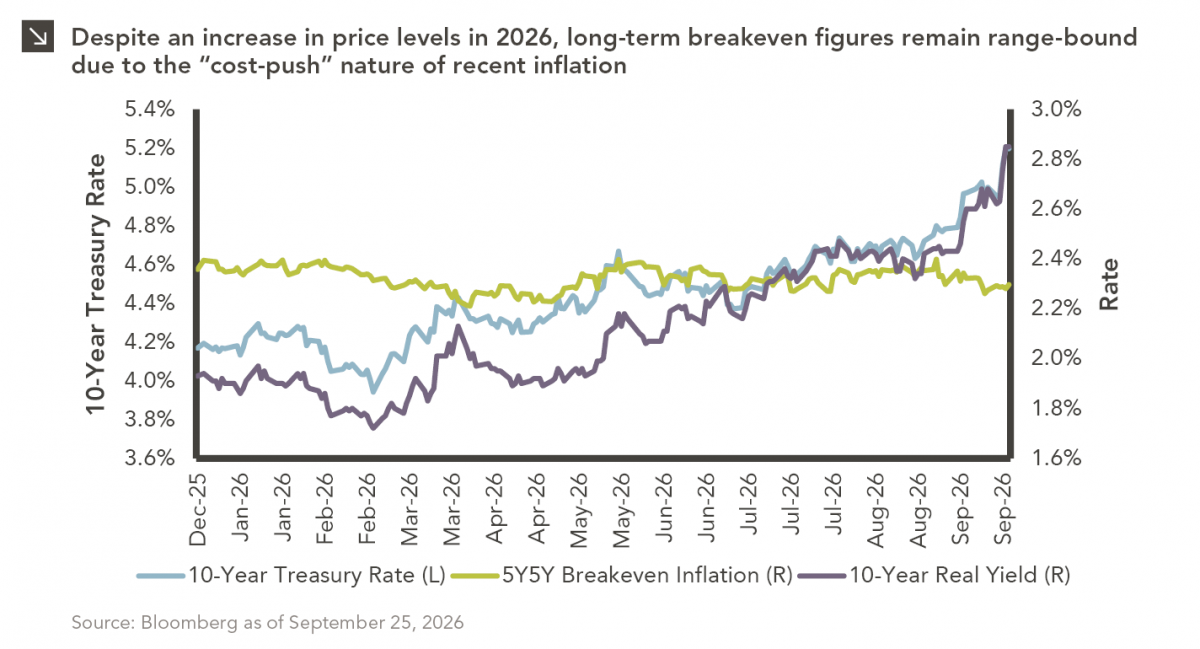
The phrase “expectations of higher inflation” has become a staple in financial news to explain the increase in nominal U.S….
Research alerts keep you updated on our latest research publications. Simply enter your contact information, choose the research alerts you would like to receive and click Subscribe. Alerts will be sent as research is published.
We respect your privacy. We will never share or sell your information.
If you have questions or need further information, please contact us directly and we will respond to your inquiry within 24 hours.
Contact Us >