Fred Huang
Research Analyst


Barring a significant equity market drawdown in the coming weeks, the current bull market will turn three years old in October. The gains posted by the S&P 500 Index during this time have certainly been robust, with the benchmark delivering 24% and 36% returns in the first and second 12-month periods of the current bull market, respectively. This strong performance has led many investors to question if stocks will continue to deliver in the near future. Interestingly, bull markets in decades past have seen positive stock returns well into the third, fourth, and fifth years; however, these gains tend to be more muted than those notched in the first two years. Over the last 50 years, the pattern has often been the following:
To expand on the final bullet point, the third, fourth, and fifth years of a bull market often prove shakier given the convergence of several structural factors. For instance, early in the cycle, central banks and governments typically provide aggressive stimulus to allow markets to recover from troughs; however, inflation and financial stability risks typically arise within a few years. These factors usually prompt tightening from policymakers, which can constrain equity performance. At the same time, the sharp rebound in corporate profits that characterizes the first two years begins to normalize, making year-over-year comparisons less favorable. Valuations, which tend to increase in the early innings of a bull market as confidence returns, also usually peak around year three. This causes any future stock gains to be more dependent on genuine fundamental improvements (i.e., earnings growth) rather than continued multiple expansion. Finally, after two years of strong performance, investor sentiment often shifts from optimism to caution, with growing fears that current conditions may not persist. While it is impossible to predict the trajectory of equity markets from here, it may be prudent for investors to expect more muted gains from stocks in the years ahead simply based on historical patterns.
Print PDF
The opinions expressed herein are those of Marquette Associates, Inc. (“Marquette”), and are subject to change without notice. This material is not financial advice or an offer to purchase or sell any product. Marquette reserves the right to modify its current investment strategies and techniques based on changing market dynamics or client needs.
09.21.2026
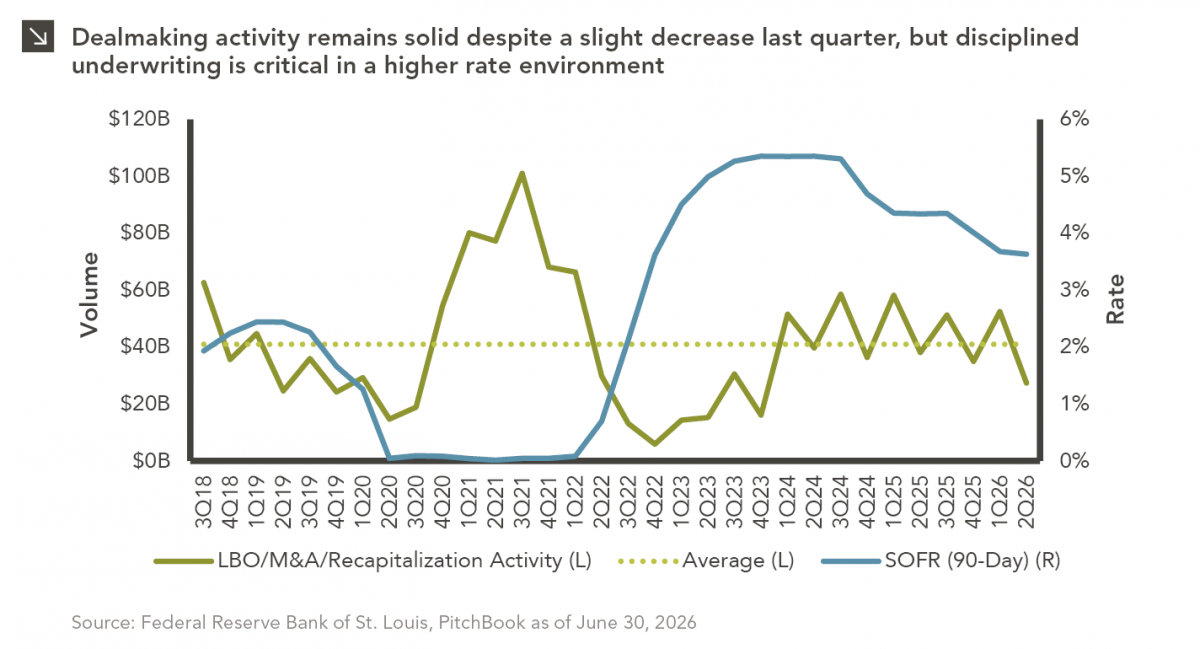
For much of the past several years, the conventional view has been that higher interest rates and stretched valuations would…
09.14.2026
There are many great things about working at Marquette Associates, but “Free Lunch Tuesday” is right at the top of…
09.08.2026
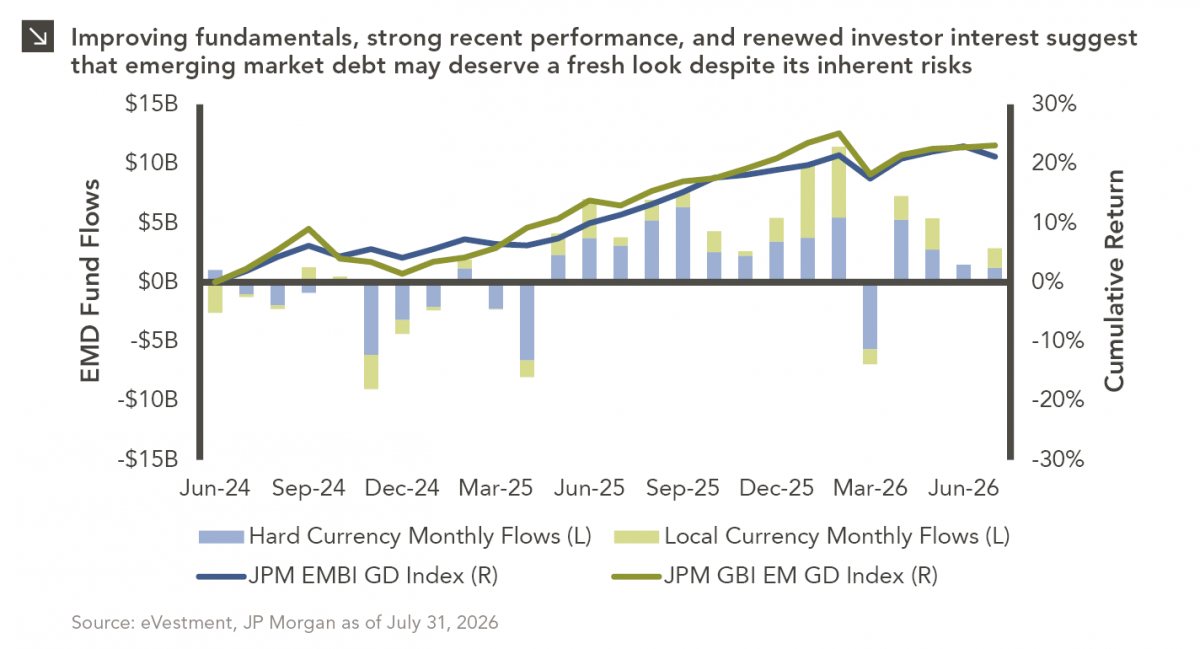
Over the last several years, emerging market debt (EMD) has faced several headwinds, with rising yields across other fixed income…
08.31.2026
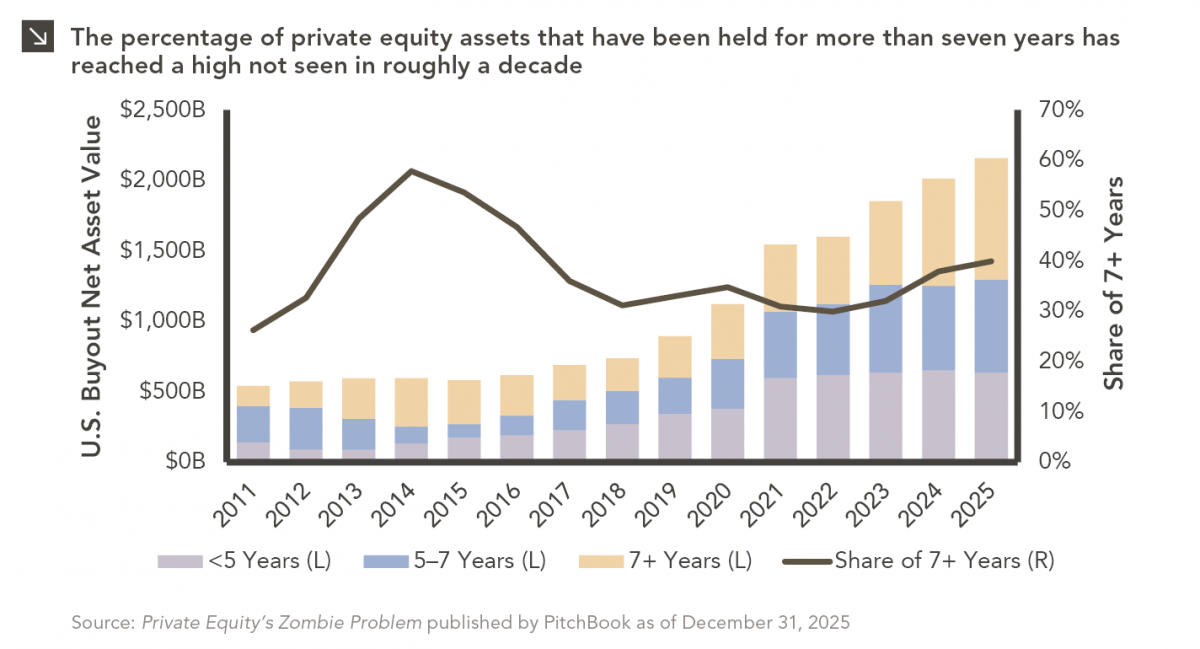
Private equity has always had a few portfolio companies that refused to leave the party. Today, however, the industry appears…
08.24.2026
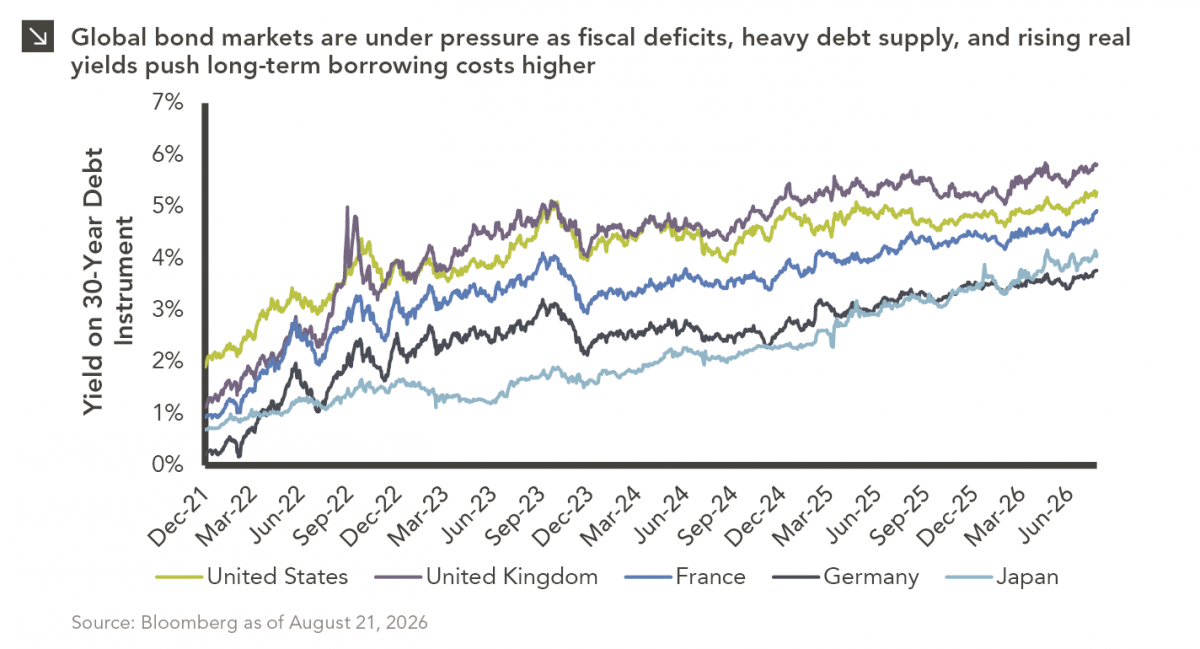
The global bond market is facing renewed pressure as investors demand higher yields to hold long-dated government debt, pushing borrowing…

08.17.2026
As a college football player struggling to put on mass, the “supersizing” deal at McDonald’s was hard to beat. For…
Research alerts keep you updated on our latest research publications. Simply enter your contact information, choose the research alerts you would like to receive and click Subscribe. Alerts will be sent as research is published.
We respect your privacy. We will never share or sell your information.
If you have questions or need further information, please contact us directly and we will respond to your inquiry within 24 hours.
Contact Us >