Doug Oest, CAIA
Partner


It is common to hear that consumption contributes 65 to 70% of total GDP, hence its importance to economic growth. More insightful, though, is to understand the underlying components of consumption and how accurately it truly reflects consumption on behalf of consumers. To do this, we use the Personal Consumption Expenditures (PCE) data which is the source of that 65 – 70% number. Critically, one must understand the elements of PCE data: in addition to the traditional consumption items (clothing, electronics, food and drink, housing, transportation, etc.), non-profit spending and expenditures made “on behalf” of consumers, such as Medicare and Medicaid, are also included. While traditional “active” consumer spending undoubtedly makes up a large percentage of G.D.P., increased spending on health care (through Medicare and Medicaid) over time has likely overstated this popular statistic.
Indeed, this is reflected in the historical data: in 1959, over 73% of consumer spending was spent in four main traditional consumer spending categories: housing, transportation, food and drink, and personal care/clothing. Over the last 50 years, the percentage spent on these four categories decreased to just over 50% of all spending in 2011. The biggest reason for the change is increased spending on healthcare – it accounted for less than 6% of overall PCE in 1959, while today it accounts for nearly 20%. This massive increase has certainly decreased the percentage of total PCE that is attributable to traditional, active consumer spending choices.
PCE is not a great indicator of average consumer expenditures, because the “spending” on Medicare and Medicaid is not distributed evenly among consumers, nor is it an “elected” expenditure in that consumers freely choose to spend or not spend on the two items. So if consumers aren’t actually spending 20% of their expenditures on healthcare, what are they buying? To get a sense for what consumers are actually spending their money on, the Bureau of Labor Statistics performs a survey called the Consumer Expenditure Survey that attempts to collect data on the spending habits of American consumers. Based on these results, healthcare accounts for less than 7% of annual spending for the average consumer.
| Category | % of Avg. Annual Expenditures |
| Food | 12.7% |
| Housing | 34.4% |
| Apparel and services | 3.5% |
| Transportation | 16.0% |
| Healthcare | 6.6% |
| Entertainment | 5.2% |
| Cash contributions | 3.4% |
| Personal insurance and pensions | 11.2% |
| Other | 7.0% |

The opinions expressed herein are those of Marquette Associates, Inc. (“Marquette”), and are subject to change without notice. This material is not financial advice or an offer to purchase or sell any product. Marquette reserves the right to modify its current investment strategies and techniques based on changing market dynamics or client needs.

07.07.2026
JULY 23 — 1:00pm CT Please join Marquette’s research team for our 2026 Halftime Market Insights Webinar…
07.06.2026
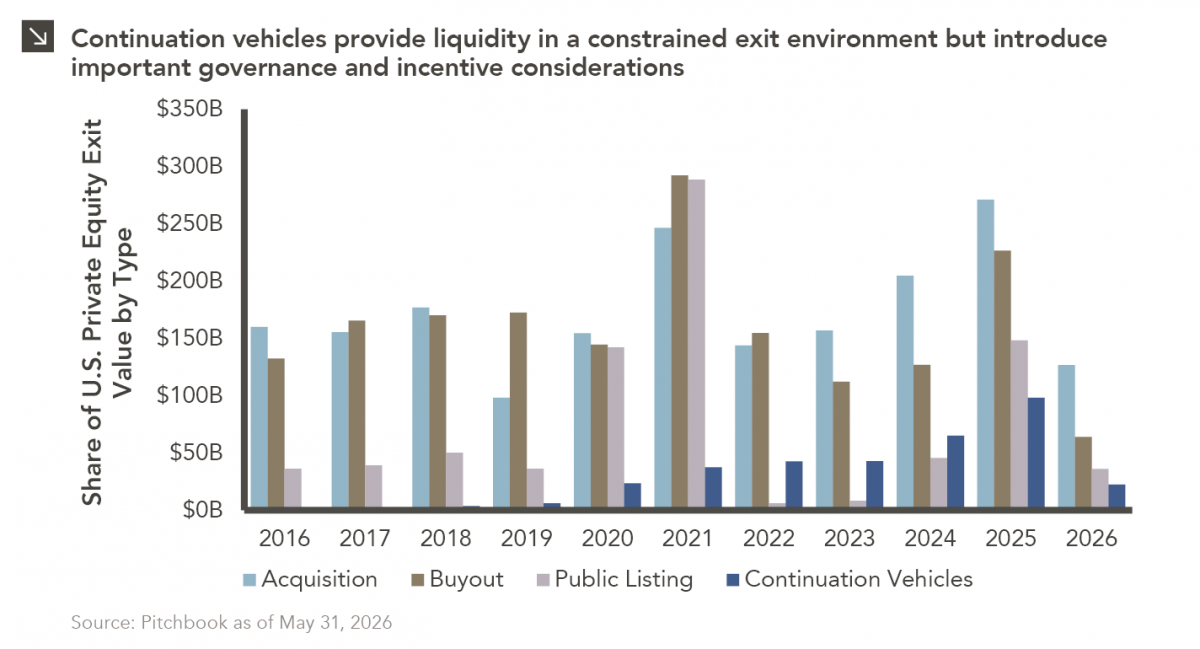
Since traditional exit routes have remained constrained in recent years due to higher interest rates, valuation gaps, and a subdued…
06.29.2026
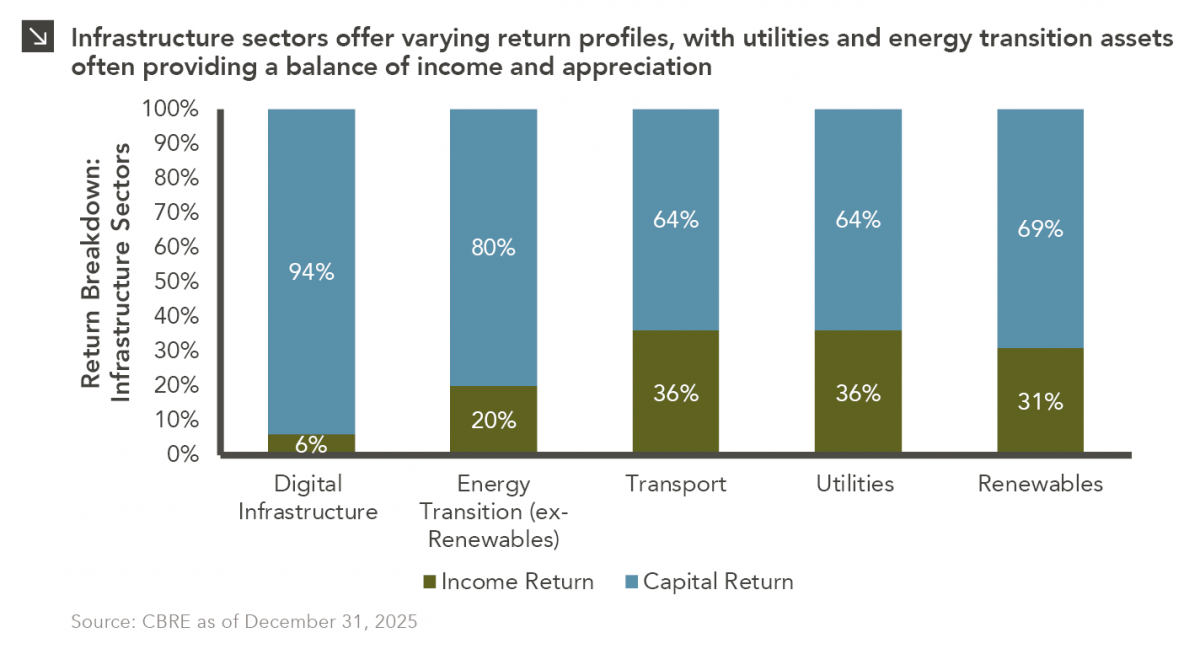
This week’s chart highlights the varying return profiles across key infrastructure sectors by illustrating the split between income and capital…

06.25.2026
Commodities represent a unique asset class within global financial markets. Like equities and bonds, commodity prices are influenced by the…
06.22.2026
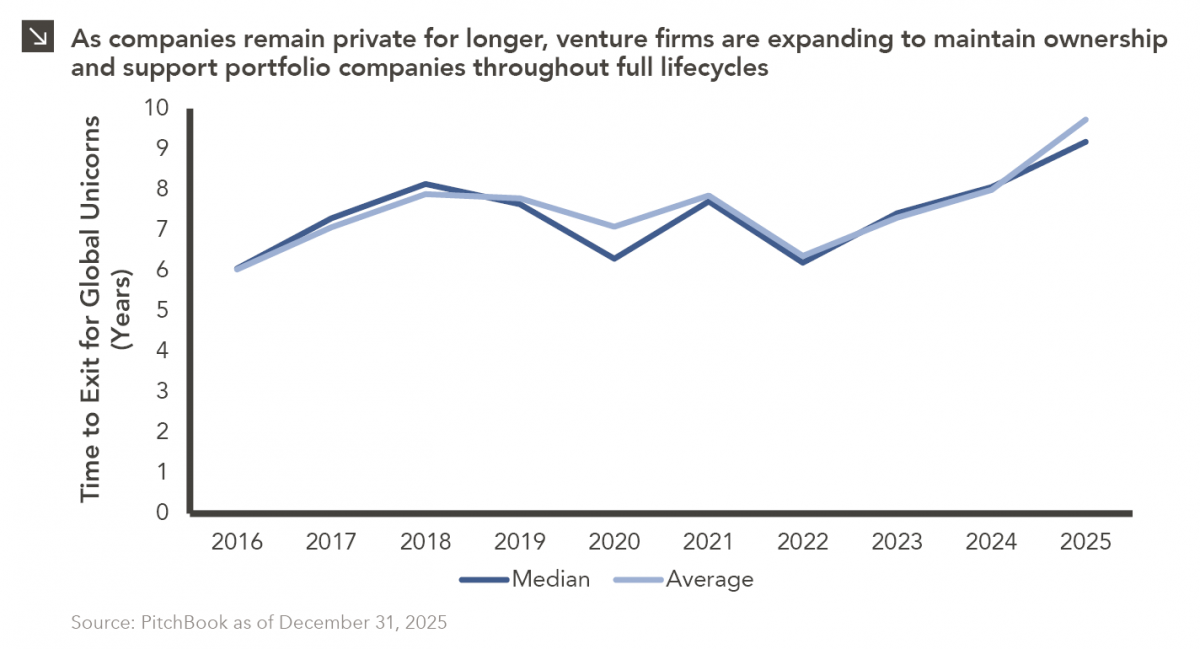
When Benchmark, one of Silicon Valley’s most renowned early-stage venture capital firms, closed $2 billion across two new funds this…
06.15.2026
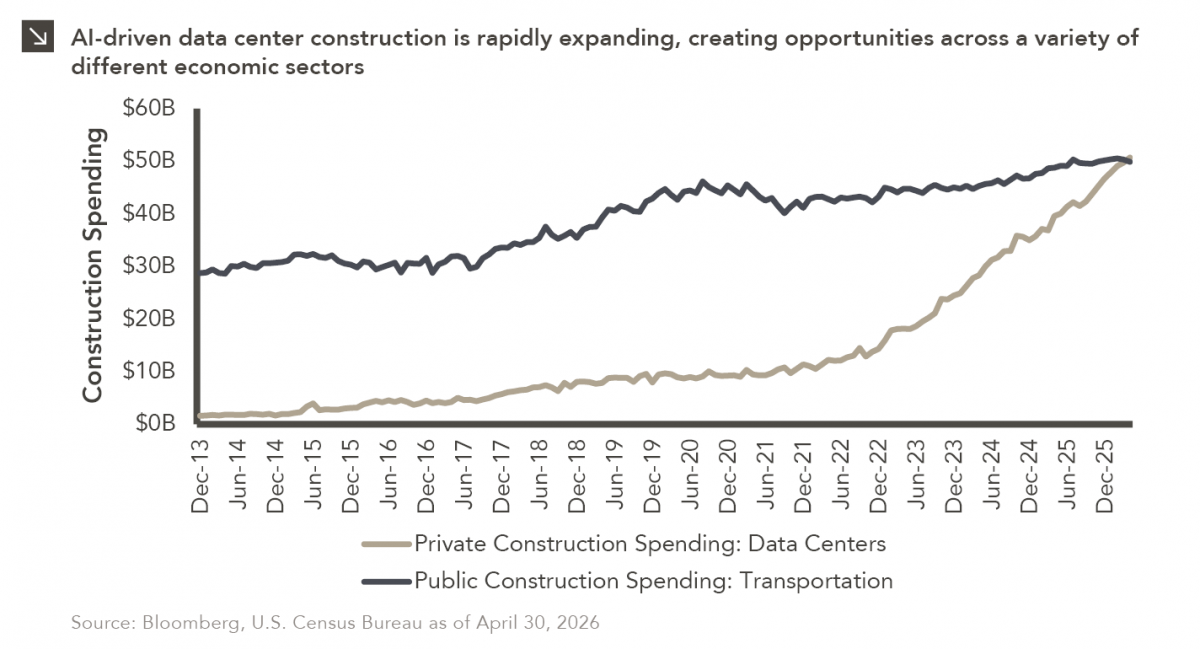
The rapid buildout of artificial intelligence infrastructure is reshaping the U.S. investment landscape. According to recent Census Bureau data, spending…
Research alerts keep you updated on our latest research publications. Simply enter your contact information, choose the research alerts you would like to receive and click Subscribe. Alerts will be sent as research is published.
We respect your privacy. We will never share or sell your information.
If you have questions or need further information, please contact us directly and we will respond to your inquiry within 24 hours.
Contact Us >