10.22.2026
Will Higher Rates Cramp the Markets?
Anyone who has run a marathon knows the last six miles are brutal — no matter how well the first…


Currencies are a popular topic in investment circles today, as their impact on total returns can be meaningful for investors. While many investment funds do not hedge currency exposure at the portfolio level due to the costs involved and the expectation of mean reversion over time, certain market participants are very active in the foreign exchange markets and seek to capitalize on price movements among currencies, which can be volatile in the short-term. In this Chart of the Week, we look at carry trades, the fundamental strategy of market participants who speculate on currency movements. At its essence, a carry trade is borrowing money in a low-yielding currency and investing it in a high-yielding currency. At the close of the trade, the investor pockets the difference between the interest received on the higher yielding currency and the interest paid on the lower yielding currency (net of transaction costs).
This chart shows a collection of the top- and bottom-performing carry trades of 2015 and compares their returns with the year-to-date results of 2016. As the chart shows, speculating against the dollar generated severe losses for most currencies last year, as the dollar rallied throughout 2015. Many of the carry trades that lost against the U.S. dollar have seen positive gains through early March, but can the performance of these trades persist? On one hand, holding the U.S. dollar should remain beneficial as the currency is likely to show continued, albeit modest, strength vs. other major global currencies. Reasons for this include expectations of tightening by the Fed and diverging central bank policies. Even if the Fed does not raise rates for the rest of this year, it is unlikely that it would cut rates, so the supportive case for the U.S. dollar remains. The Euro, another major global currency, is contending with monetary easing from the European Central Bank. Furthermore, concerns over Euro-area growth and political tensions present a headwind for the currency.
On the other hand, emerging market currencies have shown strength thus far in 2016, as the turnaround in industrial metals prices elevated many commodity currencies, including the Brazilian real (BRL) and the Malaysian ringgit (MYR). Concerns over long-standing debt disputes in Argentina led to increased volatility for the Argentine peso (ARS) in recent years. The 2015 election of new President Mauricio Macri led to optimism over a deal with Argentina’s creditors, and the country reached an agreement with bondholders in early March. However, the country’s plan to raise new levels of debt in April caused a sharp downturn in its currency.
With the persistence of diverging central bank policies and the prospect of negative interest rates in many parts of the world, the outlook for many carry trades will continue to see meaningful impacts from macroeconomic volatility not only on a global level, but also on a country- and region-specific level.
Note: ARS=Argentine Peso; ISK=Iceland Krona; INR=Indian Rupee; BHD=Bahraini Dinar; JPY=Japanese Yen; EUR=Euro; DKK=Danish Krone; TRY=Turkish Lira; CLP=Chilean Peso; MXN=Mexican Peso; NOK=Norwegian Krone; CAD=Canadian Dollar; MYR=Malaysian Ringgit; ZAR=South African Rand; COP=Colombian Peso; BRL=Brazilian Real.
The opinions expressed herein are those of Marquette Associates, Inc. (“Marquette”), and are subject to change without notice. This material is not financial advice or an offer to purchase or sell any product. Marquette reserves the right to modify its current investment strategies and techniques based on changing market dynamics or client needs.

10.22.2026
Anyone who has run a marathon knows the last six miles are brutal — no matter how well the first…
10.19.2026
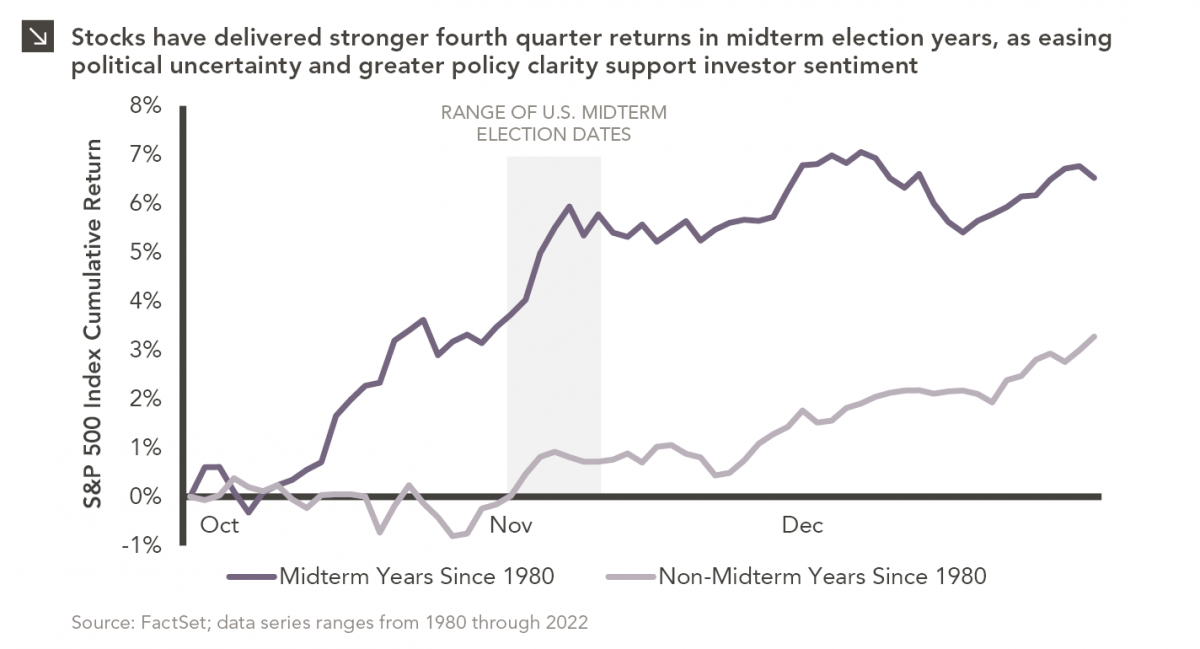
Since 1980, the S&P 500 Index has generally performed well in the weeks surrounding U.S. midterm elections. Specifically, the index…
10.12.2026
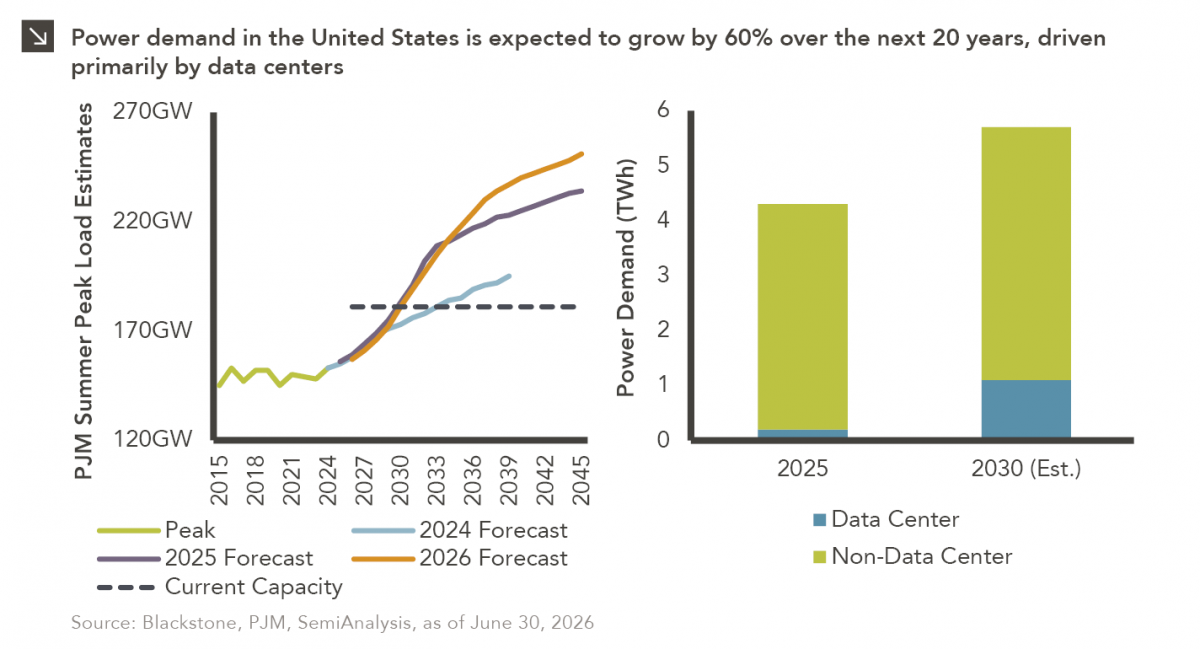
This week’s chart highlights the accelerating growth of electricity demand in the U.S., which has been driven primarily by the…

10.08.2026
LIVE WEBINAR — OCTOBER 22 Please join Marquette’s research team for our 3Q 2026 Market Insights Webinar…
10.05.2026
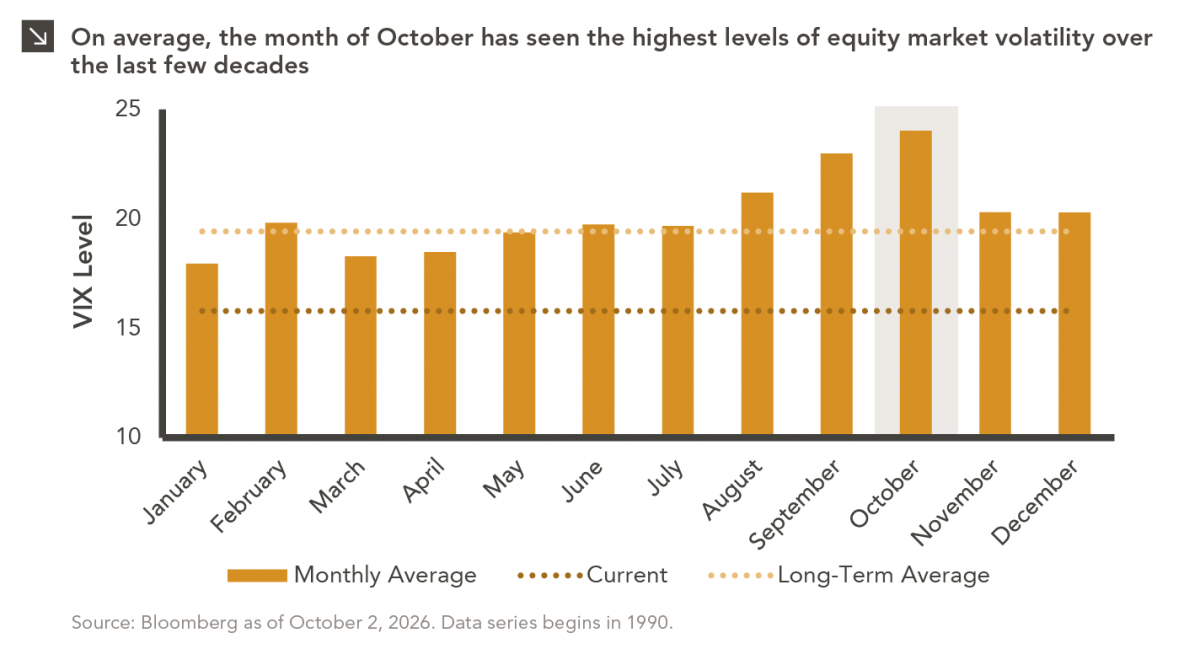
For investors, the spookiest thing about October might not be the ghosts and monsters that are bound to show up…
09.28.2026
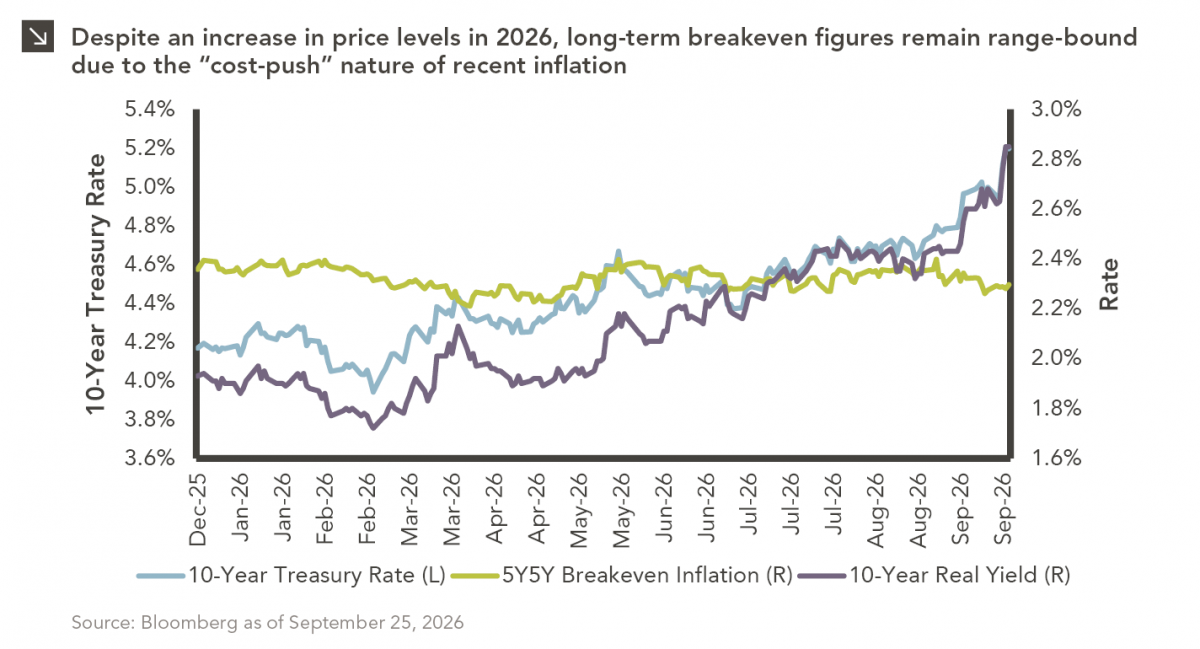
The phrase “expectations of higher inflation” has become a staple in financial news to explain the increase in nominal U.S….
Research alerts keep you updated on our latest research publications. Simply enter your contact information, choose the research alerts you would like to receive and click Subscribe. Alerts will be sent as research is published.
We respect your privacy. We will never share or sell your information.
If you have questions or need further information, please contact us directly and we will respond to your inquiry within 24 hours.
Contact Us >