09.08.2026
EMD’s Second Chance?
Over the last several years, emerging market debt (EMD) has faced several headwinds, with rising yields across other fixed income…


Technical analysis enables speculators to make future market predictions based solely upon a charted historical past; the actions of the market are studied as opposed to the underlying fundamentals of a company. Analysts have studied these sorts of charts for years and in the process discovered trends that are believed to support specific future behavior. One of these trends is explored in this week’s chart as it applies to the market’s preference of style: value vs. growth.
Typically, these trends are applied to a single stock’s movement, but for the sake of assessing the future return prospects of value and growth, we will apply them to the Russell 3000 Value and Russell 3000 Growth indices. More specifically, we calculate the return differential between the two indices by subtracting the Russell 3000 Growth index from the Russell 3000 Value index. This differential is smoothed by using a 90-day moving average and indicates value’s outperformance versus growth when above 0. The 200-day moving average is used as an alarm to changing trends; if a stock price, or in our case a shorter period moving average, breaks upwards through the 200-day moving average, this is seen as a bullish sign, or in our case the outperformance of value over growth. The opposite can be said if our differential breaks through this line downwards. As pictured, value broke through its 200-day moving average line in November, suggesting its future outperformance over growth, which it has recently delivered.
Bollinger Bands, portrayed in green and blue, represent 2 standard deviations above and below the 200-day moving average. It is generally thought that breaking this upper band signifies the security is overbought, which in our case would suggest a trend reversal in growth’s favor and that perhaps, value’s brief period of outperformance is over. With sectors like Healthcare and Tech rallying lately — up 1.3% and 0.9% respectively in March — growth may truly be back in fashion. Given the oscillating nature of the differential, however, this may be a true case of ambiguity in which value and growth have yet to battle it out.
The opinions expressed herein are those of Marquette Associates, Inc. (“Marquette”), and are subject to change without notice. This material is not financial advice or an offer to purchase or sell any product. Marquette reserves the right to modify its current investment strategies and techniques based on changing market dynamics or client needs.
09.08.2026
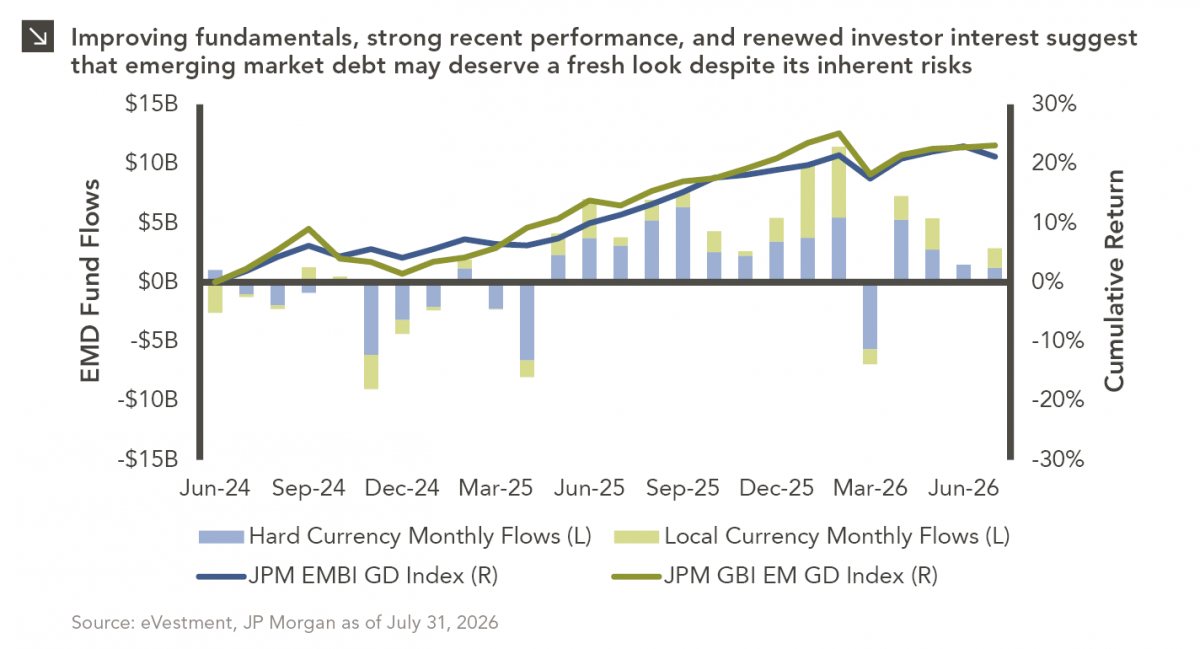
Over the last several years, emerging market debt (EMD) has faced several headwinds, with rising yields across other fixed income…
08.31.2026
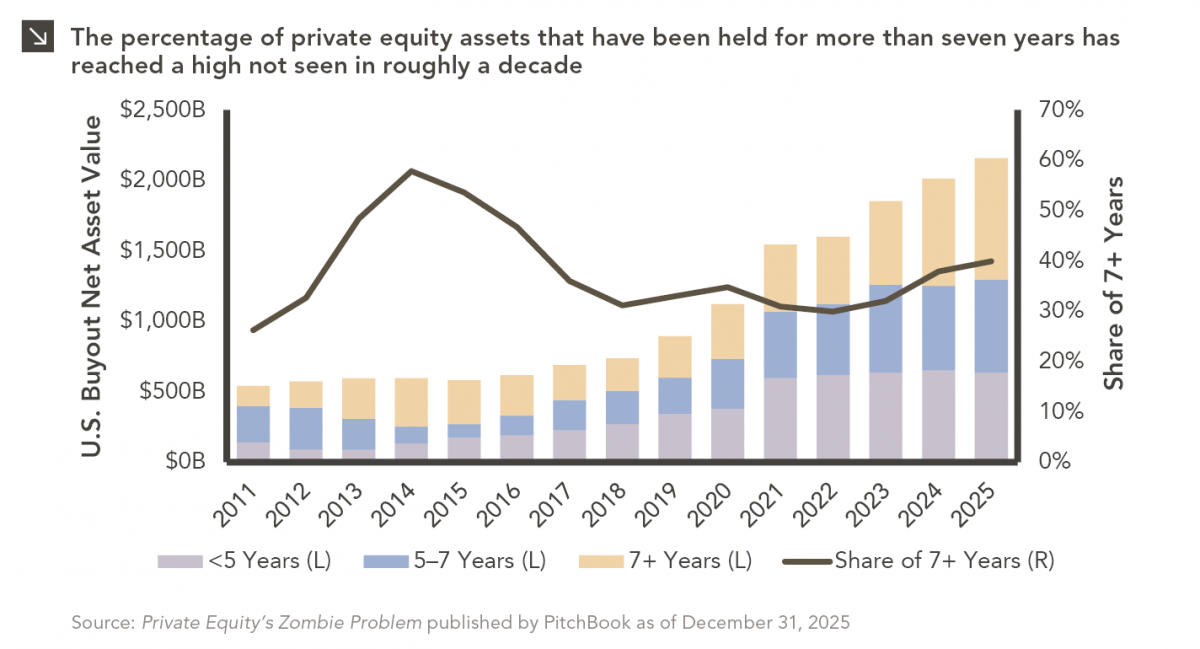
Private equity has always had a few portfolio companies that refused to leave the party. Today, however, the industry appears…
08.24.2026
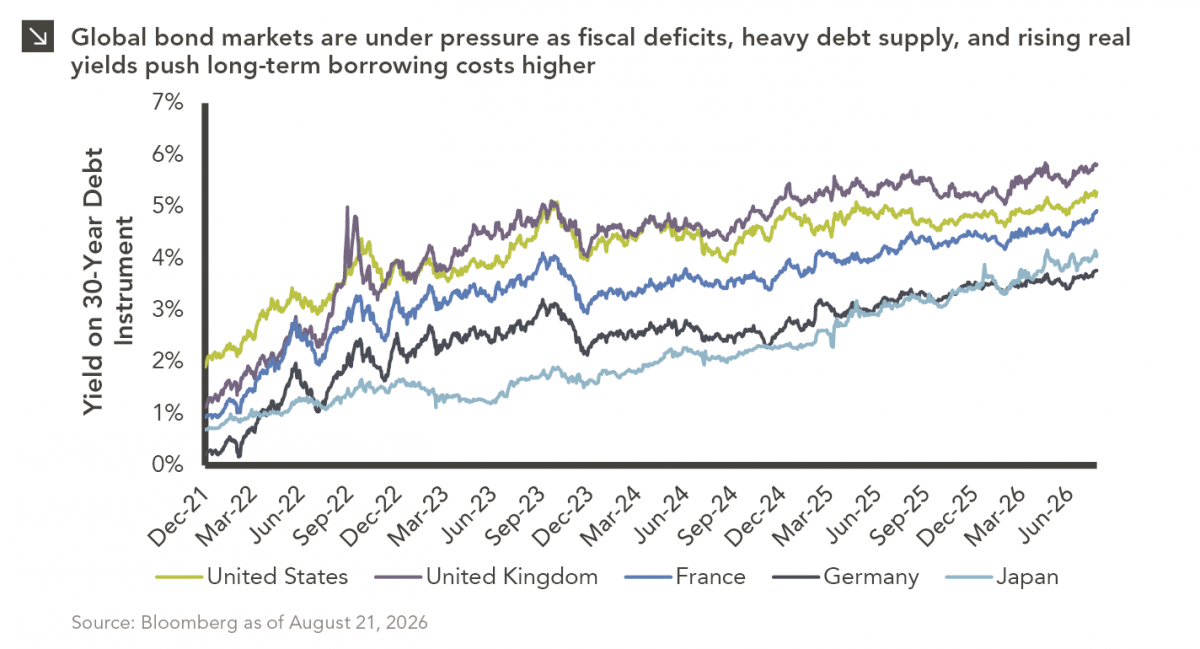
The global bond market is facing renewed pressure as investors demand higher yields to hold long-dated government debt, pushing borrowing…

08.17.2026
As a college football player struggling to put on mass, the “supersizing” deal at McDonald’s was hard to beat. For…
08.10.2026
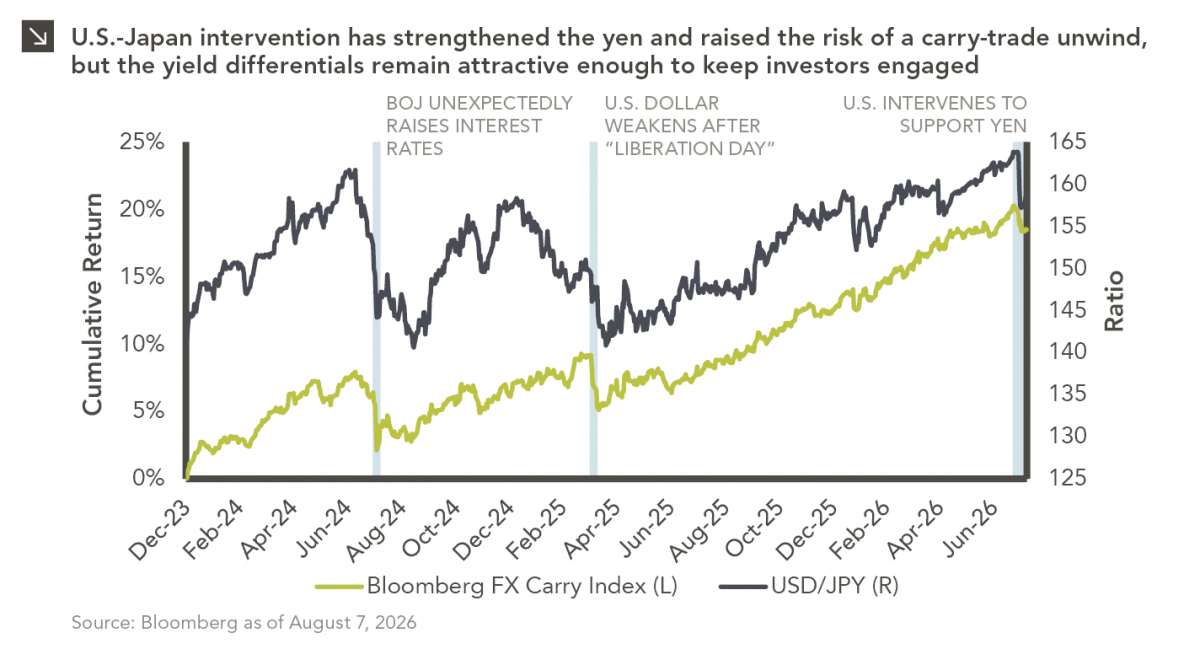
After reaching nearly ¥164 per dollar, its weakest level in roughly four decades, the yen had become a source of…
08.03.2026
In the cinematic masterpiece Rocky IV, Rocky gets dazed by his opponent, Captain Ivan Drago, and complains that he sees…
Research alerts keep you updated on our latest research publications. Simply enter your contact information, choose the research alerts you would like to receive and click Subscribe. Alerts will be sent as research is published.
We respect your privacy. We will never share or sell your information.
If you have questions or need further information, please contact us directly and we will respond to your inquiry within 24 hours.
Contact Us >