Mike Spychalski, CAIA
Vice President


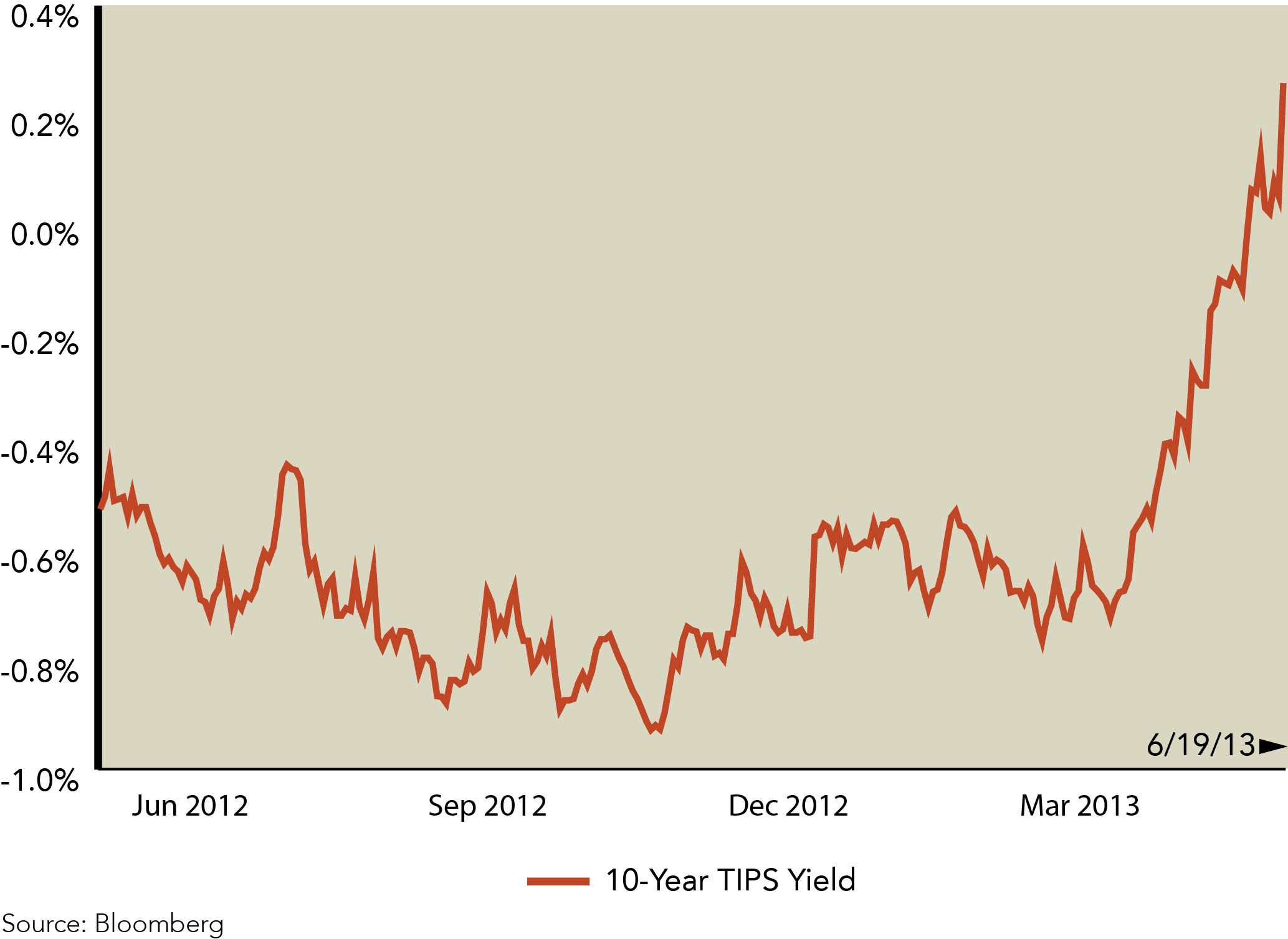
This week’s Chart of the Week illustrates the significant increase in yields on the 10 Year Treasury Inflation Protected Security (TIPS) over the past several weeks. From May 1, 2013 to June 19, 2013, the yield on 10 Year TIPS increased from -0.67% to +0.26% (an increase of 0.93%). Over that time frame, investors holding 10 Year TIPS contracts suffered losses of approximately 8.0% (there is an inverse relationship between prices and yields, so as yields increase, prices fall). This huge selloff in TIPS has largely been driven by the increase in yields on the 10 Year Nominal Treasury, which saw yields jump by 0.72% over the same time period (representing a loss of 4.9%). Much of the increase in the 10 Year Nominal Treasury yield has been attributed to expectations that the Federal Reserve Bank, which is currently purchasing $85 billion worth of Treasuries and Mortgage Backed Securities every month as part of its various quantitative easing programs, is going to start winding down its asset purchases in the near future. This was confirmed on June 19, when Federal Reserve Chairman Ben Bernanke announced that if economic data continues to come in line with the Fed’s current expectations, the Fed will begin to scale back the level of asset purchases later this year, and could end the asset purchases entirely by mid-year 2014.
However, the jump in nominal Treasury yields does not fully explain the recent increase in TIPS yields. The yields on TIPS are driven by two primary forces, nominal Treasury yields, and inflationary expectations. Thus, the increase in TIPS yields that is not explained by the increase in nominal Treasury yields is primarily attributable to falling inflationary expectations. This should not be surprising given that one of the primary goals of the Fed’s quantitative easing programs was to prevent deflation from occurring in the U.S. economy (i.e. increasing inflation). The simultaneous combination of higher nominal Treasury yields and falling inflationary expectations are the perfect storm that led to the significant losses in TIPS over the past several weeks.

The opinions expressed herein are those of Marquette Associates, Inc. (“Marquette”), and are subject to change without notice. This material is not financial advice or an offer to purchase or sell any product. Marquette reserves the right to modify its current investment strategies and techniques based on changing market dynamics or client needs.
10.12.2026
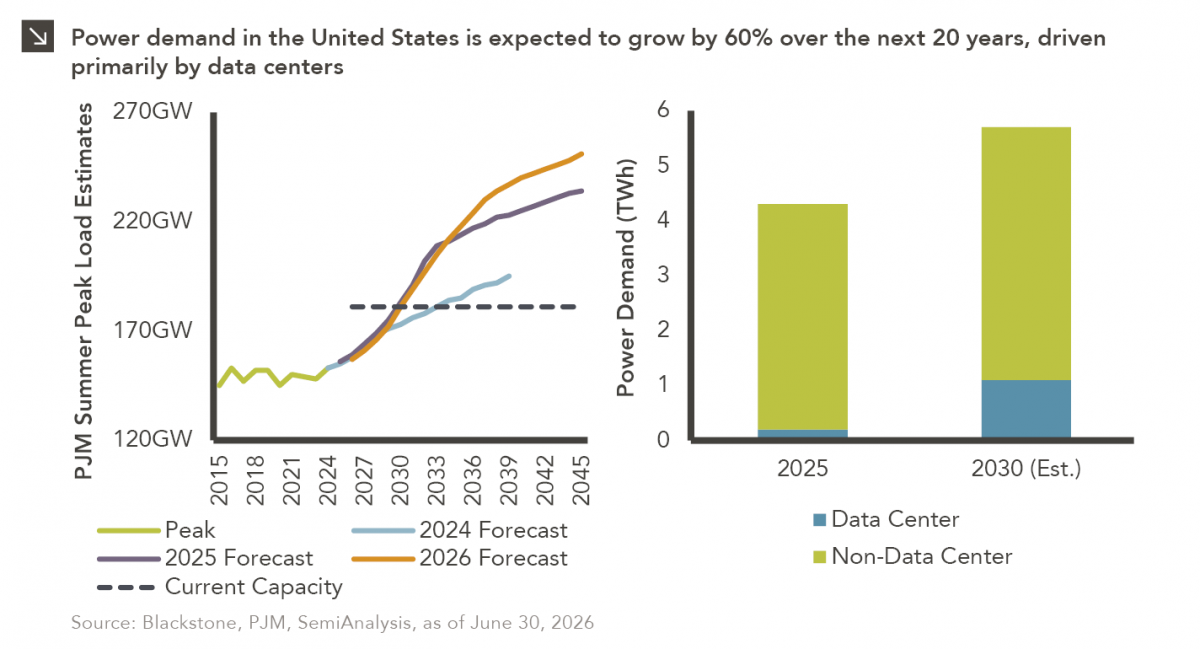
This week’s chart highlights the accelerating growth of electricity demand in the U.S., which has been driven primarily by the…
10.05.2026
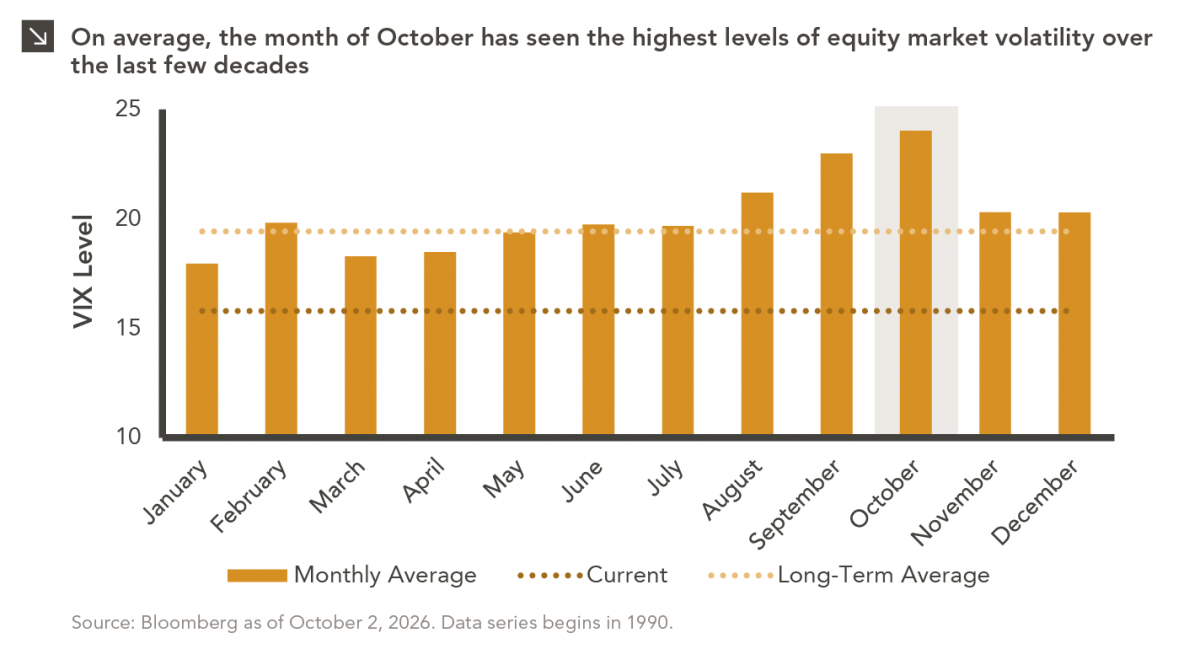
For investors, the spookiest thing about October might not be the ghosts and monsters that are bound to show up…
09.28.2026
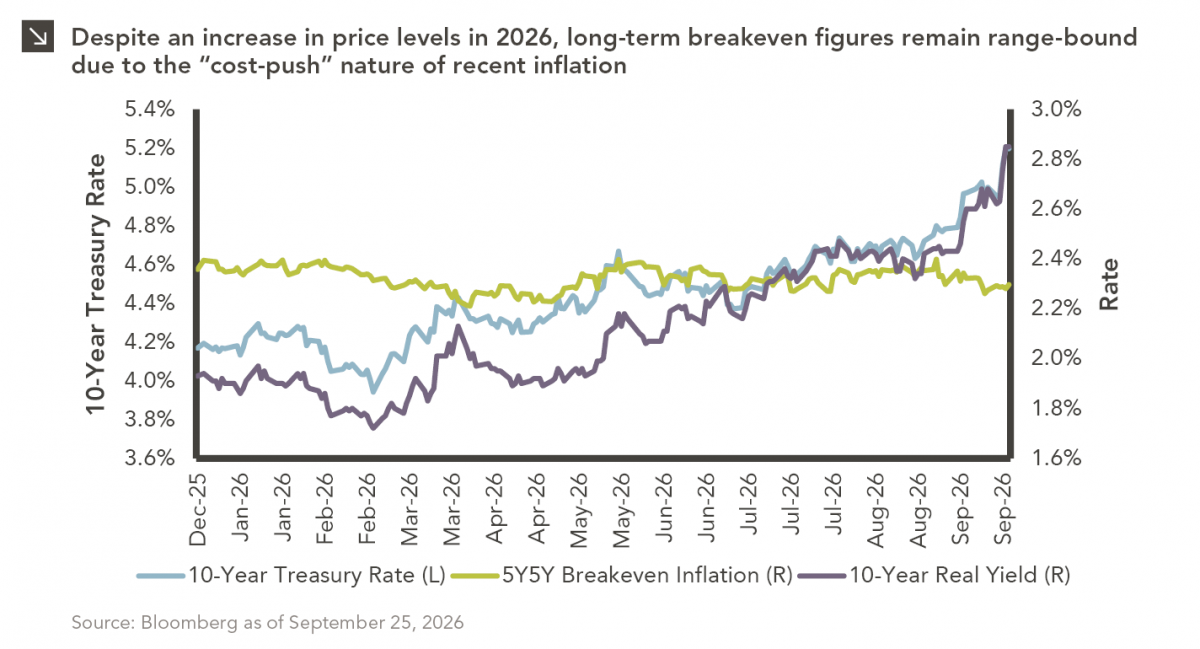
The phrase “expectations of higher inflation” has become a staple in financial news to explain the increase in nominal U.S….
09.21.2026
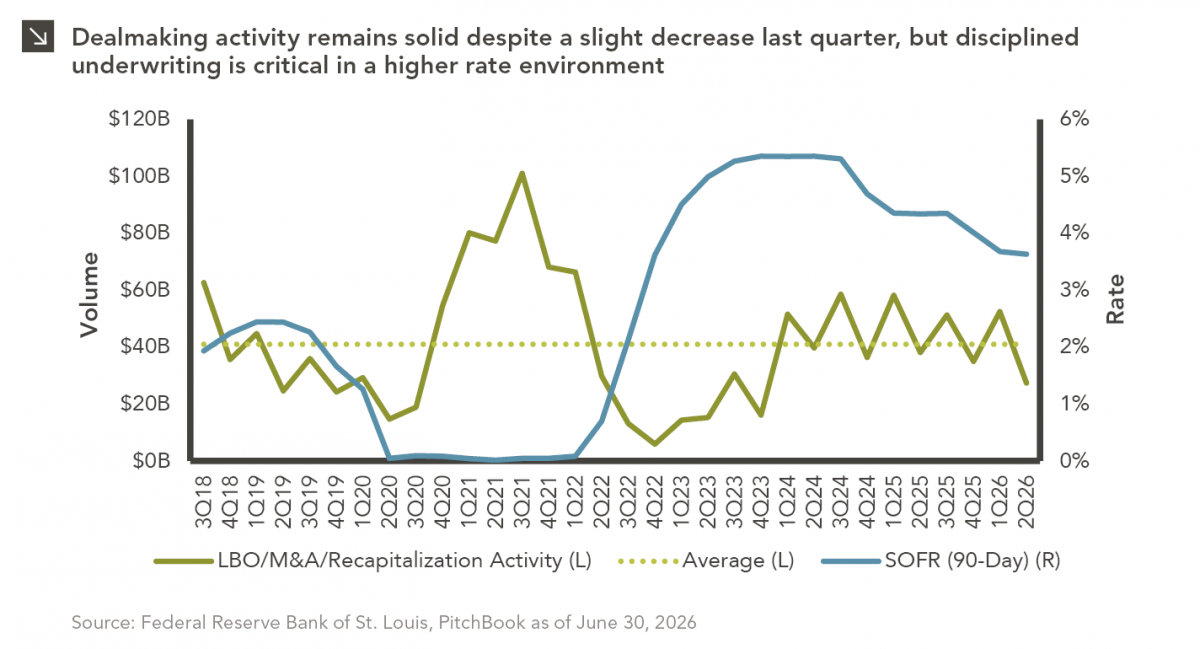
For much of the past several years, the conventional view has been that higher interest rates and stretched valuations would…
09.14.2026
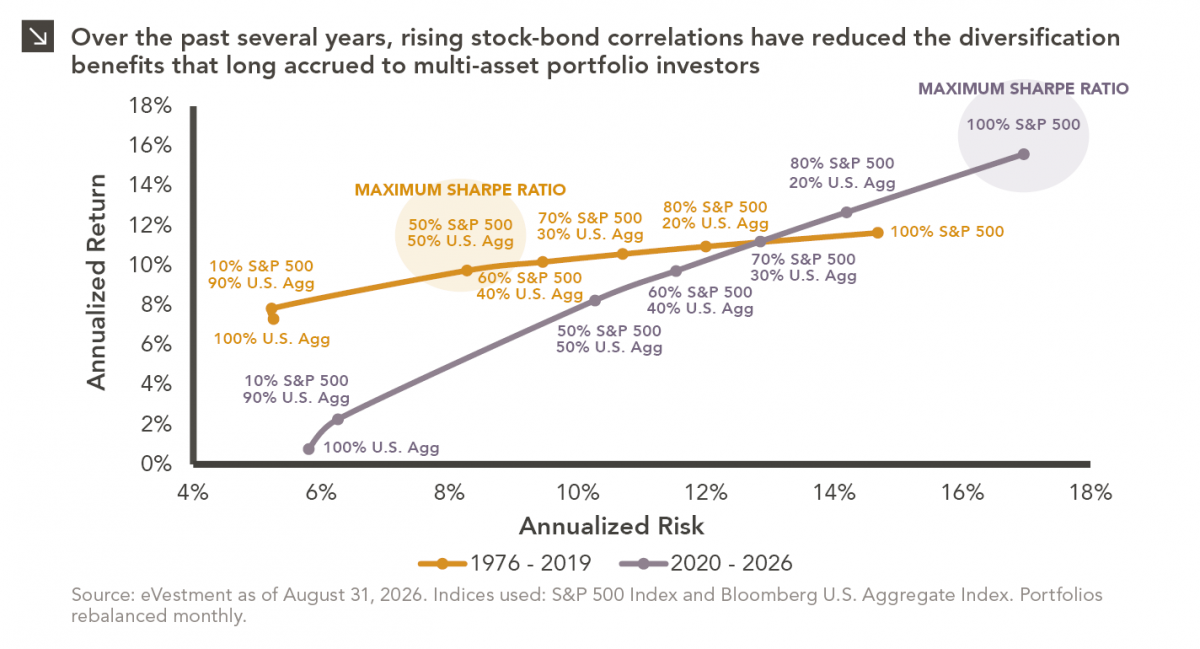
There are many great things about working at Marquette Associates, but “Free Lunch Tuesday” is right at the top of…
09.08.2026
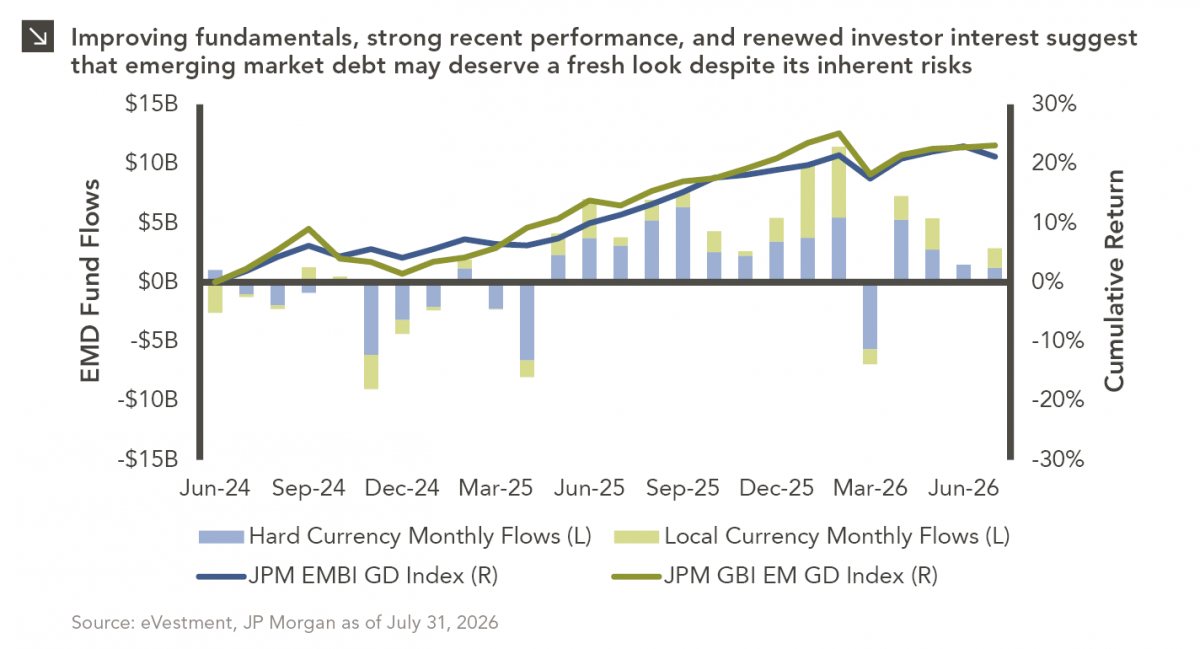
Over the last several years, emerging market debt (EMD) has faced several headwinds, with rising yields across other fixed income…
Research alerts keep you updated on our latest research publications. Simply enter your contact information, choose the research alerts you would like to receive and click Subscribe. Alerts will be sent as research is published.
We respect your privacy. We will never share or sell your information.
If you have questions or need further information, please contact us directly and we will respond to your inquiry within 24 hours.
Contact Us >