10.22.2026
Will Higher Rates Cramp the Markets?
Anyone who has run a marathon knows the last six miles are brutal — no matter how well the first…


Our Chart of the Week examines the relative performance of Core and Intermediate Government/Credit fixed income strategies in rising and falling rate environments. The chart shows Core’s annual total return since the 1970s as represented in the blue using the Barclays U.S. Aggregate index. Annual total return of the Barclays Intermediate Government/Credit index is shown in orange. We also include inflation in green, using the CPI’s annual change, and the 10-year Treasury yield in gray. As one can see, Core beat Intermediate Government/Credit and inflation when rates dropped during the 30-year bull run for bonds from the 1980s to today. This is because Core features higher yields and longer duration, the latter of which boosts bond prices when rates drop. But Core lags Intermediate Government/Credit and inflation if rates rise significantly, as we experienced during the 1970s oil crisis. This was again because of Core’s longer duration. In other words, Core’s longer-dated bonds took much longer to be recycled out as rates rose and newer, higher-yielding bonds came to market; as a result, returns lagged.
Going forward, no one knows whether rates will go up or down. We performed projections based on the likely scenario that the Fed hikes 25bp per year for the next three years. We assume a flattening curve and the 10-year Treasury rises 10bp per year. In this scenario, we estimate that Core will beat Intermediate Government/Credit because of its higher yield despite its longer duration. If the economy gets worse, we assume there are no hikes and the 10-year Treasury yield goes to zero in three years. For this case, we estimate that Core will beat Intermediate Government/Credit handily because of both its duration and yield pickup. What it takes for Intermediate Government/Credit to beat Core is extremely strong economic growth or a dramatic inflationary environment where prices of goods skyrocket, during which we assume 0.5% or more of annual increases in the 10-year Treasury yield. Here, Core’s longer duration hurts it more than its higher yield. These estimates do not account for technical market selloffs or buying binges, but show what a perfectly rational market is expected to do.
As a practical takeaway, if investors are deciding between Core vs. Intermediate Government/Credit, this shows that Core is more resilient in the more likely scenarios. On the other hand, if an investor has chosen Intermediate Government/Credit for its lower duration, its performance will be relatively similar to that of Core in all scenarios. Ultimately, both strategies will provide liquidity, diversification, and safety in the event of market stress; relative performance across interest rate environments will not be significant, though core offers a bit higher upside under the most likely interest rate scenario over the next few years.
The opinions expressed herein are those of Marquette Associates, Inc. (“Marquette”), and are subject to change without notice. This material is not financial advice or an offer to purchase or sell any product. Marquette reserves the right to modify its current investment strategies and techniques based on changing market dynamics or client needs.

10.22.2026
Anyone who has run a marathon knows the last six miles are brutal — no matter how well the first…
10.19.2026
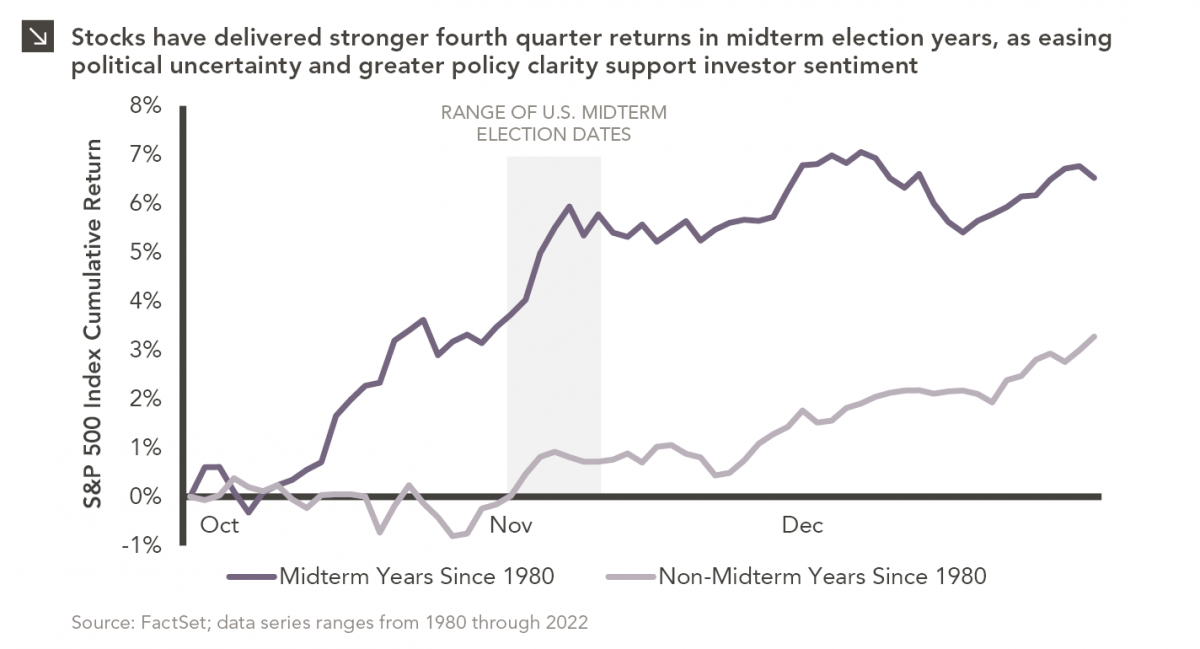
Since 1980, the S&P 500 Index has generally performed well in the weeks surrounding U.S. midterm elections. Specifically, the index…
10.12.2026
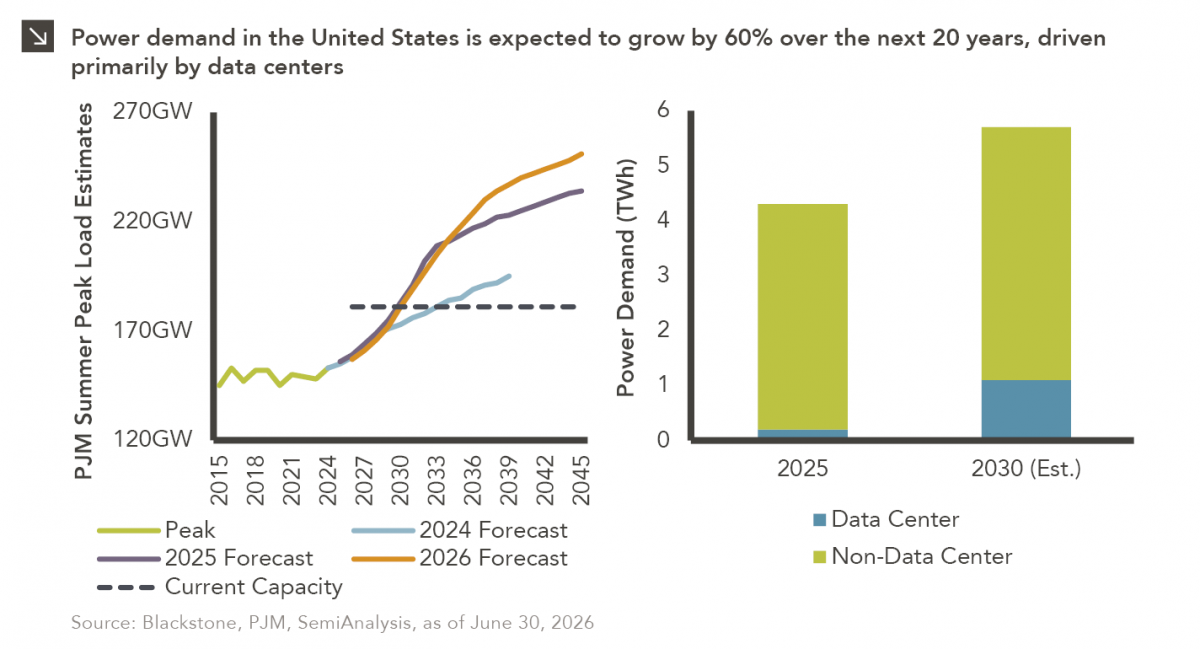
This week’s chart highlights the accelerating growth of electricity demand in the U.S., which has been driven primarily by the…

10.08.2026
LIVE WEBINAR — OCTOBER 22 Please join Marquette’s research team for our 3Q 2026 Market Insights Webinar…
10.05.2026
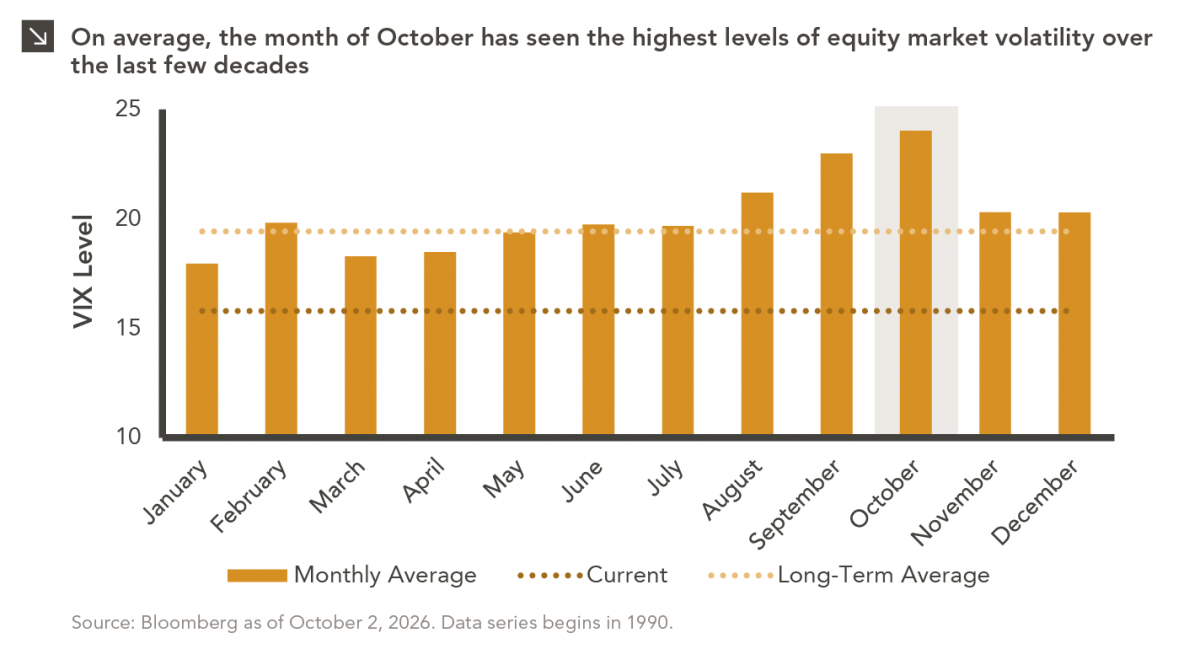
For investors, the spookiest thing about October might not be the ghosts and monsters that are bound to show up…

09.28.2026
The phrase “expectations of higher inflation” has become a staple in financial news to explain the increase in nominal U.S….
Research alerts keep you updated on our latest research publications. Simply enter your contact information, choose the research alerts you would like to receive and click Subscribe. Alerts will be sent as research is published.
We respect your privacy. We will never share or sell your information.
If you have questions or need further information, please contact us directly and we will respond to your inquiry within 24 hours.
Contact Us >