Mike Spychalski, CAIA
Vice President


The U.S. Treasury yield curve, as measured by the difference between 10-year Treasuries and 2-year Treasuries, has flattened significantly over the past several years, decreasing from 2.65% on December 31, 2013 to 0.65% on November 15, 2017. In fact, this is the flattest that the yield curve has been since November 4, 2007, just prior to the onset of the “Great Recession,” and this has sparked concerns about a potential recession on the near-term horizon. A flattening yield curve has typically been associated with concerns about future economic growth, so mounting worries about a potential recession are understandable.
However, these concerns appear to be a bit premature. First, it is important to note that every recession since 1980 (including the “Great Recession”) was precipitated not only by a flattening yield curve, but by an inverted yield curve, meaning that yields on longer-term (i.e. 10-year) Treasuries were below yields on shorter-term (i.e. 2-year) Treasuries. Given that yields on 10-year Treasuries are currently 0.65% higher than yields on 2-year Treasuries, we are nowhere near an inverted yield curve. Second, it is worth noting that it is fairly common for the yield curve to flatten during rate hike cycles when short-term rates tend to rise faster than long-term rates. Given that the Federal Reserve Bank has increased interest rates four times since 2015, a flattening yield curve is not an unexpected occurrence. Finally, it is important to note that the yields on U.S. Treasuries — particularly the longer-end of the curve — have been significantly impacted by the actions of other central banks around the world. In 2013, the Bank of Japan launched a $1.4 trillion quantitative easing program that primarily focused on purchasing longer maturity Japanese government bonds. In 2015 the European Central Bank launched a $1.2 trillion quantitative easing program that primarily focused on purchasing longer maturity European government bonds. These large-scale bond purchase programs drastically lowered interest rates on Japanese and European government bonds, enticing investors from around the world to purchase U.S. Treasuries, which offered significantly higher relative yields. Between December 31, 2013 (when the spread between 10-year and 2-year Treasuries was 2.65%) and November 15, 2017 (when the spread between 10-year and 2-year Treasuries was 0.65%), yields on 10-year U.S. Treasuries actually decreased from 3.03% to 2.34%, while yields on 2-year U.S. Treasuries increased from 0.38% to 1.69%.
While the flattening yield curve is somewhat concerning, it appears that this combination of Federal Reserve rate hikes boosting the short end of the curve and quantitative easing programs from global central banks depressing the longer end of the curve is the primary driver of the flattening yield curve, not concerns about future economic growth in the United States.
The opinions expressed herein are those of Marquette Associates, Inc. (“Marquette”), and are subject to change without notice. This material is not financial advice or an offer to purchase or sell any product. Marquette reserves the right to modify its current investment strategies and techniques based on changing market dynamics or client needs.

The opinions expressed herein are those of Marquette Associates, Inc. (“Marquette”), and are subject to change without notice. This material is not financial advice or an offer to purchase or sell any product. Marquette reserves the right to modify its current investment strategies and techniques based on changing market dynamics or client needs.
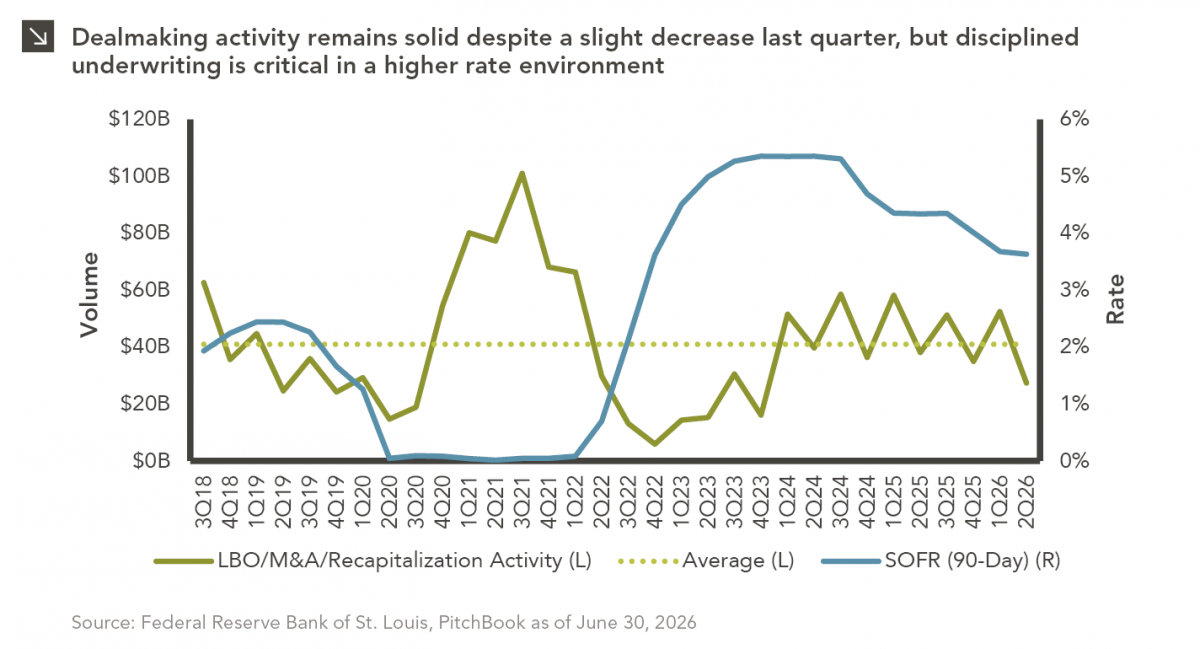
09.21.2026
For much of the past several years, the conventional view has been that higher interest rates and stretched valuations would…
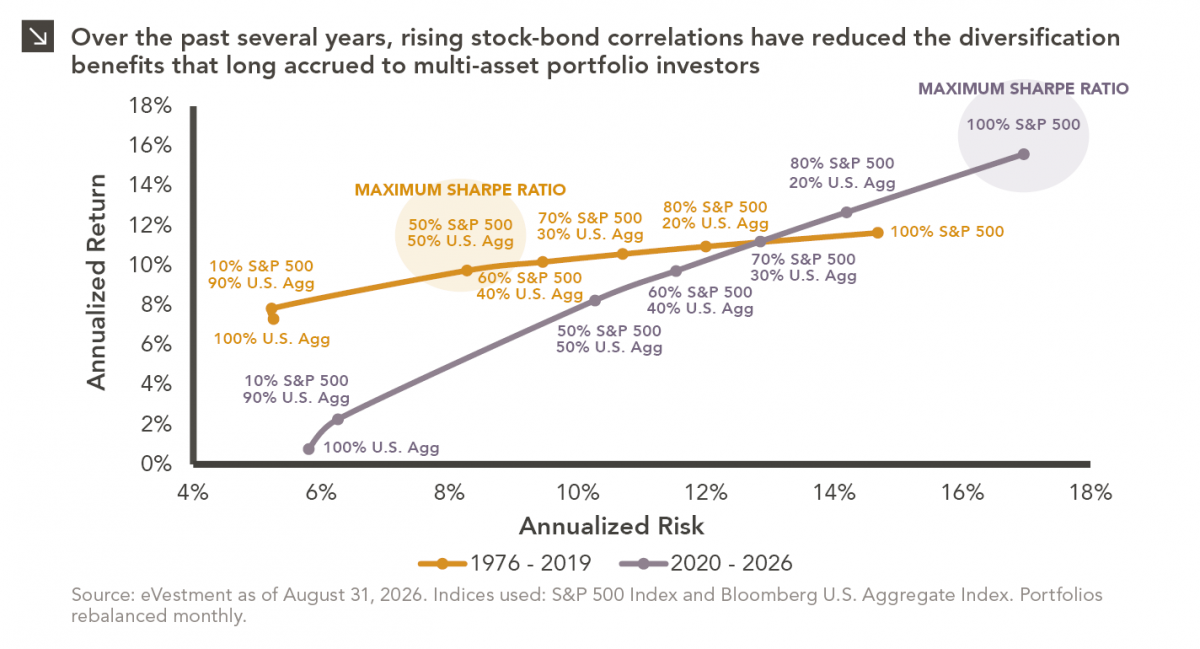
09.14.2026
There are many great things about working at Marquette Associates, but “Free Lunch Tuesday” is right at the top of…
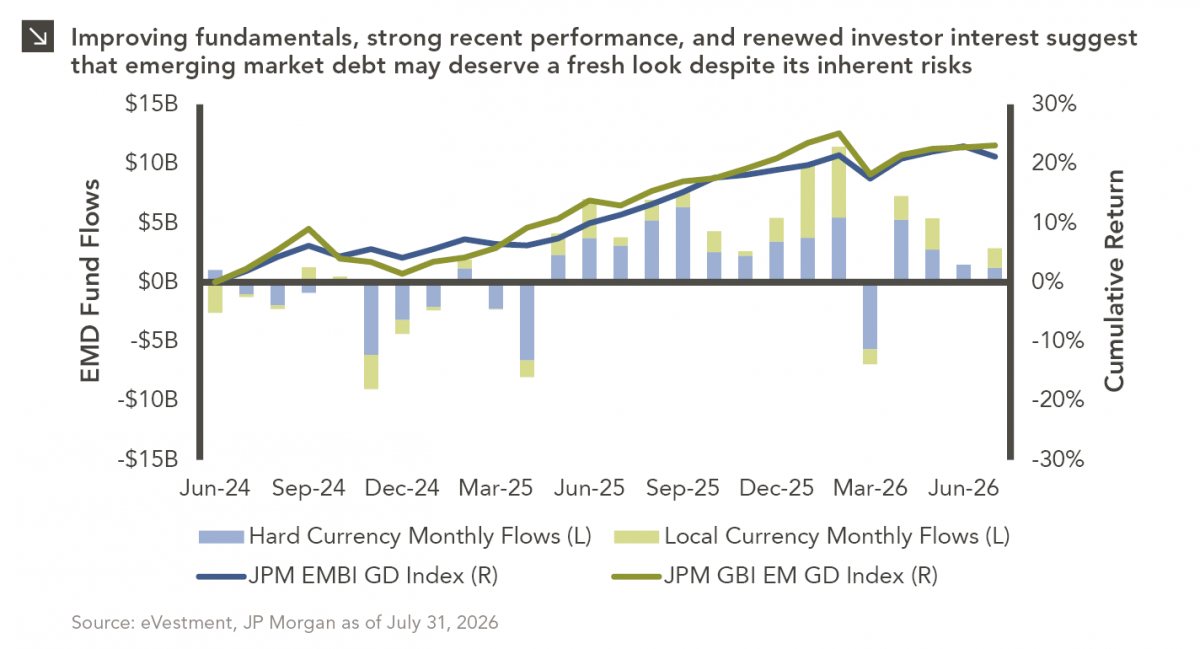
09.08.2026
Over the last several years, emerging market debt (EMD) has faced several headwinds, with rising yields across other fixed income…
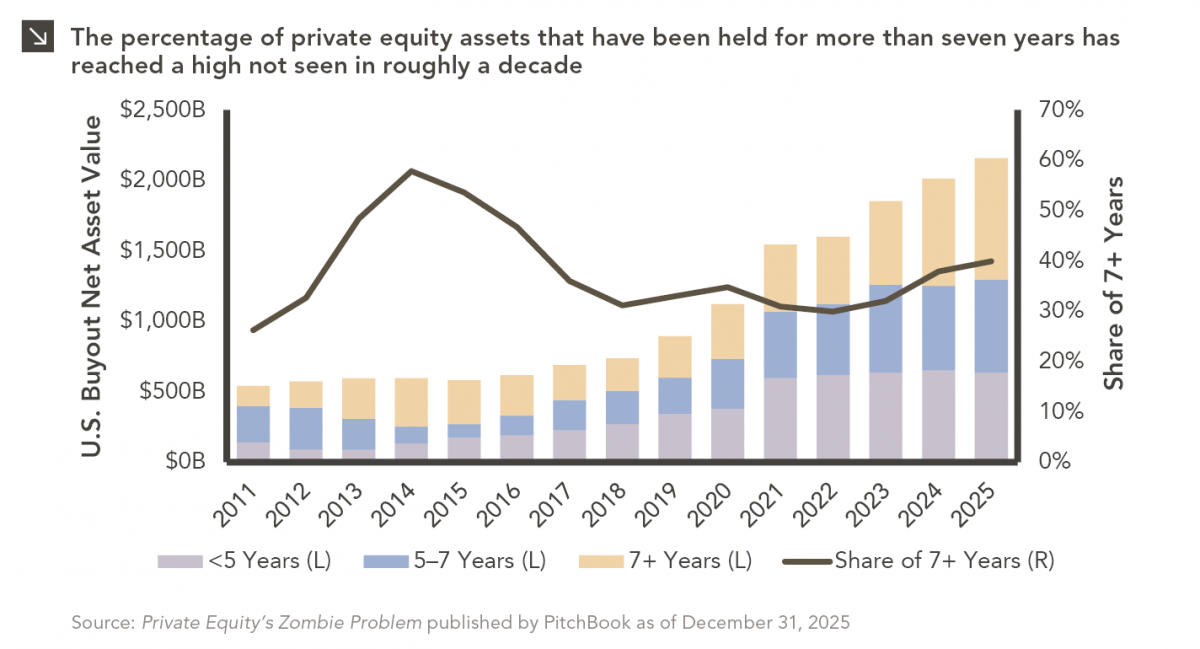
08.31.2026
Private equity has always had a few portfolio companies that refused to leave the party. Today, however, the industry appears…
08.24.2026
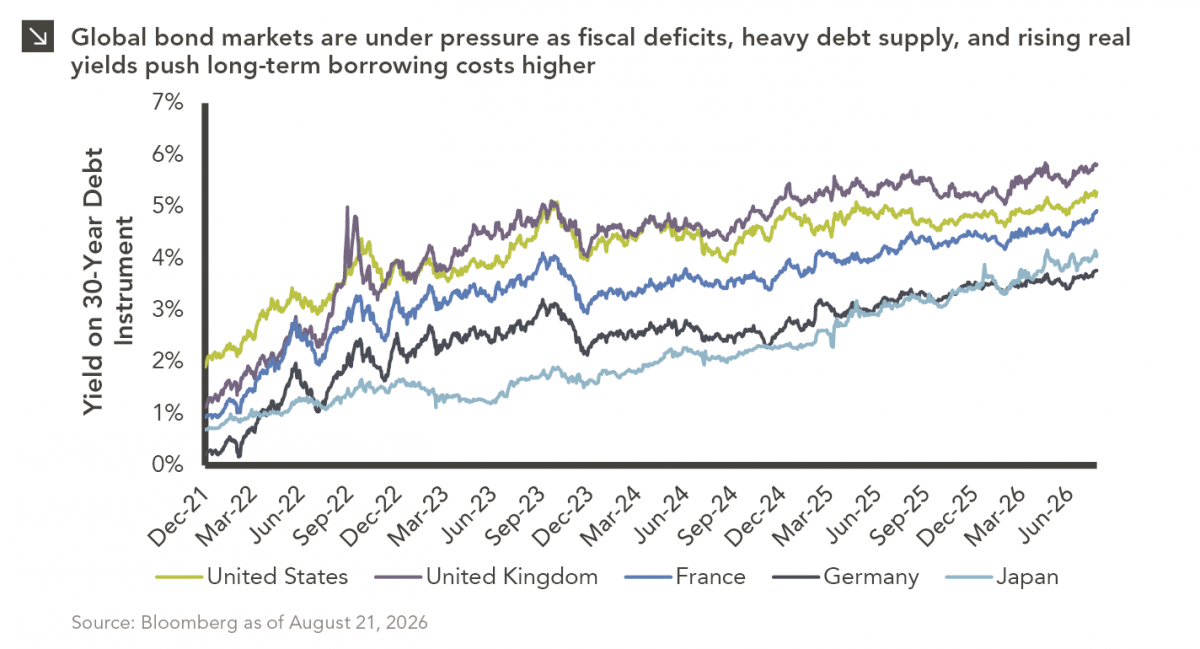
The global bond market is facing renewed pressure as investors demand higher yields to hold long-dated government debt, pushing borrowing…

08.17.2026
As a college football player struggling to put on mass, the “supersizing” deal at McDonald’s was hard to beat. For…
Research alerts keep you updated on our latest research publications. Simply enter your contact information, choose the research alerts you would like to receive and click Subscribe. Alerts will be sent as research is published.
We respect your privacy. We will never share or sell your information.
If you have questions or need further information, please contact us directly and we will respond to your inquiry within 24 hours.
Contact Us >