09.08.2026
EMD’s Second Chance?
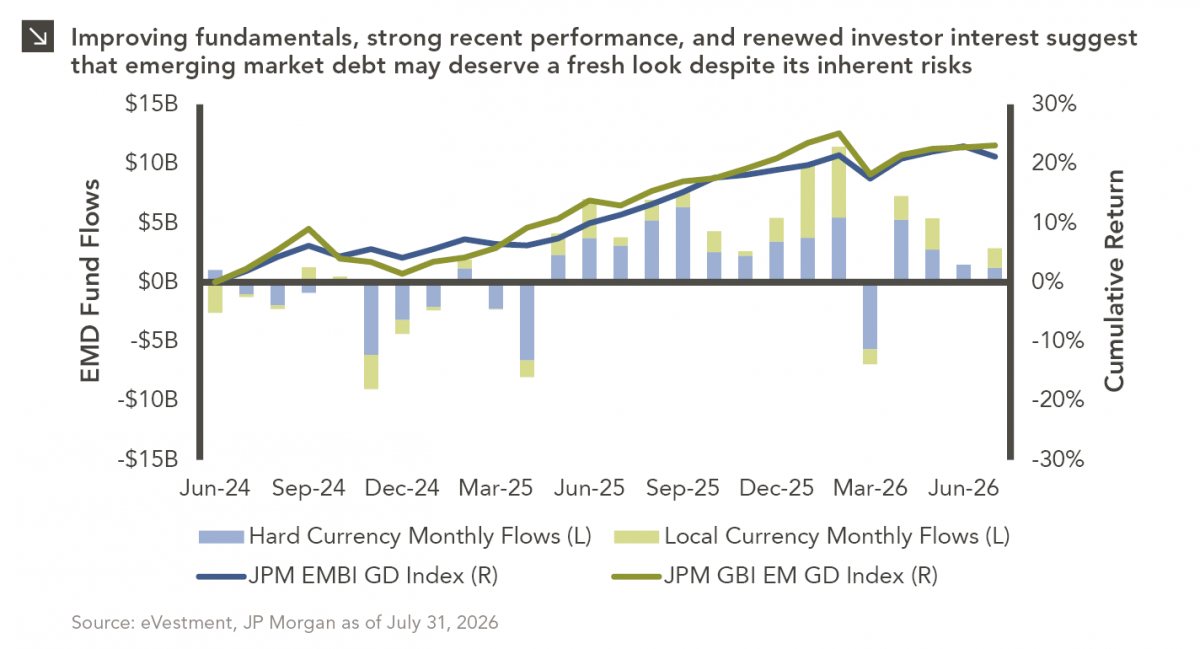
Over the last several years, emerging market debt (EMD) has faced several headwinds, with rising yields across other fixed income…


As many commentators have pointed out, over the past two years the BarCap Aggregate has seen a large increase in its benchmark allocation to treasuries. Since December 2008, treasuries as a percentage of the Agg have grown from 21% to 33% (see first image above – click on thumbnail for larger version). This highlights a drawback of any bond benchmark based on issuance. Issuance based benchmarks by their nature drive allocations not based on expected risk and return, but based on the funding needs of underlying issuers. One of the primary drivers of the increase in treasuries as a percentage of the Agg has been the large federal deficits caused by the 2008 recession necessitating higher treasury issuance. Historical and projected deficits are shown in the second image above (click thumbnail for larger version).
The federal deficit picture shows why the Treasury component of the Agg may stabilize, albeit at a higher level. While the Federal budget remains challenged and the political environment uncertain, through GDP growth alone the Federal deficit will decrease from its peak.
A more important concern for investors is how the change in the composition of the Agg affects the risk and return profile of their fixed income portfolios. If treasuries increased in market weighting in the Agg, clearly other sectors decreased in weighting. The change in sector weighting in the Agg for major sectors is shown below:
|
Treasury |
Credit |
MBS |
Agency |
Securitized |
|
| Chg. In Mkt |
11.02% |
1.16% |
-6.49% |
-2.59% |
-3.10% |
Source: Barcap; changes since December 2008
As treasuries have increased as a percentage of the Agg, MBS, agency bonds, and securitized products (ABS and CMBS) have decreased. This is due to a combination of decreases in issuance, especially for securitized products, and Fed purchases (MBS). Notably, the percentage weight to corporate bonds has remained constant on relatively strong issuance, and the weight to credit as a whole has actually increased.
Over the past 10 years, treasuries have been highly correlated with agencies (0.96) and MBS (0.85), and had a lower correlation with credit (0.62). Returns and standard deviations for the past ten years are shown below:
|
|
Return |
Stdev |
| Treasury |
5.54% |
5.09% |
| Agency |
5.36% |
3.68% |
| MBS |
5.81% |
2.81% |
| Credit |
6.48% |
5.85% |
The opinions expressed herein are those of Marquette Associates, Inc. (“Marquette”), and are subject to change without notice. This material is not financial advice or an offer to purchase or sell any product. Marquette reserves the right to modify its current investment strategies and techniques based on changing market dynamics or client needs.
09.08.2026
Over the last several years, emerging market debt (EMD) has faced several headwinds, with rising yields across other fixed income…
08.31.2026
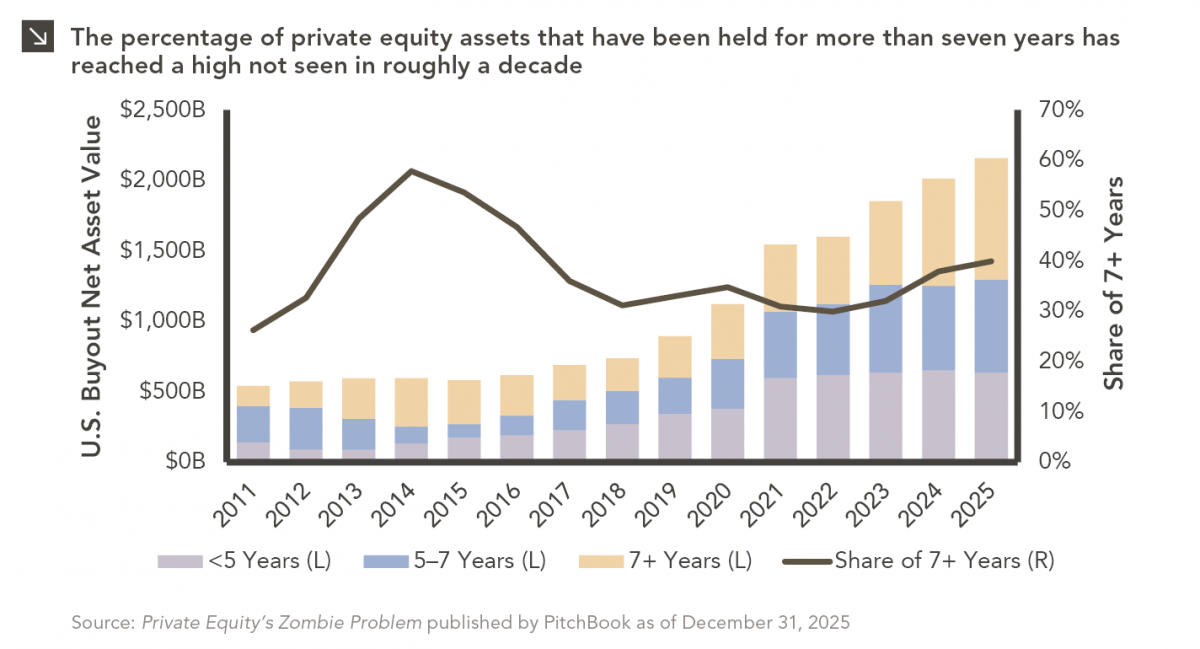
Private equity has always had a few portfolio companies that refused to leave the party. Today, however, the industry appears…
08.24.2026
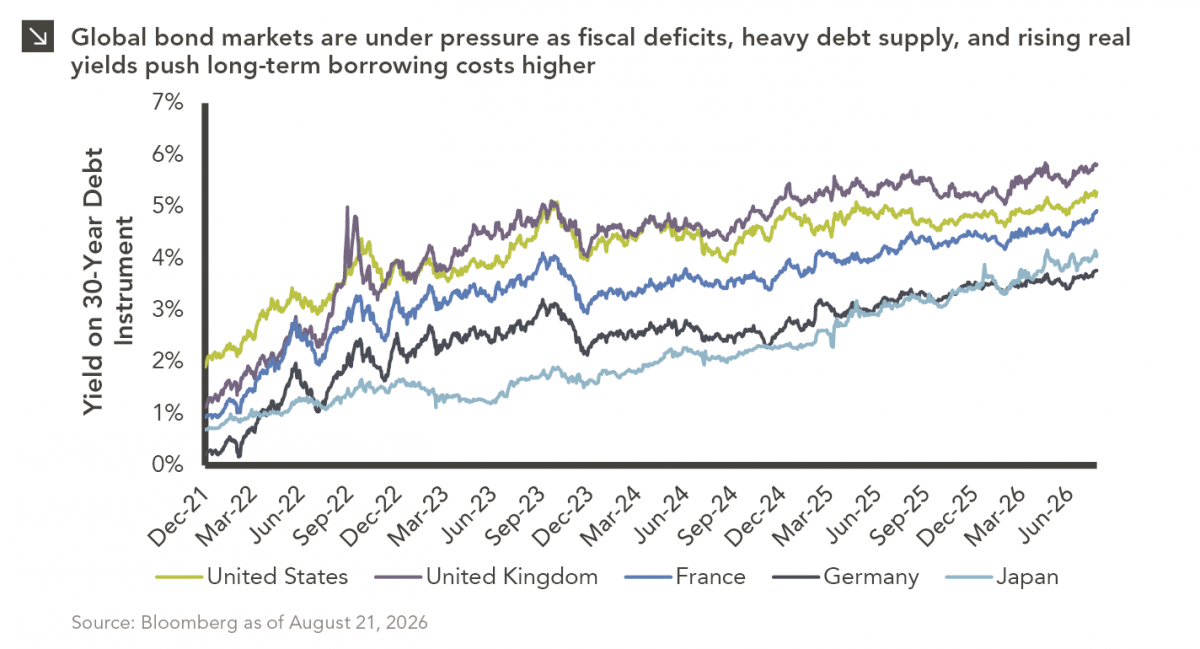
The global bond market is facing renewed pressure as investors demand higher yields to hold long-dated government debt, pushing borrowing…

08.17.2026
As a college football player struggling to put on mass, the “supersizing” deal at McDonald’s was hard to beat. For…
08.10.2026
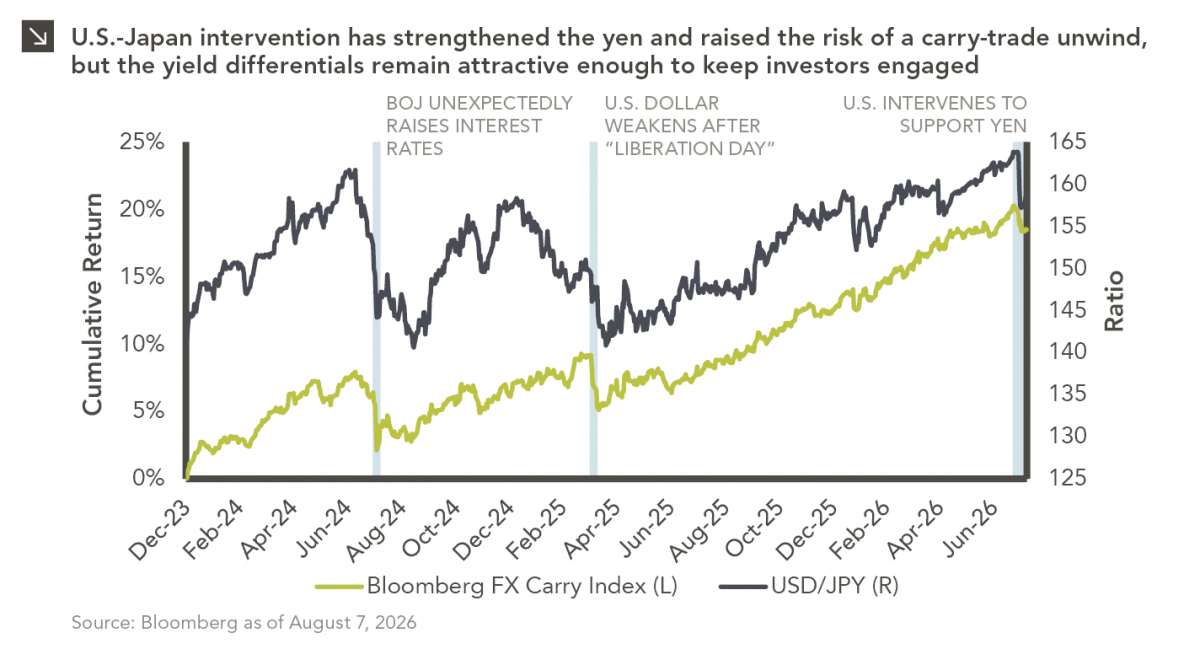
After reaching nearly ¥164 per dollar, its weakest level in roughly four decades, the yen had become a source of…
08.03.2026
In the cinematic masterpiece Rocky IV, Rocky gets dazed by his opponent, Captain Ivan Drago, and complains that he sees…
Research alerts keep you updated on our latest research publications. Simply enter your contact information, choose the research alerts you would like to receive and click Subscribe. Alerts will be sent as research is published.
We respect your privacy. We will never share or sell your information.
If you have questions or need further information, please contact us directly and we will respond to your inquiry within 24 hours.
Contact Us >