09.08.2026
EMD’s Second Chance?
Over the last several years, emerging market debt (EMD) has faced several headwinds, with rising yields across other fixed income…


Small businesses are often thought of as the backbone of the U.S. economy. Long before the coronavirus, the Russell 2000 index, which tracks the performance of domestic small-cap companies, peaked at the end of August 2018. A warning sign of a slowing economy struck at the same time, with the peaking of the ISM Manufacturing Index (PMI), a gauge of domestic manufacturing activity. The tandem crest of these two indices is not too surprising as smaller companies that make inputs or provide services for larger entities are typically squeezed first when the going gets tough. Over the long-term, small-cap returns have shown a higher correlation with domestic manufacturing activity relative to mid- and large-cap returns. Despite the peak of these two indices, the S&P 500 Index, which tracks the performance of domestic large-cap companies, went on to return 16.7% from August of 2018 to its height in February of this year; small-cap returns were flat to negative over the same period. During the worst of the market decline, the Russell 2000 was down 44.1%, underperforming the S&P 500 by nearly 10%, and the PMI hit 41.5, a level not seen since the depths of the Global Financial Crisis. What explains the performance differential between these market cap indices and given the close relation to the PMI, what can we expect from small-cap stocks going forward?
Relative to large-cap, the performance gap lies in quality and construction. Many small companies in the index have low cash reserves, no profits, and debt-laden balance sheets. A lack of access to capital pushes small-cap companies to issue debt at higher rates, creating a lower threshold for quality. Additionally, the small-cap index is more cyclical in nature with a 15% total differential between sectors like interest rate sensitive financials and REITs, as well as economically sensitive industrials. Given this, we might expect the asset class to underperform in the twilight of the longest bull market in U.S. history. Secondarily, the small-cap index has broader sector and industry exposure than the S&P 500. As a result, the closure of the U.S. economy may prove detrimental for many smaller-sized businesses.
In evaluating the last two recessions, there is no consistency as to when the PMI will trough. However, U.S. small-cap returns tend to rebound after a trough in the PMI. Investors like to see a strengthening of the economy prior to betting on small-cap. Looking forward, small-cap stocks usually have better relative performance to their large-cap peers coming out of a recession. The Russell 2000 outperformed the S&P 500 in the last two recessions over the one- and two-year periods post-trough by an average of 26% and 94%, respectively. It is possible we are already starting to see a rebound in small-caps. As of May 26th, the Russell 2000 has outperformed the S&P 500 by nearly 5% month-to-date, the majority of which has accrued over the last week. Small-cap stocks have rebounded on broader containment, economic reopening, and optimism around vaccine development. As is true in every economic downturn, the players here are different; the insurgence of COVID-19 has created an unprecedented headwind for the economically sensitive Russell 2000 Index. Predicting sentiment changes is impractical at best, but as the U.S. consumer economy reopens, we hope to see falling unemployment, rising consumer confidence, and a bottoming of the PMI as domestic production ramps up.
Print PDF > The Confluence of Small-Cap Stocks and the Economy
The opinions expressed herein are those of Marquette Associates, Inc. (“Marquette”), and are subject to change without notice. This material is not financial advice or an offer to purchase or sell any product. Marquette reserves the right to modify its current investment strategies and techniques based on changing market dynamics or client needs.
09.08.2026
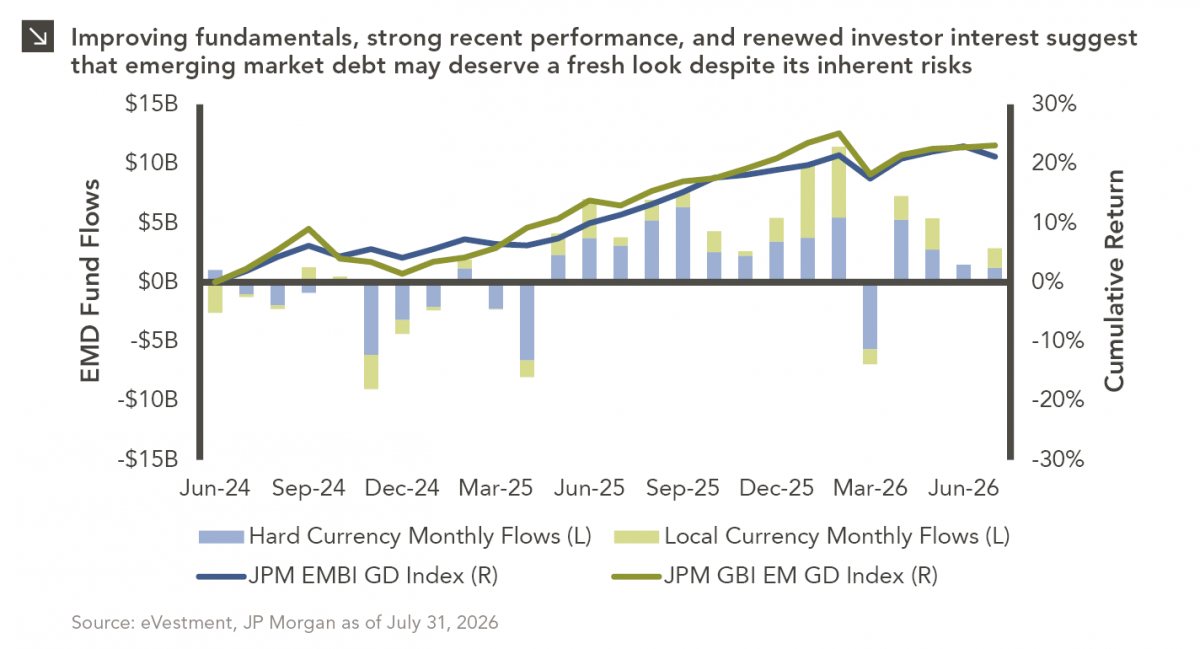
Over the last several years, emerging market debt (EMD) has faced several headwinds, with rising yields across other fixed income…
08.31.2026
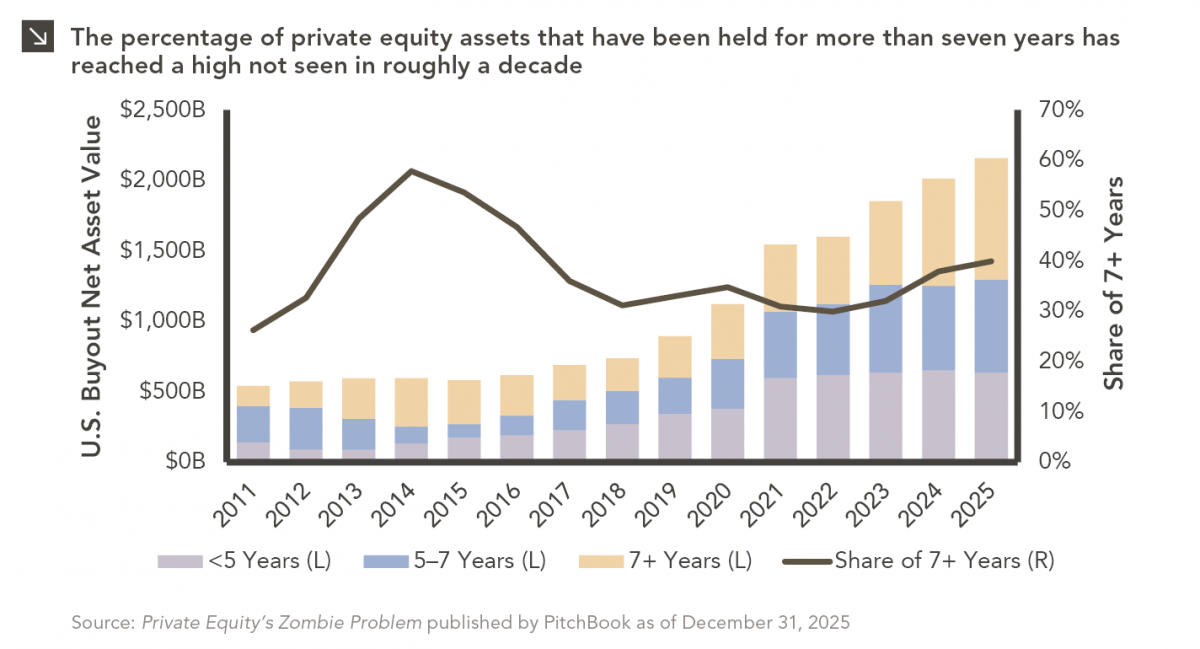
Private equity has always had a few portfolio companies that refused to leave the party. Today, however, the industry appears…
08.24.2026
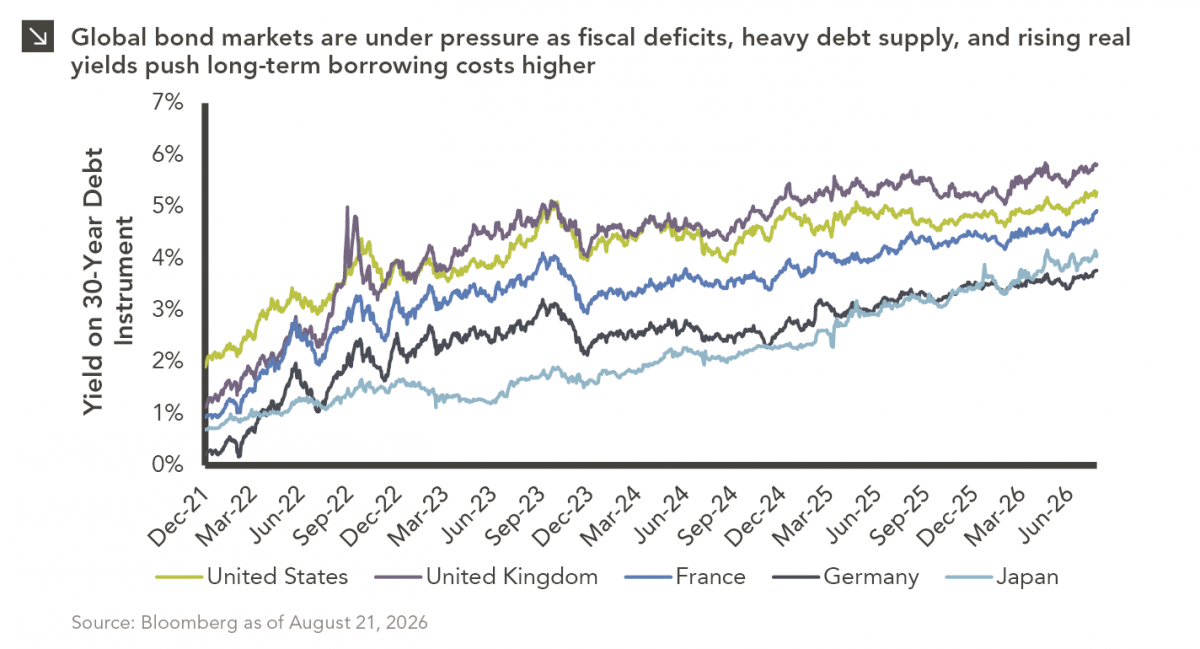
The global bond market is facing renewed pressure as investors demand higher yields to hold long-dated government debt, pushing borrowing…

08.17.2026
As a college football player struggling to put on mass, the “supersizing” deal at McDonald’s was hard to beat. For…
08.10.2026
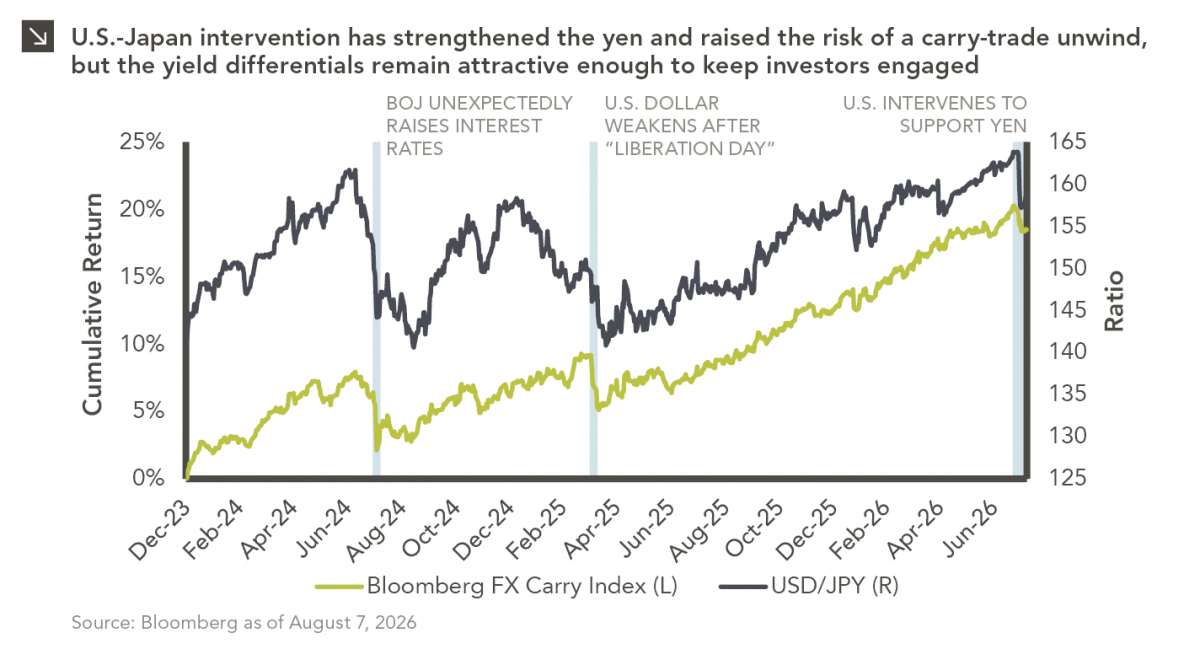
After reaching nearly ¥164 per dollar, its weakest level in roughly four decades, the yen had become a source of…
08.03.2026
In the cinematic masterpiece Rocky IV, Rocky gets dazed by his opponent, Captain Ivan Drago, and complains that he sees…
Research alerts keep you updated on our latest research publications. Simply enter your contact information, choose the research alerts you would like to receive and click Subscribe. Alerts will be sent as research is published.
We respect your privacy. We will never share or sell your information.
If you have questions or need further information, please contact us directly and we will respond to your inquiry within 24 hours.
Contact Us >