09.08.2026
EMD’s Second Chance?
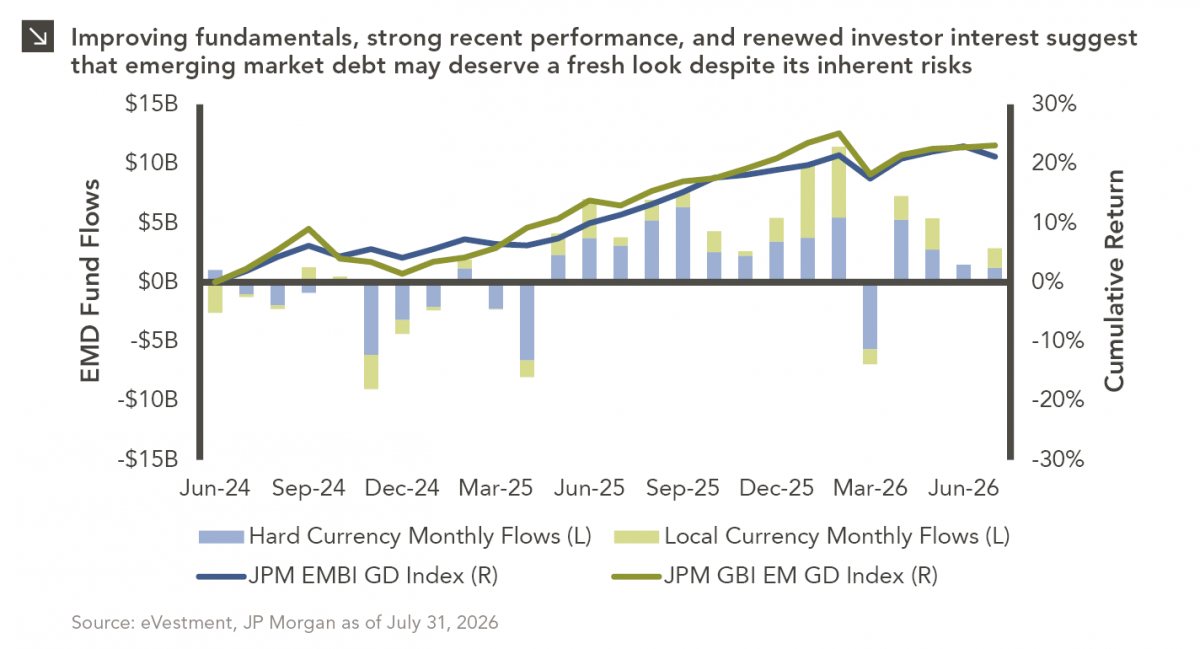
Over the last several years, emerging market debt (EMD) has faced several headwinds, with rising yields across other fixed income…


This week’s chart shows the change in the velocity of the money from 1959 through 2011 along with the growth in the monetary base. Velocity measures the frequency with which a unit of money changes hands in an economy over a given period of time. This figure can be viewed as a general gauge of activity taking place within an economy. The monetary base represents liquid currency as well as close substitutes for money including currency in circulation, bank vaults, and bank reserves. In monetary economics, the quantity theory of money states that money supply multiplied by velocity equals real GDP times the price level.
Money Supply * Velocity = Real GDP * Price Level
This implies that the price level has a direct relationship with the supply of money in an economy. As the chart shows, the monetary base is at the highest level on record, which would normally lead to an increase in the price level (inflation). However, velocity is at the lowest level since record keeping began in 1959 and is the primary reason inflation remains subdued, despite the large increase in the money supply.
The Federal Reserve has more than doubled the monetary base since December 2007 through quantitative easing in hopes of stimulating borrowing and spending. However, increases in the monetary base have largely sat idle in bank reserves as banks increased their capital ratios, tightened lending standards, and overall loan demand levels decreased, causing the velocity of money to fall. Given the current economic slack in the U.S., it is unlikely that the Federal Reserve’s monetary policies will cause inflationary issues in the near term as long as velocity remains low. However, once economic activity begins to pick up, policy tightening will be essential to reduce potential inflation pressures.
The opinions expressed herein are those of Marquette Associates, Inc. (“Marquette”), and are subject to change without notice. This material is not financial advice or an offer to purchase or sell any product. Marquette reserves the right to modify its current investment strategies and techniques based on changing market dynamics or client needs.
09.08.2026
Over the last several years, emerging market debt (EMD) has faced several headwinds, with rising yields across other fixed income…
08.31.2026
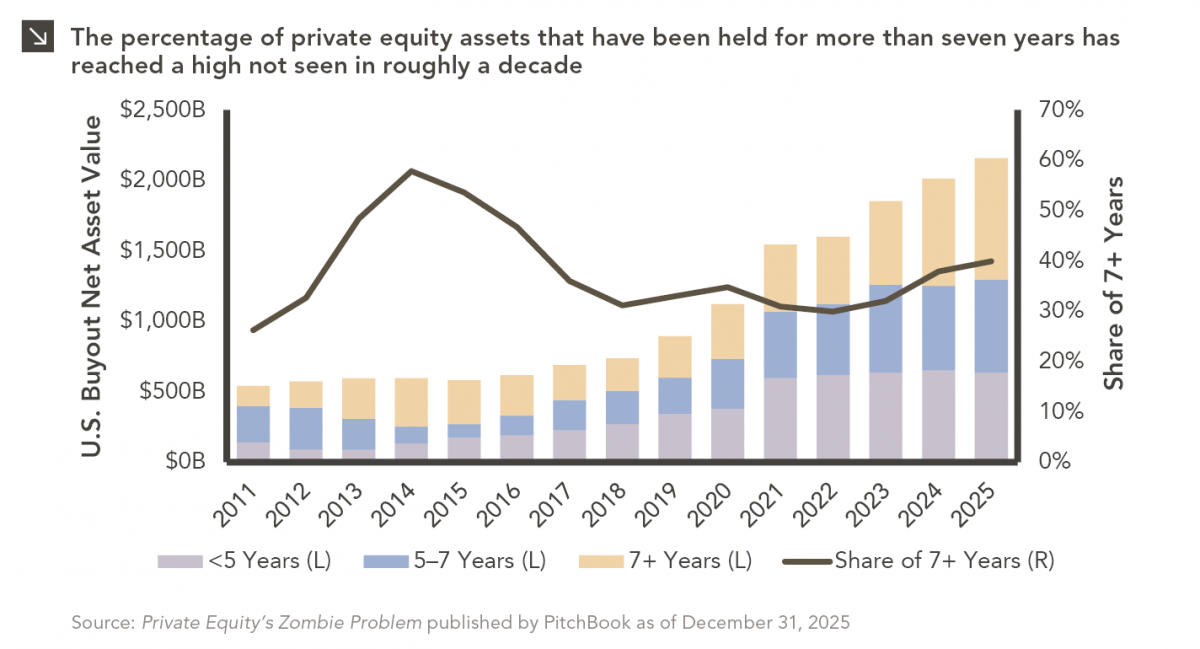
Private equity has always had a few portfolio companies that refused to leave the party. Today, however, the industry appears…
08.24.2026
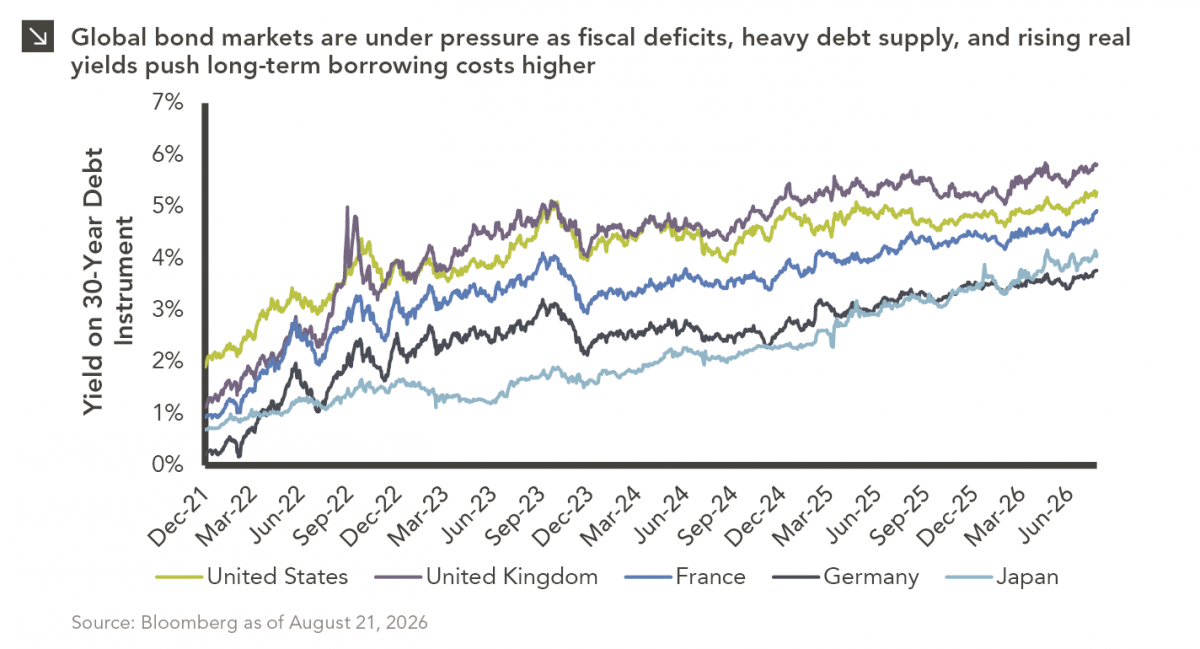
The global bond market is facing renewed pressure as investors demand higher yields to hold long-dated government debt, pushing borrowing…

08.17.2026
As a college football player struggling to put on mass, the “supersizing” deal at McDonald’s was hard to beat. For…
08.10.2026
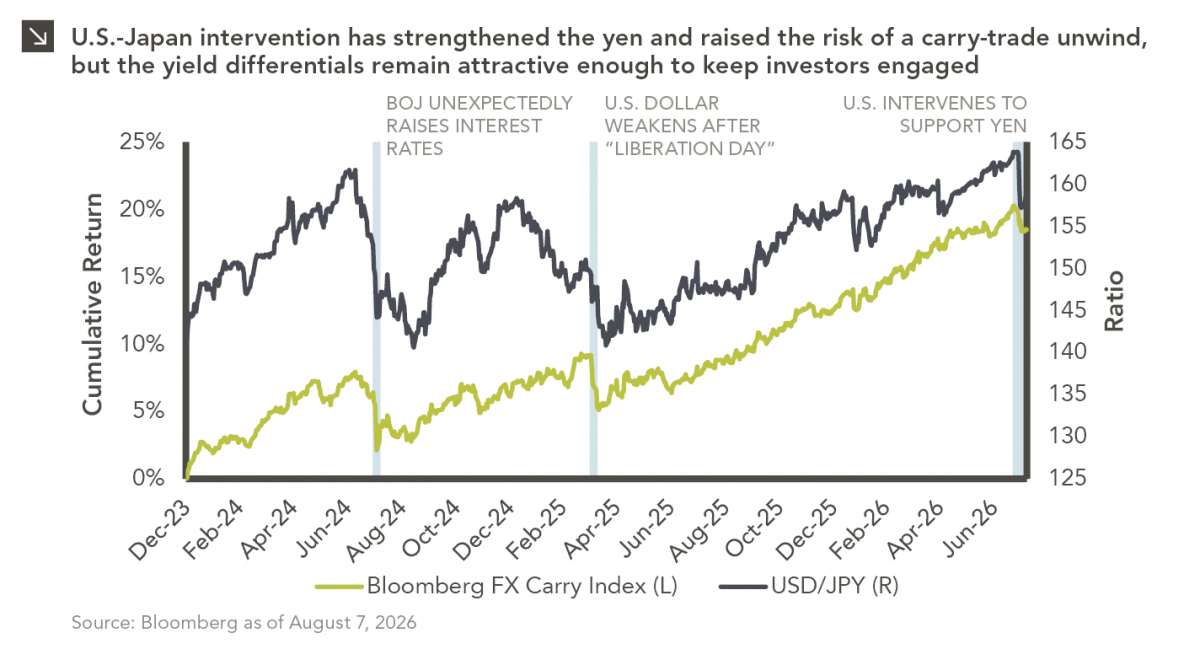
After reaching nearly ¥164 per dollar, its weakest level in roughly four decades, the yen had become a source of…
08.03.2026
In the cinematic masterpiece Rocky IV, Rocky gets dazed by his opponent, Captain Ivan Drago, and complains that he sees…
Research alerts keep you updated on our latest research publications. Simply enter your contact information, choose the research alerts you would like to receive and click Subscribe. Alerts will be sent as research is published.
We respect your privacy. We will never share or sell your information.
If you have questions or need further information, please contact us directly and we will respond to your inquiry within 24 hours.
Contact Us >