01.20.2026
Concentrating on Market Concentration
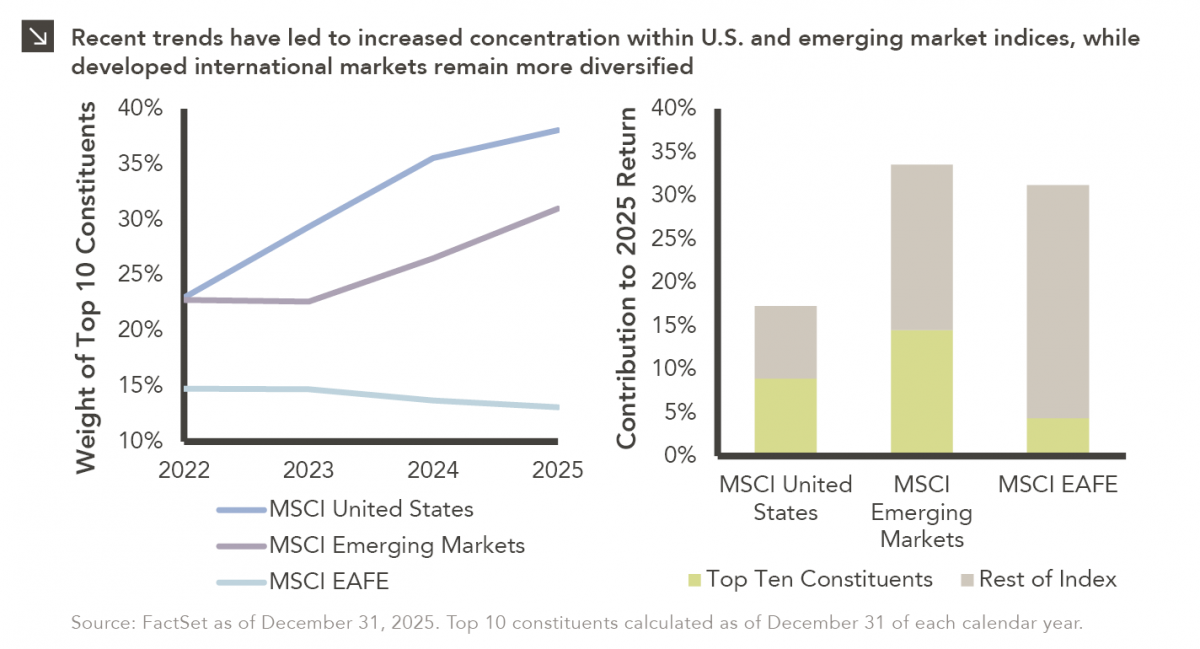
Last week, Alphabet joined NVIDIA, Microsoft and Apple as the only companies to ever reach a market capitalization of $4…


Earlier this year, the regional banking crisis and eventual collapses of Silicon Valley Bank, Signature Bank, First Republic Bank, and Silvergate Bank highlighted issues related to bank assets (e.g., U.S. Treasuries and mortgage-backed securities) sharply losing value due to higher interest rates. In many of these cases, uninsured depositors learned of growing unrealized losses at the institutions in question and feared the worst (i.e., that banks would become insolvent and pull deposits). Unfortunately, the story of declining bank asset values is relevant not only to uninsured regional banks, but to FDIC-insured depository institutions as well. To that point, the most recently published FDIC Quarterly Banking Profile highlighted growing unrealized losses across these institutions. Specifically, unrealized losses on securities totaled $558.4 billion in the second quarter of 2023, which represents an increase of $42.9 billion from the previous period. Rate hikes have certainly exacerbated these figures, as current losses are more than two standard deviations removed from the average levels exhibited since the Global Financial Crisis. An understanding of the implications of increased losses across different security types (e.g., available-for-sale vs. held-to-maturity) can be particularly useful. Notably, while held-to-maturity securities are reported as noncurrent assets on a company’s financial statements and earned interest income appears on a company’s income statement, changes in the prices of these securities are not reflected on the income statement if the securities have maturities longer than one year. As a result, some financial metrics (e.g., earnings) of certain banks may be somewhat overstated at present.
Even today, interest rates continue to chip away at the value of bank assets, and additional upward pressure on rates may strain bank profitability as held-to-maturity securities approach maturity. Banks will be hoping that the end of the current rate hiking cycle comes before these losses make their way to the income statement, which could cause many to question the health of various institutions. On a positive note, the FOMC announced during its most recent meeting that it would be holding its policy rate at a constant level, which may assuage some investor concerns related to this topic. Marquette will continue to monitor the impact of interest rates on the banking sector and the overall economy.
Print PDFThe opinions expressed herein are those of Marquette Associates, Inc. (“Marquette”), and are subject to change without notice. This material is not financial advice or an offer to purchase or sell any product. Marquette reserves the right to modify its current investment strategies and techniques based on changing market dynamics or client needs.
01.20.2026
Last week, Alphabet joined NVIDIA, Microsoft and Apple as the only companies to ever reach a market capitalization of $4…

01.07.2026
This video is a recording of a live webinar held January 15 by Marquette’s research team analyzing 2025 across the…

01.14.2026
Contrary to widespread belief, fixed income aggregate strategies offer a continuum of active risk and return profiles. While aggregate strategies…
01.12.2026
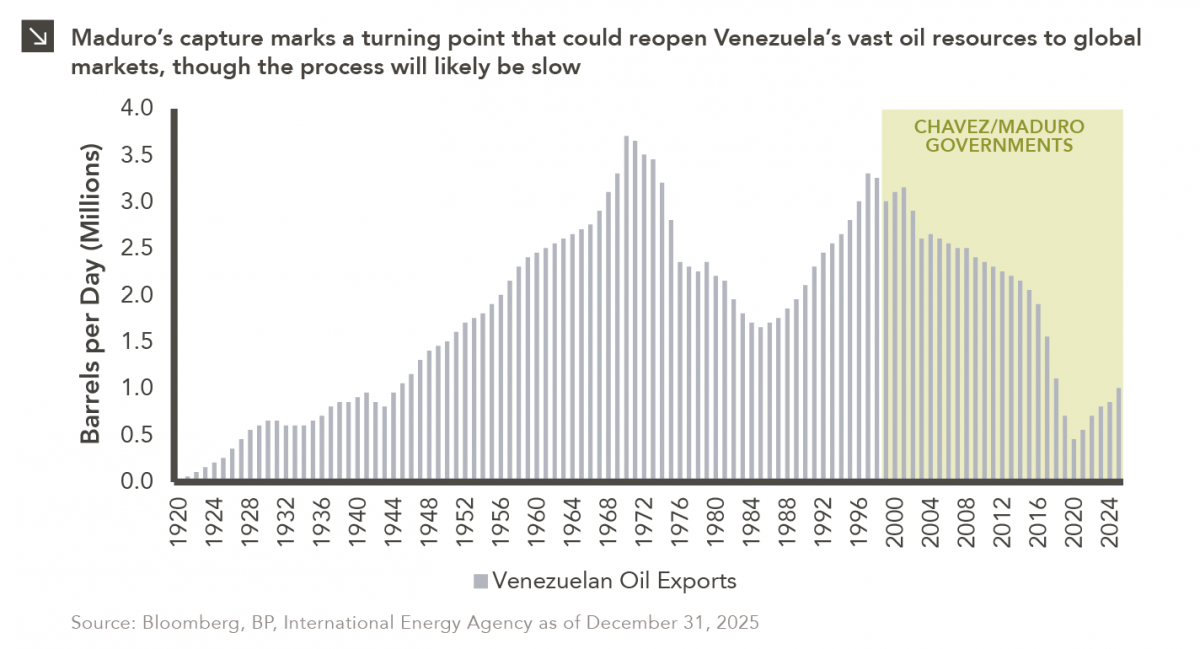
The capture of Venezuelan president Nicolás Maduro is a watershed moment for a country whose natural resource economy has been…

01.05.2026
The development of artificial intelligence is advancing along two largely distinct paths. The first centers on generative AI powered by…

12.29.2025
While the holiday season was once marked by bustling bars, readers may notice that nightlife isn’t what it used to…
Research alerts keep you updated on our latest research publications. Simply enter your contact information, choose the research alerts you would like to receive and click Subscribe. Alerts will be sent as research is published.
We respect your privacy. We will never share or sell your information.
If you have questions or need further information, please contact us directly and we will respond to your inquiry within 24 hours.
Contact Us >