Amy Miller
Associate Director of Private Equity


In investment management, asset allocators and their advisors frequently revisit the concept of portfolio diversification — whether by geography, market capitalization, security, or industry. While Marquette advocates for a diversified portfolio within private markets, it is important to recognize that not all diversification strategies are equally effective. Certain industry characteristics make specific sectors more attractive for private investments, particularly those that exhibit sustainable growth driven by favorable demographic or secular trends, fragmentation, capital constraints, and market inefficiencies. These features are often advantageous in private markets as they create opportunities for value enhancement and potential alpha generation.
Within the private equity asset class, five core sectors — what we refer to as the “magnificent five” — have consistently dominated merger and acquisition activity over the past six years. These sectors are healthcare, technology, industrials, business services, and financial services. According to Dealogic, over 60% of deals across 13 tracked industries have been concentrated within these five sectors, as measured by transaction count. Moreover, these industries have outperformed relative to top-quartile multiple on invested capital (MOIC). It is therefore logical that private equity managers would focus their capital in areas with higher probabilities of outsized returns, which in turn shapes the composition of investor portfolios. It is also important to note that this concentration also intensifies competition for deals within these sectors.
A critical point to consider is the dispersion of returns between top and bottom quartiles across industries — the wider the dispersion, the greater the risk. It is no surprise that the highest-performing industries, healthcare and technology, are often heavily represented in private equity portfolios. In this competitive and risk-laden environment, particularly within the private equity asset class, manager selection becomes increasingly crucial for investors seeking to achieve superior outcomes.
Print PDF
The opinions expressed herein are those of Marquette Associates, Inc. (“Marquette”), and are subject to change without notice. This material is not financial advice or an offer to purchase or sell any product. Marquette reserves the right to modify its current investment strategies and techniques based on changing market dynamics or client needs.

07.07.2026
JULY 23 — 1:00pm CT Please join Marquette’s research team for our 2026 Halftime Market Insights Webinar…
07.06.2026
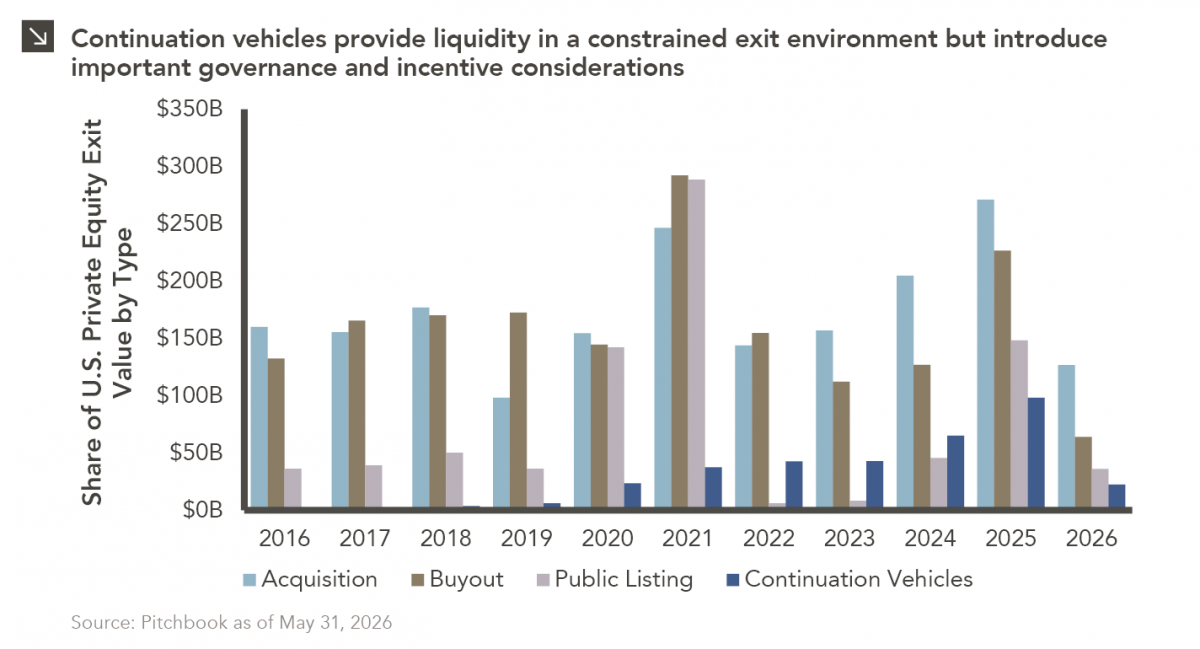
Since traditional exit routes have remained constrained in recent years due to higher interest rates, valuation gaps, and a subdued…
06.29.2026
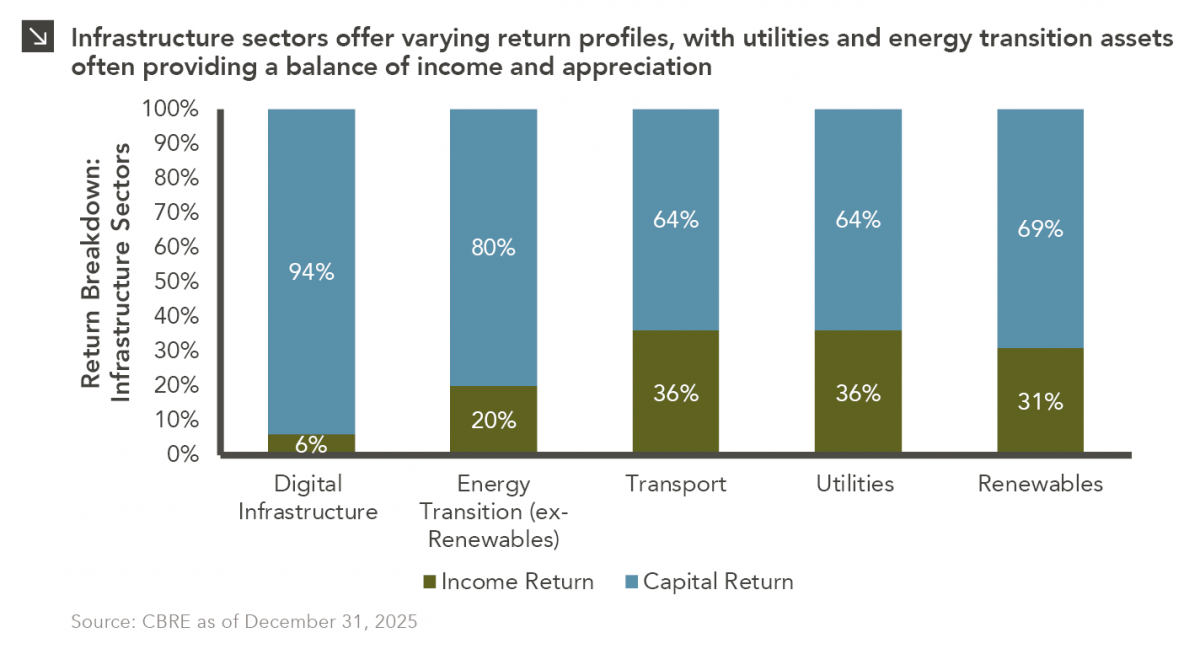
This week’s chart highlights the varying return profiles across key infrastructure sectors by illustrating the split between income and capital…

06.25.2026
Commodities represent a unique asset class within global financial markets. Like equities and bonds, commodity prices are influenced by the…
06.22.2026
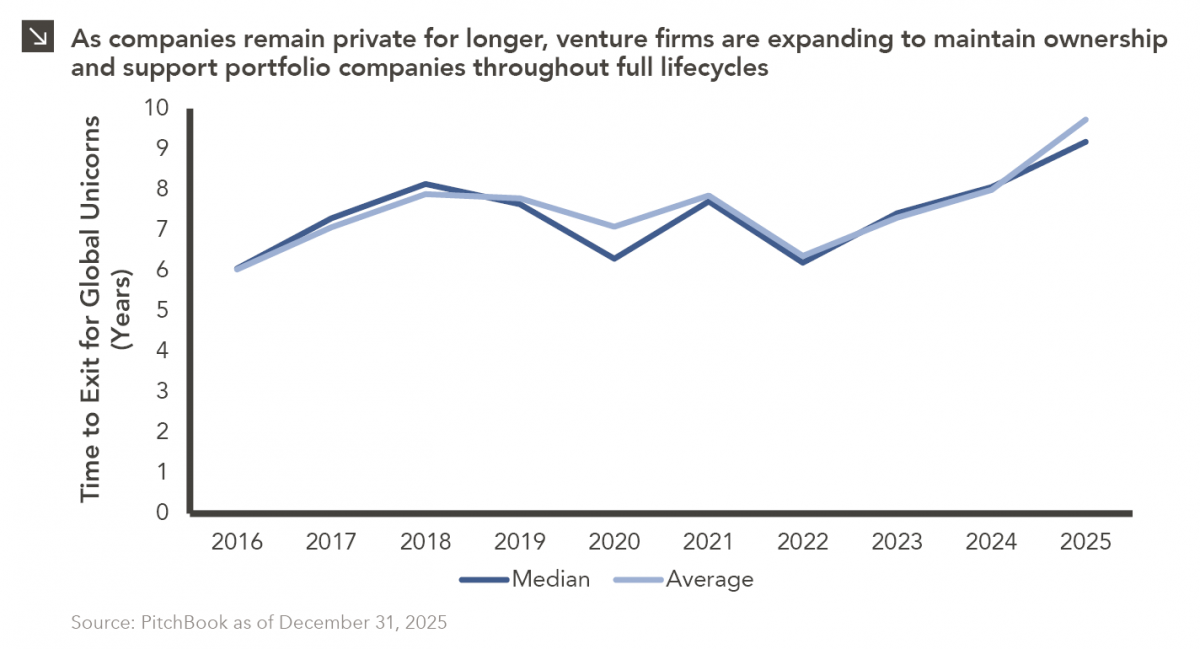
When Benchmark, one of Silicon Valley’s most renowned early-stage venture capital firms, closed $2 billion across two new funds this…
06.15.2026
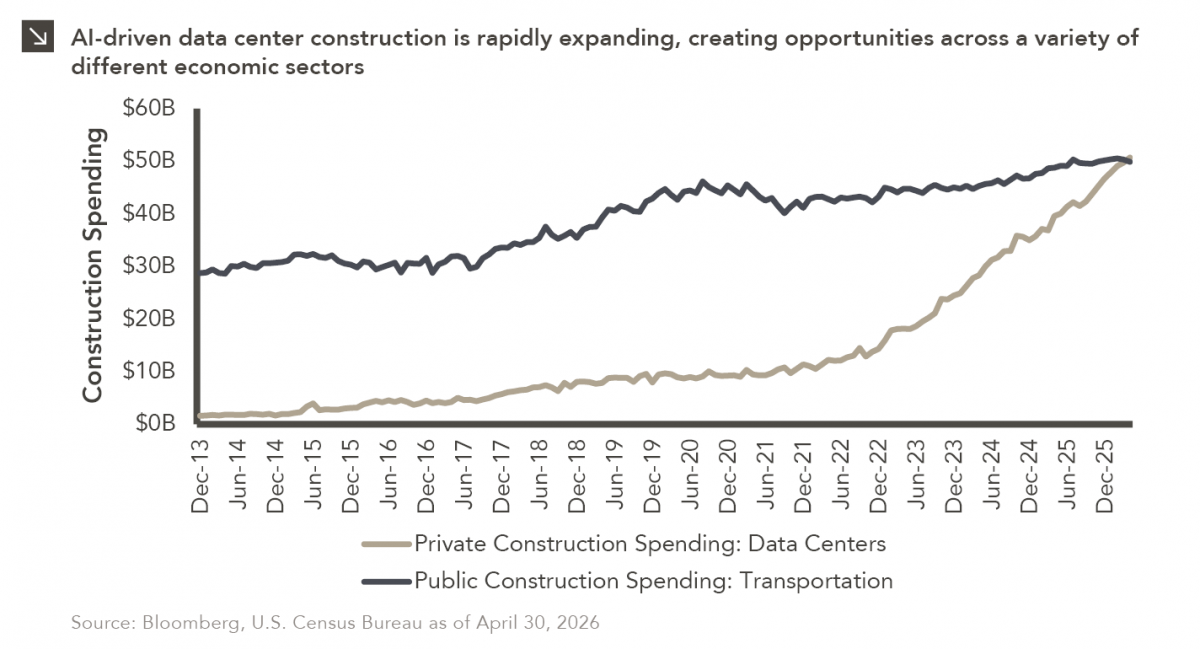
The rapid buildout of artificial intelligence infrastructure is reshaping the U.S. investment landscape. According to recent Census Bureau data, spending…
Research alerts keep you updated on our latest research publications. Simply enter your contact information, choose the research alerts you would like to receive and click Subscribe. Alerts will be sent as research is published.
We respect your privacy. We will never share or sell your information.
If you have questions or need further information, please contact us directly and we will respond to your inquiry within 24 hours.
Contact Us >