Evan Frazier, CFA, CAIA
Senior Research Analyst


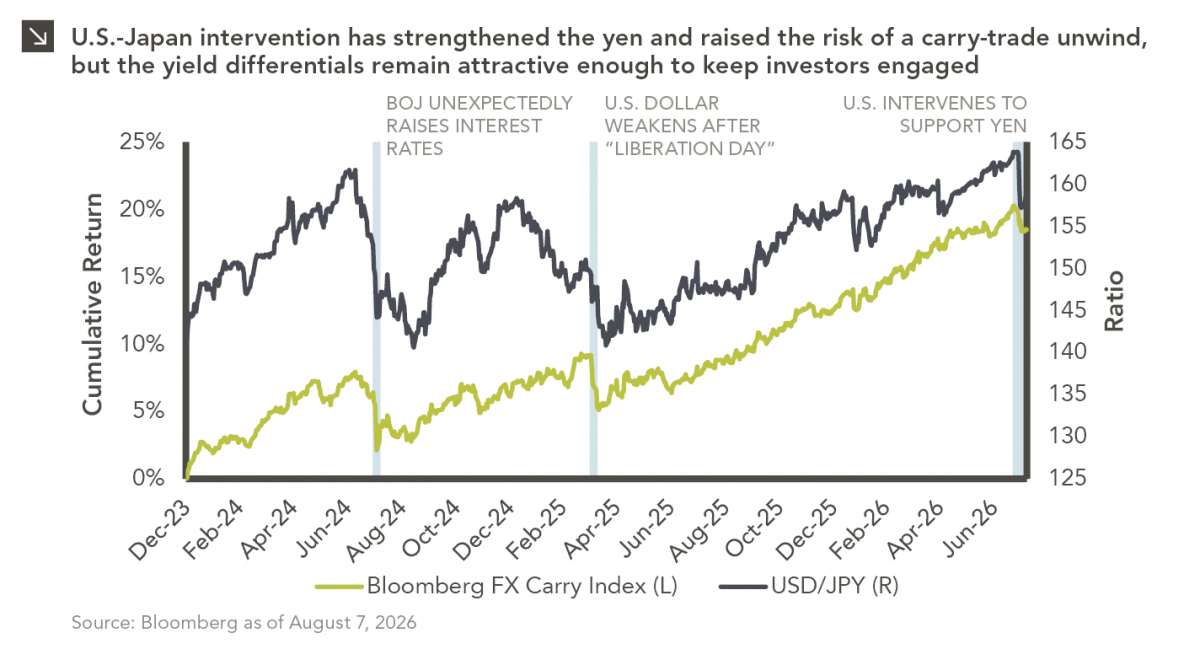
After reaching nearly ¥164 per dollar, its weakest level in roughly four decades, the yen had become a source of extreme concern for Japanese policymakers. On July 31, the U.S. Treasury joined Japan in buying yen in an effort to buoy the currency, representing the first coordinated U.S.-Japan yen intervention in nearly three decades. This development pushed USD/JPY sharply lower, with the yen briefly strengthening by roughly 5% from its pre-intervention level. The exact amount of U.S. support for the yen remains undisclosed, but the scale of the currency’s recovery suggests that the intervention may have exceeded the levels seen in 1998 and 2011, when U.S. contributions were each below $1 billion. Japan, meanwhile, is estimated to have deployed roughly $53 billion in a single day, which would represent a record amount of intervention. Treasury Secretary Scott Bessent has subsequently indicated that Washington is prepared to do “whatever it takes” to further support the currency, arguing that an excessively weak yen could encourage competitive devaluations elsewhere in Asia and ultimately create broader economic instability.
An important topic for global investors is what this intervention means for the yen-funded carry trade. This trade is mechanically simple: investors borrow in yen at relatively low interest rates, convert the proceeds into another currency, and invest in higher-yielding assets. Carry trade returns therefore come from both interest-rate differentials and favorable currency movements (provided the funding currency remains weak or stable). For years, this has made the yen an attractive funding source for positions in higher-yielding currencies, global equities, credit, and other risk assets. The catch is that carry trades are highly sensitive to fluctuations in the funding currency. A sudden appreciation in the funding currency can overwhelm months of accumulated interest income, forcing leveraged investors to close positions by buying back the funding currency and selling the assets they purchased with the borrowed funds. Similar circumstances were evident two years ago, when a stronger yen and changing expectations around Bank of Japan policy contributed to a rapid deleveraging across global markets. Many have highlighted a similar vulnerability in recent weeks, noting that the yen’s approach toward ¥164 per dollar was raising the risk of an intervention-driven carry-trade unwind.
An interesting feature of the current episode is that the intervention has not produced a full-scale carry trade unwind, with the Bloomberg FX Carry Index only down 1.3% in the last ten trading days. Equity markets have also largely shaken off the implications of U.S. intervention in the yen, with most major indices notching gains in recent weeks. These developments indicate that investors are increasingly treating the yen’s appreciation as something to hedge around rather than as a reason to abandon the carry trade altogether. This distinction is important to highlight. If the yen strengthens gradually and predictably, investors can hedge the currency exposure while continuing to collect the interest differential. If, however, intervention creates expectations of a sustained and disorderly yen rally, the calculus changes materially because leveraged investors have less incentive to maintain positions whose currency risk could overwhelm the carry. U.S. involvement therefore has a somewhat paradoxical effect on carry trade dynamics. By making intervention more credible, Washington and Tokyo may reduce the probability of an uncontrolled carry-trade unwind in the near term, while simultaneously increasing the sensitivity of investors to future yen moves. Bessent’s willingness to intervene again effectively puts a floor under the yen’s downside risk but also introduces a new source of asymmetric risk for investors who remain short yen. In other words, intervention does not necessarily kill the carry trade, but it may make the trade less one-sided.
Ultimately, the durability of the intervention will depend less on the amount of yen purchased than on whether underlying interest-rate and policy dynamics begin to move in Japan’s favor. Currency intervention can change positioning and market psychology, but it cannot permanently overcome a large yield differential if investors continue to believe the yen will remain structurally cheap. The U.S. and Japan appear to recognize this distinction. Bessent has described the intervention as providing Japan with time to implement policies that can support the currency, while markets continue to look to the Bank of Japan for evidence that rates can rise further. The immediate result is therefore likely to be a more cautious, hedged version of the yen carry trade rather than its outright disappearance. Investors may continue to seek the attractive yield pickup available outside Japan, but the willingness to run unhedged yen-funded leverage should diminish going forward. One risk to watch for is the possibility of yen appreciation for reasons beyond intervention (e.g., faster BOJ tightening or a meaningful narrowing of the U.S.-Japan rate differential), which would create the conditions for a much more consequential carry-trade unwind. For now, however, the intervention appears to have succeeded in changing the risk profile of the carry trade without fundamentally changing its economics.
Print PDF
The opinions expressed herein are those of Marquette Associates, Inc. (“Marquette”), and are subject to change without notice. This material is not financial advice or an offer to purchase or sell any product. Marquette reserves the right to modify its current investment strategies and techniques based on changing market dynamics or client needs.
10.12.2026
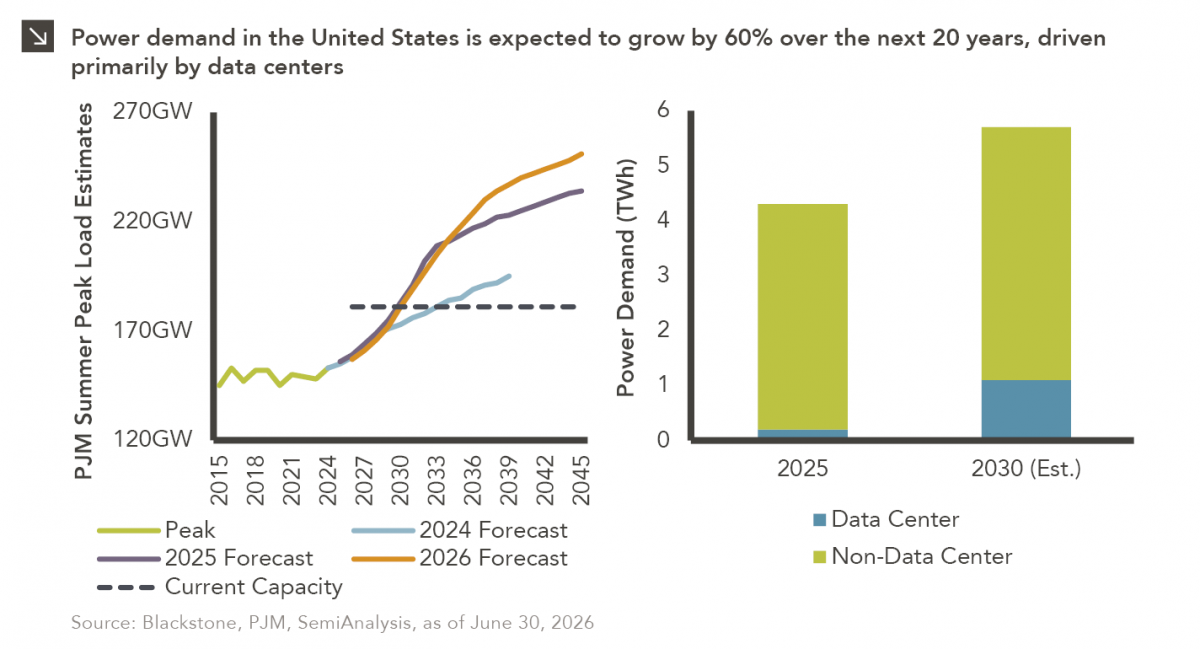
This week’s chart highlights the accelerating growth of electricity demand in the U.S., which has been driven primarily by the…

10.08.2026
LIVE WEBINAR — OCTOBER 22 Please join Marquette’s research team for our 3Q 2026 Market Insights Webinar…
10.05.2026
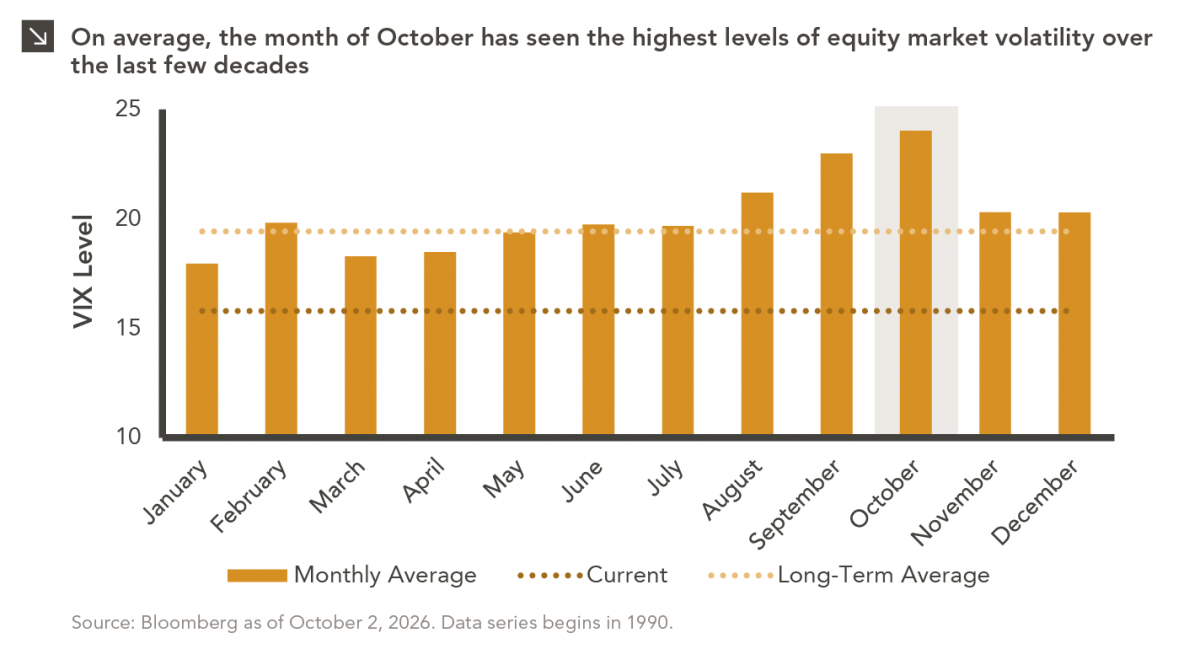
For investors, the spookiest thing about October might not be the ghosts and monsters that are bound to show up…
09.28.2026
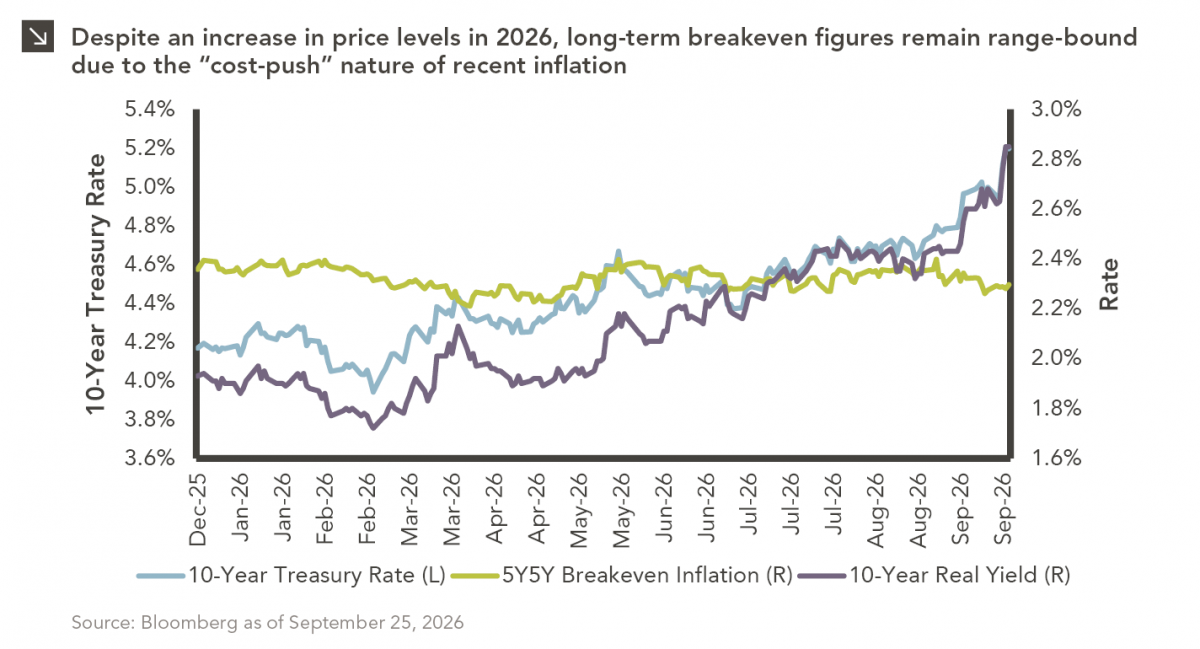
The phrase “expectations of higher inflation” has become a staple in financial news to explain the increase in nominal U.S….
09.21.2026
For much of the past several years, the conventional view has been that higher interest rates and stretched valuations would…
09.14.2026
There are many great things about working at Marquette Associates, but “Free Lunch Tuesday” is right at the top of…
Research alerts keep you updated on our latest research publications. Simply enter your contact information, choose the research alerts you would like to receive and click Subscribe. Alerts will be sent as research is published.
We respect your privacy. We will never share or sell your information.
If you have questions or need further information, please contact us directly and we will respond to your inquiry within 24 hours.
Contact Us >