09.08.2026
EMD’s Second Chance?
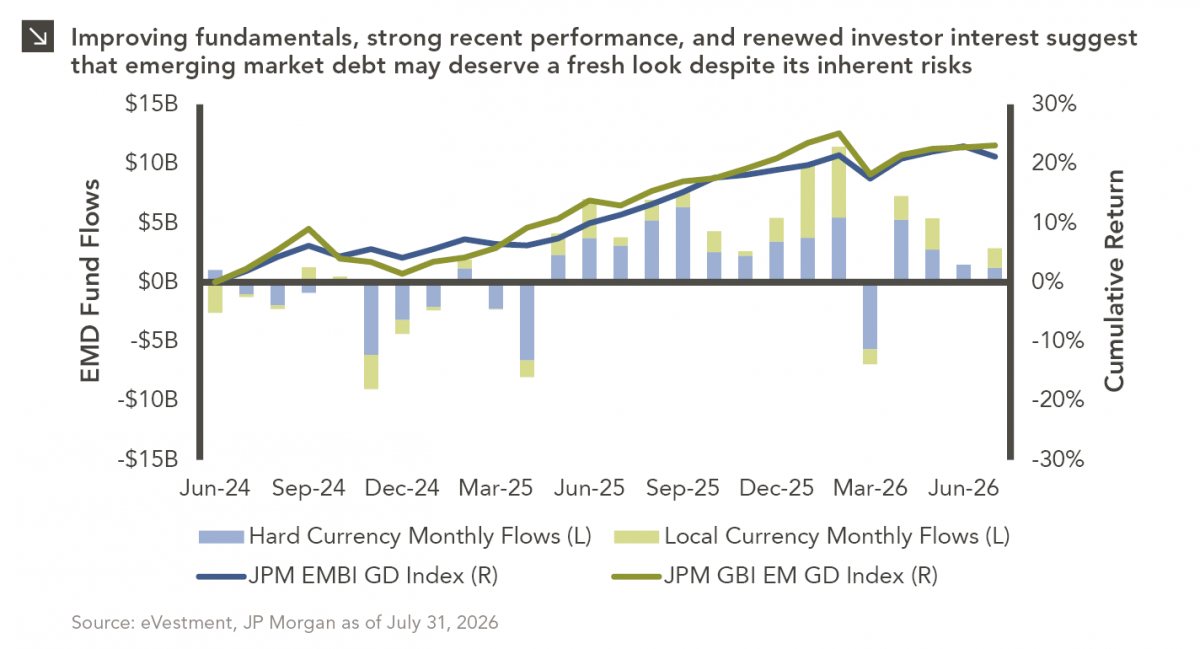
Over the last several years, emerging market debt (EMD) has faced several headwinds, with rising yields across other fixed income…


The Federal Reserve’s two central aims are to keep unemployment below a 5% threshold and inflation near a 2% constant. This week’s chart looks at how the Federal Reserve addressed these aims as they cut interest rates on Wednesday, July 31st, 2019, for the first time since the 2008 Financial Crisis from a fed funds target rate of 2.25%–2.5% to 2.0%–2.25%. This well-telegraphed and long-expected 25 basis point cut signals a shift in the Fed’s monetary policy towards one of dovish1 stimulus after a period of hawkishness from 2015 to 2018 that saw the Fed raise the fed funds target rate nine times from 0–0.25% to 2.25%–2.5%. In conjunction with this rate cut, the Fed also halted the run-off of their balance sheet by restarting their reinvestment in government bonds, effectively infusing more cash into the economy to provide further support.
As shown in the chart, this latest interest rate cut occurs with unemployment well below their 5% threshold — which by itself shows that stimulus is not necessary, while inflation is lower than their 2% target — which by itself shows that some stimulus would not hurt. The reasons for the Fed’s cut include a persistently slow global economy, weak business earnings environment, high U.S. rates relative to low and negative rates2 set by other central banks, the fact that low unemployment has not been driving inflation higher, and potential threats to global growth including Brexit and the tariff escalation between the U.S. and several countries, such as China.
For more information, please reference our full newsletter on the topic.
Print > The Fed’s First Post-Recession Economic Stimulus
1 Dovishness is a term used to describe central banks and central bankers who want to provide economic stimulus to keep unemployment low by reducing interest rates, which makes it easier for businesses to borrow and therefore hire people because of greater economic activity. This is in contrast with hawkishness, which describes central banks and central bankers who want to slow the economy down in order to contain inflation by raising interest rates, which makes it tougher for businesses to borrow and therefore restrains prices because of less economic activity.
2 Negative interest rates have recently become more prevalent among German and Japanese short term bonds as those economies continue to languish and their governments continue to provide more stimulus.
The opinions expressed herein are those of Marquette Associates, Inc. (“Marquette”), and are subject to change without notice. This material is not financial advice or an offer to purchase or sell any product. Marquette reserves the right to modify its current investment strategies and techniques based on changing market dynamics or client needs.
The opinions expressed herein are those of Marquette Associates, Inc. (“Marquette”), and are subject to change without notice. This material is not financial advice or an offer to purchase or sell any product. Marquette reserves the right to modify its current investment strategies and techniques based on changing market dynamics or client needs.
09.08.2026
Over the last several years, emerging market debt (EMD) has faced several headwinds, with rising yields across other fixed income…
08.31.2026
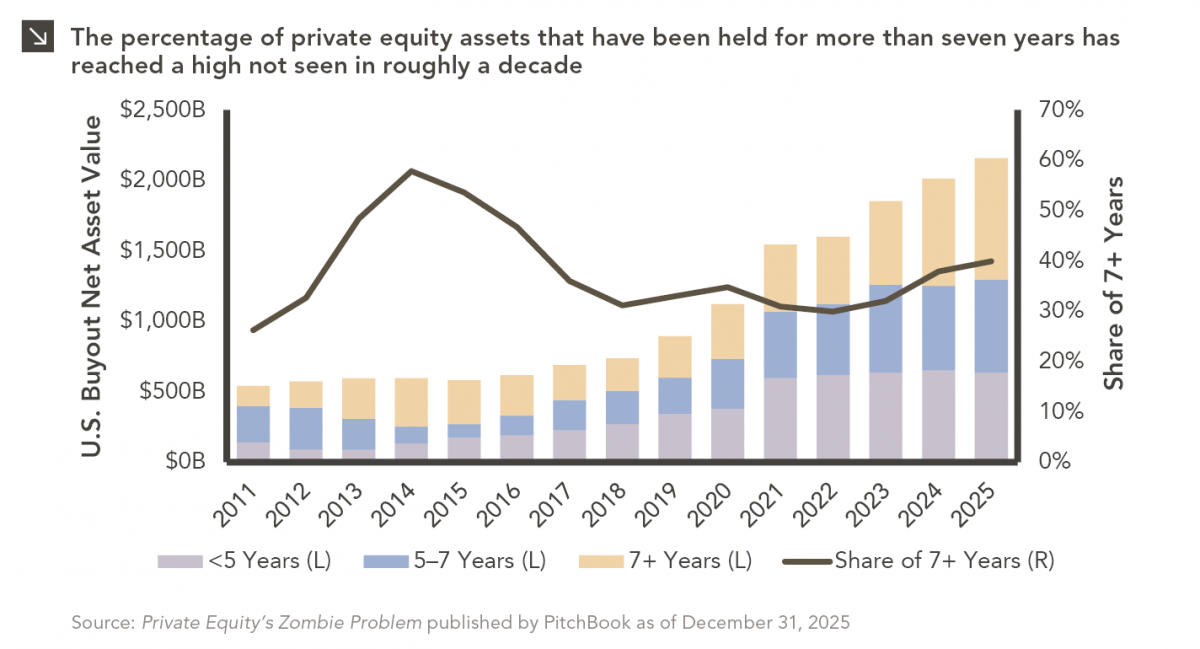
Private equity has always had a few portfolio companies that refused to leave the party. Today, however, the industry appears…
08.24.2026
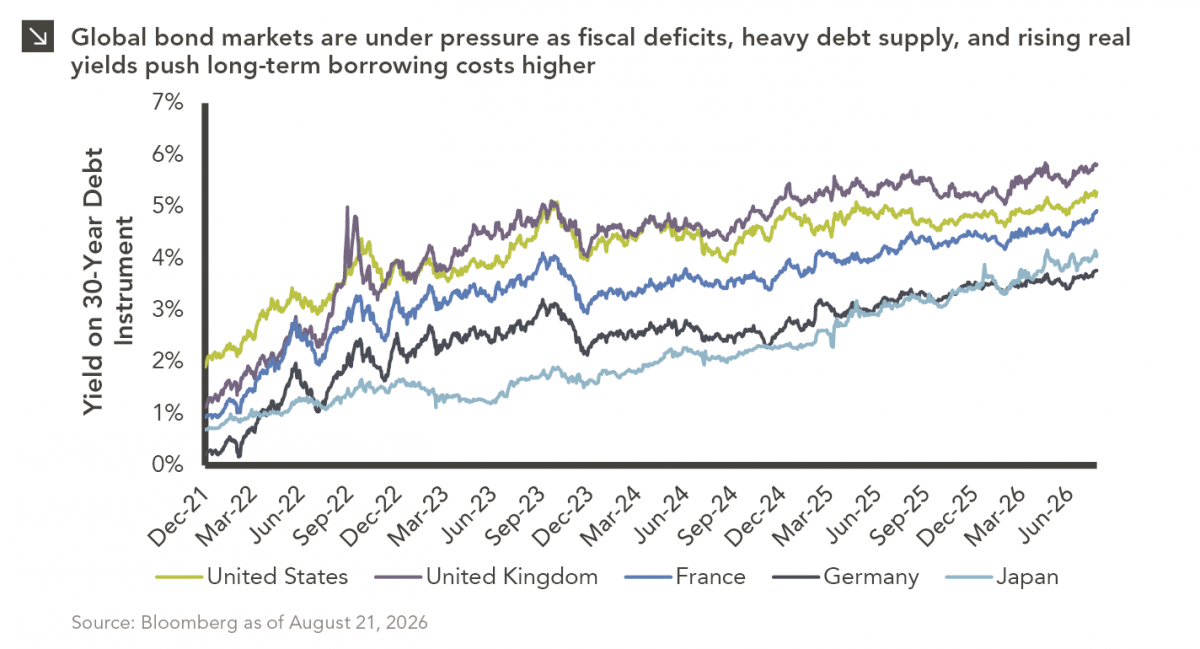
The global bond market is facing renewed pressure as investors demand higher yields to hold long-dated government debt, pushing borrowing…

08.17.2026
As a college football player struggling to put on mass, the “supersizing” deal at McDonald’s was hard to beat. For…
08.10.2026
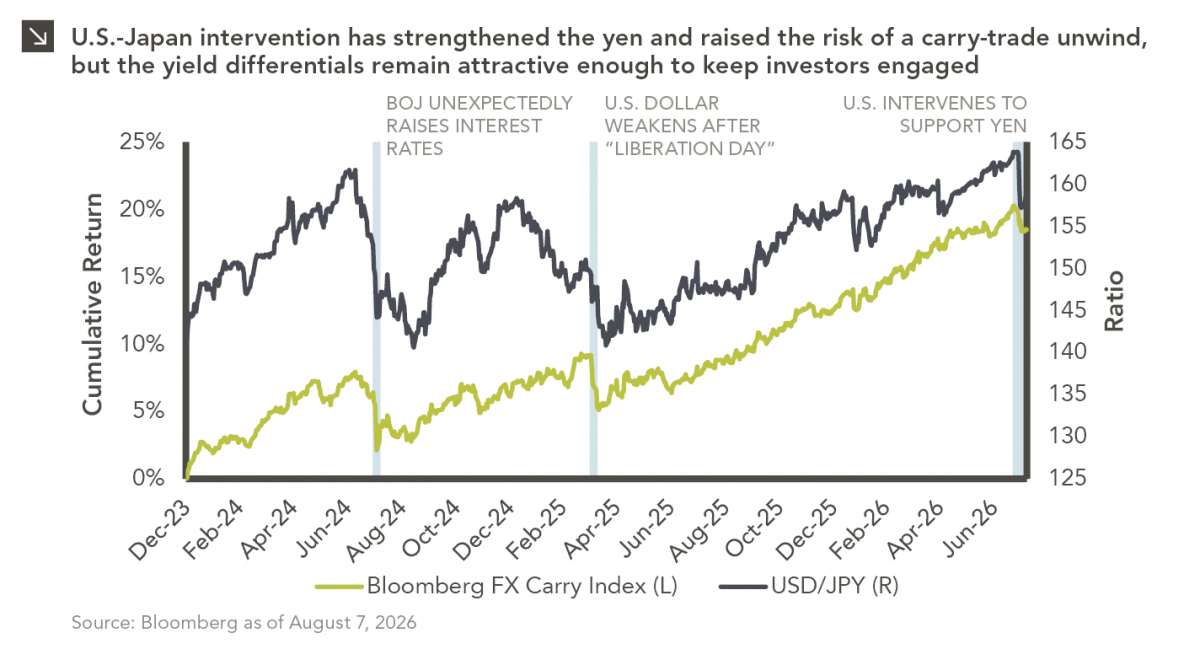
After reaching nearly ¥164 per dollar, its weakest level in roughly four decades, the yen had become a source of…
08.03.2026
In the cinematic masterpiece Rocky IV, Rocky gets dazed by his opponent, Captain Ivan Drago, and complains that he sees…
Research alerts keep you updated on our latest research publications. Simply enter your contact information, choose the research alerts you would like to receive and click Subscribe. Alerts will be sent as research is published.
We respect your privacy. We will never share or sell your information.
If you have questions or need further information, please contact us directly and we will respond to your inquiry within 24 hours.
Contact Us >