11.09.2026
C’s Get Degrees (of Pain)
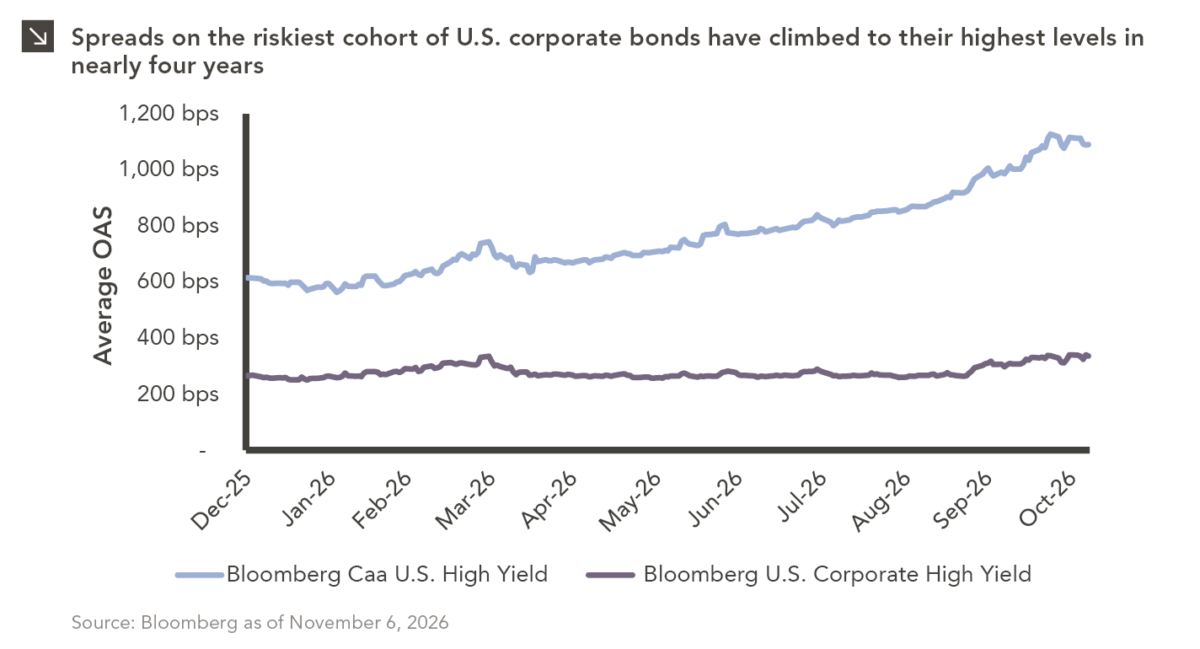
The U.S. distressed debt market is showing increasingly pronounced signs of stress. As of this writing, option-adjusted spreads on CCC-rated…


While there is still much uncertainty around the long-term economic ramifications of COVID-19, financial markets have been undergoing frequent massive swings as both investment managers and allocators evaluate the situation and what it might mean for their current and future investments. Given the illiquid and slow-moving nature of private equity investments, an outstanding question is: What will this mean for private market investors?
One principle which people took serious note of in the last crisis was something called the “denominator effect.” A decline in the value of one asset should result in other assets being sold to properly rebalance a portfolio, but many assets like venture capital (“VC”), private equity (“PE”), and others can be quite hard to sell in the short-to-medium term, leaving LPs overallocated to private markets. When the stock market falls dramatically, public market investments fall in value immediately; however, private market investments do not reflect the changing environment right away because they require a manual valuation process that is one to two quarters behind public markets.
In addition, LPs allocating to PE and VC can expect net cash flows to turn negative, a break from the norm of recent years when distributions outpaced contributions, which led to positive net cash flows. During a time of crisis, GPs dislike realizing investments at diminished valuations. Instead, they tend to further invest into existing portfolio companies, or at least hold those companies longer, which leads to reduced distributions. Furthermore, GPs also tend to call down capital more slowly during times of market crisis because deal-making slows substantially. It is forecasted that it will take months, possibly even until the end of the year for transaction volumes to rebound.
The exact repercussions the crisis will have on PE fund performance will remain unknown until we know how deeply the virus will affect global economies. However, we do believe private markets will fare well in the current market environment. Research indicates that while PE exhibits high correlation with public market performance over longer periods of time, in times of volatility it tends to drop less and subsequently outperform. Funds deploying cash through the crisis are in a favorable position to deliver elevated returns given the higher likelihood of finding a bargain in a crisis. Previous crisis funds, such as 2001 or 2009 vintages, posted top-tier metrics; the hope is that this pandemic is consistent with these previous patterns for private equity returns.
Print PDF > Private Equity in Times of Crisis
The opinions expressed herein are those of Marquette Associates, Inc. (“Marquette”), and are subject to change without notice. This material is not financial advice or an offer to purchase or sell any product. Marquette reserves the right to modify its current investment strategies and techniques based on changing market dynamics or client needs.
11.09.2026
The U.S. distressed debt market is showing increasingly pronounced signs of stress. As of this writing, option-adjusted spreads on CCC-rated…
11.02.2026
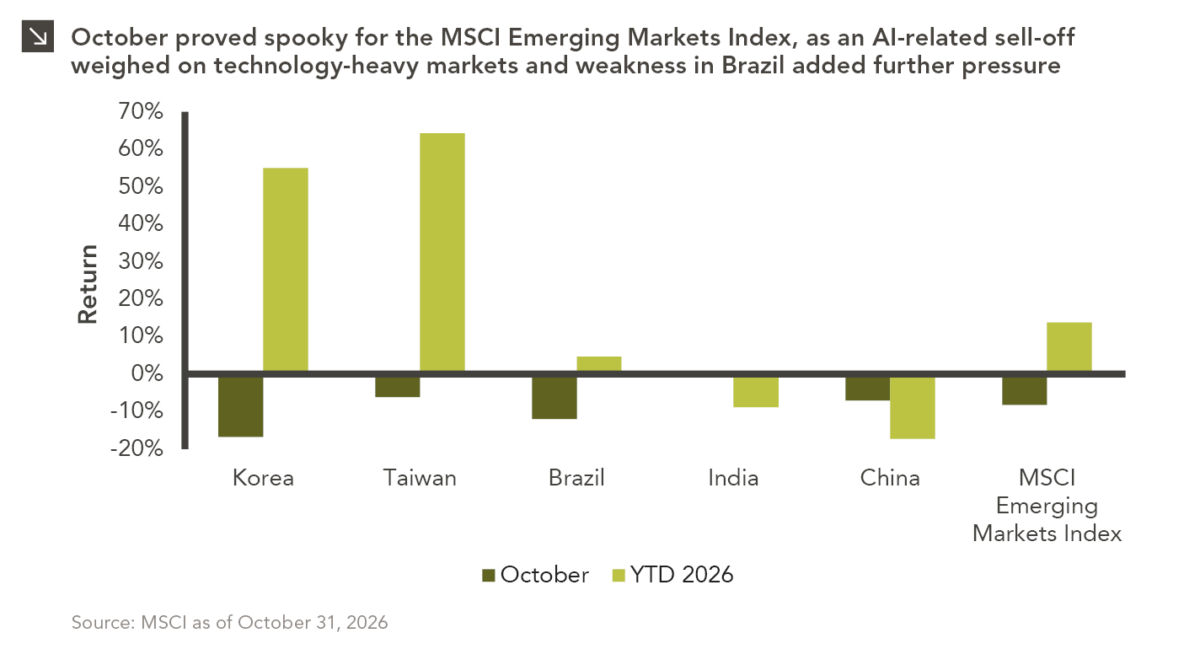
Emerging markets faced a challenging October, with the space declining by around 8.3% amid renewed concerns over the sustainability of…
10.26.2026
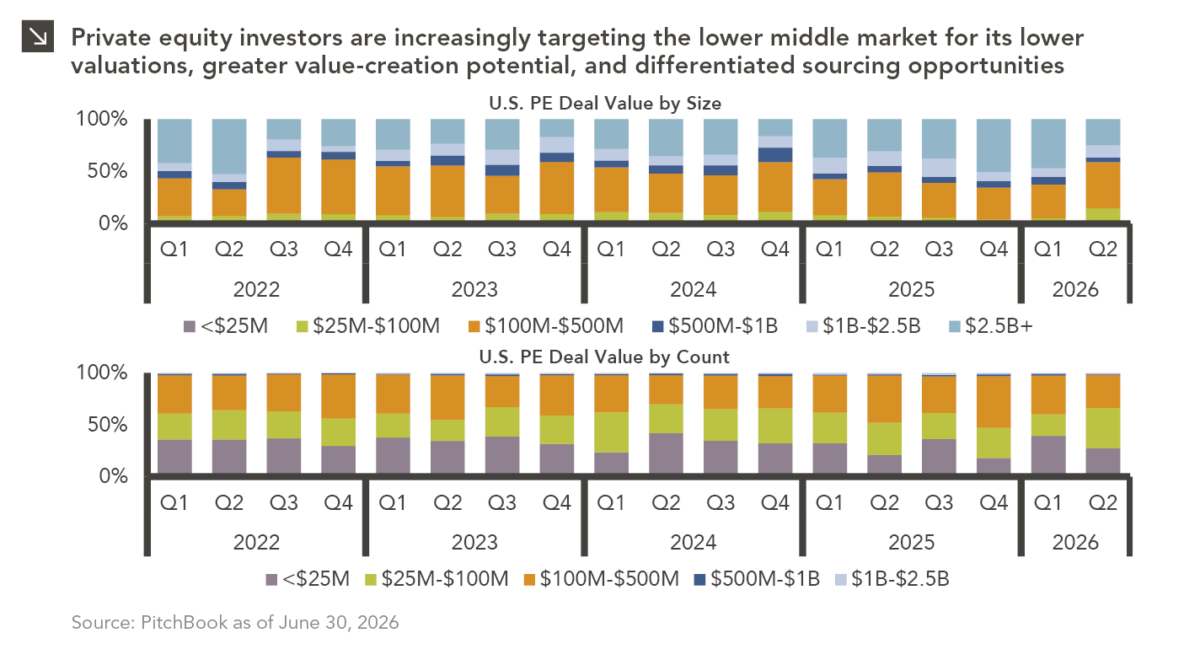
Private equity activity is increasingly shifting toward smaller transactions, with total deal value for transactions of $100 million or less…

10.08.2026
This video is a recording of a live webinar held October 22 by Marquette’s research team analyzing the third quarter…

10.22.2026
Anyone who has run a marathon knows the last six miles are brutal — no matter how well the first…
10.19.2026
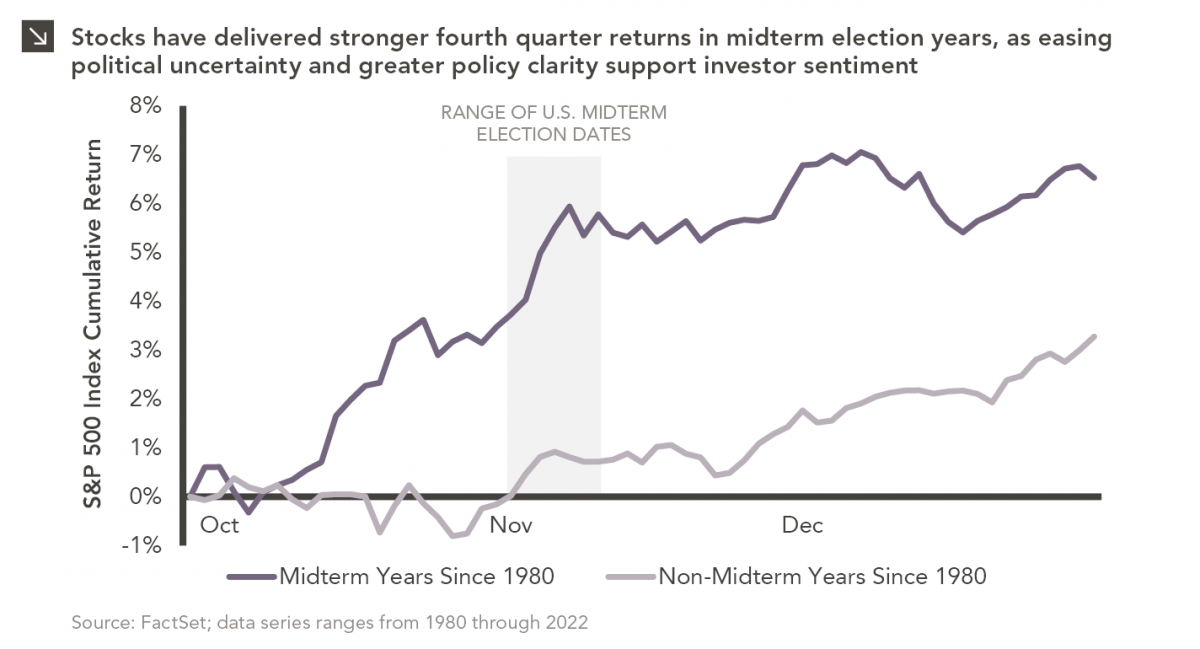
Since 1980, the S&P 500 Index has generally performed well in the weeks surrounding U.S. midterm elections. Specifically, the index…
Research alerts keep you updated on our latest research publications. Simply enter your contact information, choose the research alerts you would like to receive and click Subscribe. Alerts will be sent as research is published.
We respect your privacy. We will never share or sell your information.
If you have questions or need further information, please contact us directly and we will respond to your inquiry within 24 hours.
Contact Us >