James Torgerson
Senior Research Analyst


Warren Buffett once implored investors to “be greedy when others are fearful,” and this sage advice is certainly applicable to the high yield bond market. Bond investors (who have not been living under a rock) are likely aware that high yield spread valuations are extremely tight at present. Specifically, the OAS for the Bloomberg U.S. High Yield Corporate Index reached 250 basis points on January 22 of this year, which represents its lowest level in nearly two decades. Further, outside of brief periods of widening, high yield spreads have remained well below long-term averages for multiple years. These dynamics exist for several reasons (e.g., solid corporate balance sheets, a resilient U.S. economy, and the overall higher quality of the market) and there is no denying that there is currently minimal value to be found in high yield spreads. All this begs the question: When will spreads eventually widen and by how much?
Put simply, it is impossible to answer these questions without the ability to predict the future (if you can predict the future and happen to be reading this, please call me). Indeed, timing spreads is usually a fool’s errand, but this does not stop investors from trying. When conditions are tight, many postpone capital deployment until spreads are wider and have better value, which is actually a reasonable strategy if it can be executed properly. However, a major flaw exists in this approach: Human behavior. Significant widening of high yield spreads often coincides with major economic shocks and lower asset values across portfolios. Fearful and not wanting to “catch a falling knife,” most investors will again postpone allocation decisions until economic risks subside. Since spreads widen and peak quickly, these fears can, ironically, cause investors to miss the better value they were waiting for in the first place.
This week’s chart highlights seven of the most significant spread widening periods in the history of the Bloomberg U.S. High Yield Corporate Index, as well as the cumulative 2-year performance for the index immediately following those peaks in spreads. These periods all coincided with significant economic shocks that led to elevated fear among investors, which likely delayed investment decisions but also presented strong buying opportunities. Specifically, the average cumulative return for the index in the two years immediately following these shocks was more than 43%. It is important to note that this outsized performance would have been difficult to achieve, as, barring incredible luck, buying at the peak of spreads is highly unlikely. The more relevant takeaway here is as follows: The longer it takes to allocate, the more value that is missed (on average). To put this idea in numerical terms, an investor who waited six months to invest after the peak spread levels in the instances outlined above saw an average two-year performance reduction of nearly 20% relative to one who bought at peak levels.
To be clear, Marquette is not advocating the timing of spread levels, but the information detailed above does demonstrate that even when risks seem greatest, delaying an investment due to fear of losses can result in missed opportunities. In the case of high yield spreads, it is always helpful to remember that what goes up must come down.
Print PDF
The opinions expressed herein are those of Marquette Associates, Inc. (“Marquette”), and are subject to change without notice. This material is not financial advice or an offer to purchase or sell any product. Marquette reserves the right to modify its current investment strategies and techniques based on changing market dynamics or client needs.

04.01.2026
Fixed income is the largest global financial market and often one of the largest allocations within institutional investors’ portfolios. A…
03.30.2026
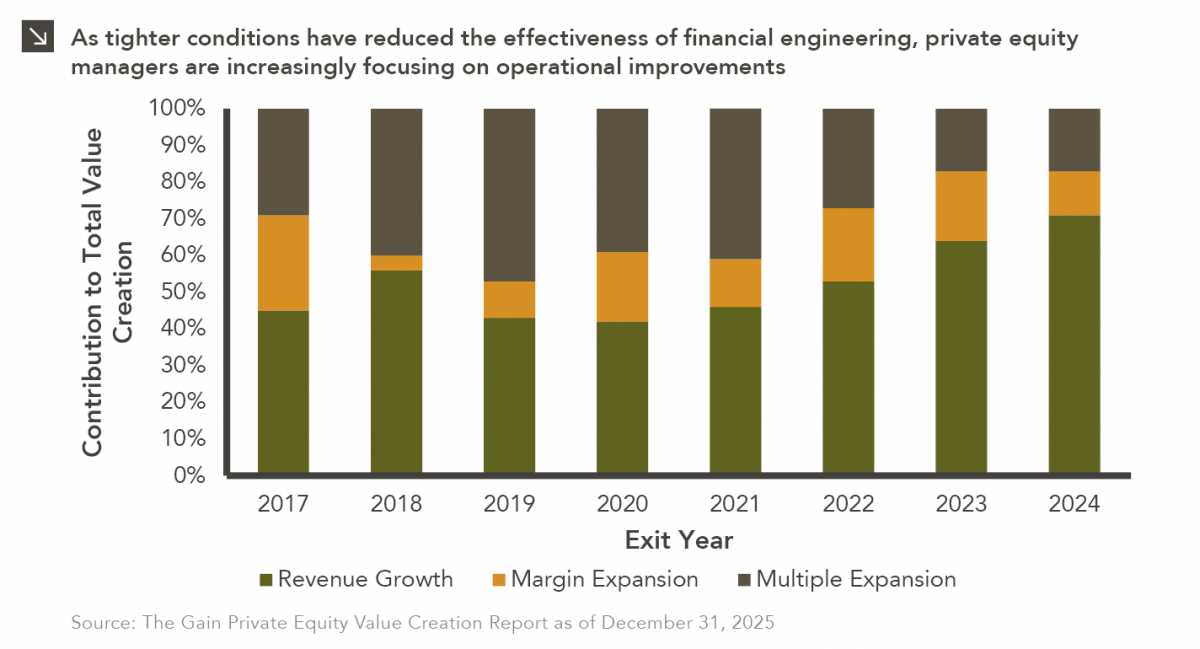
In the period between 2009 and 2022, private equity managers thrived amid an environment of low interest rates and rising…

03.23.2026
Global energy costs have risen sharply this month due to a convergence of geopolitical shocks, as critical infrastructure and transport…

03.16.2026
This week’s chart illustrates a clear structural shift in the fundraising dynamics of North American closed-end real estate funds over…

03.02.2026
Recent market dynamics in the software sector reflect a sharp shift in investor sentiment driven primarily by concerns that advances…

02.23.2026
Most have traditionally viewed a successful exit for a venture-backed start-up as either an IPO or an acquisition by a…
Research alerts keep you updated on our latest research publications. Simply enter your contact information, choose the research alerts you would like to receive and click Subscribe. Alerts will be sent as research is published.
We respect your privacy. We will never share or sell your information.
If you have questions or need further information, please contact us directly and we will respond to your inquiry within 24 hours.
Contact Us >