Jessica Noviskis Featured on Bloomberg Surveillance 4/10/26

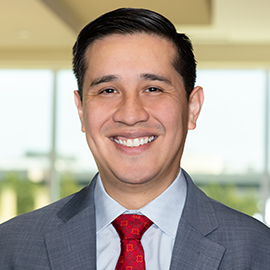
Portfolio Strategist Jessica Noviskis, CFA was featured on Bloomberg TV’s Surveillance coverage on April 10, 2026.

Jessica discussed the publication of March CPI data that morning and the week’s announcement of a ceasefire in Iran, including the outlook for interest rates at the Fed’s meeting later this month, lingering positivity among investors through bouts of volatility in recent years, expectations for the re-opening of the Strait of Hormuz, and the impact of the war on energy prices and ultimately on company earnings.

Watch the segment on Bloomberg’s website or YouTube channel.


The opinions expressed herein are those of Marquette Associates, Inc. (“Marquette”), and are subject to change without notice. This material is not financial advice or an offer to purchase or sell any product. Marquette reserves the right to modify its current investment strategies and techniques based on changing market dynamics or client needs.

1Q 2026 Market Insights Webinar

Please join Marquette’s research team for our 1Q 2026 Market Insights Webinar analyzing the first quarter across the economy and various asset classes as well as themes we’ll be monitoring in the coming months. This webinar will be recorded and posted to our website and YouTube channel afterward.

LOGISTICS

  • Register directly with Microsoft Teams using the email invitation sent April 2. Once you register, Microsoft will send an email confirming your registration that also contains the meeting link to join, plus a reminder one hour before the webinar starts.
  • Attend on Thursday, April 16, at 1:00pm CT. All attendees will be held in the webinar lobby until the presentation begins at 1:00.
  • Q&A will be open during the webinar using Microsoft Teams’ Q&A feature. Feel free to send any in advance to our team, too.

Our quarterly Market Insights series examines the primary asset classes we cover for clients including the U.S. economy, fixed income, U.S. and non-U.S. equities, hedge funds, real assets, and private markets, with commentary by our research analysts and directors.

If you have any questions, please send our team an email.

A Portfolio Needs Structure: An Overview of the Securitized Credit Asset Class

Fixed income is the largest global financial market and often one of the largest allocations within institutional investors’ portfolios. A typical fixed income allocation implements an investment grade anchor with a few “satellite” mandates — most commonly high yield bonds, leveraged loans, and emerging market debt — that carry more credit risk but provide higher levels of yield. Fixed income portfolios are often over-exposed to corporate borrowers through both anchor and satellite allocations. Additionally, these satellite allocations usually increase corporate credit risk while reducing equity diversification that fixed income is supposed to provide. Securitized credit provides higher yields and more compelling diversification benefits.

Securitized credit is a large asset class that has been largely ignored by institutional investors due to under-representation in fixed income indices, perceived complexities, and a stigma from its role in the Great Financial Crisis. While factors responsible for under-allocation to securitized credit have merits, these have caused investors to overlook the benefits of the asset class. Securitized credit provides a spread and yield premium relative to similarly rated corporate credit, diversified risk exposure to various credit and market cycles, and lower correlation to both traditional fixed income and equities. Overall, securitized credit’s attributes can help to further optimize portfolio structures.

Evan Frazier Speaking at Institutional Investor 2026 East Coast Sub-Advisory & Manager Research Roundtable 4/28

On Tuesday, April 28, Evan Frazier, CFA, CAIA will be speaking at Institutional Investor’s 21st Annual East Coast Sub-Advisory & Manager Research Roundtable in Boston.

Evan will be leading one of the Afternoon Think Tank sessions: The Evolution of Model Portfolio Utilization by Wealth Platforms. The Roundtable brings together leading participants in the sub-advisory and manager research landscape to assess how the investment objectives of institutions are changing and how firms that offer sub-advised strategies can respond to these needs. For more information, please visit the event webpage.

Seventy-Five Horses and Two Pieces of Plastic

Anyone who has gone snowmobiling knows it can be simultaneously exhilarating and terrifying. Throttling across snow and through a forest powered by a 75-horsepower engine with two plastic skis to steer makes it hard to feel like one has complete control; 30 mph in the open air feels more like 100!

Nonetheless, operating a snowmobile is pretty straightforward: The throttle is a right-thumb button, the brake is a left-hand squeeze lever. Beyond those two controls, it’s up to the driver to effectively navigate the trail, with the critical concession that the terrain is out of anyone’s complete control. Which brings me to our 2026 market outlook.

The “throttles” for portfolios are the usual constituents: equities, below investment grade credit, and private markets. The “brakes” are investment grade fixed income, particularly Treasuries which can slow a portfolio’s losses if the market tumbles. The terrain is naturally the actual path that each of these asset classes will follow in 2026. Since 2022 the equity market ride has been mostly exhilarating, save for some of the terrifying moments like the market dip after Liberation Day. But that’s in the rearview mirror, and the focus is what is around the bend. Will the thrill continue, or should we ease up on the throttle?

3Q 2025 Market Insights

This video is a recording of a live webinar held October 22 by Marquette’s research team analyzing the third quarter across the economy and various asset classes as well as themes we’ll be monitoring through the rest of 2025.

Our quarterly Market Insights series examines the primary asset classes we cover for clients including the U.S. economy, fixed income, U.S. and non-U.S. equities, hedge funds, real assets, and private markets, with commentary by our research analysts and directors.

Featuring:
Greg Leonberger, FSA, EA, MAAA, FCA, Partner, Director of Research
Frank Valle, CFA, CAIA, Associate Director of Fixed Income
James Torgerson, Senior Research Analyst
Catherine Hillier, Senior Research Analyst
David Hernandez, CFA, Director of Traditional Manager Search
Evan Frazier, CFA, CAIA, Senior Research Analyst
Dennis Yu, Research Analyst
Amy Miller, Associate Director of Private Equity

Sign up for research alerts to be invited to future webinars and notified when we publish new videos.
If you have any questions, please send our team an email.

The Calm Before the Storm?

I spent the past weekend at my alma mater to watch them play their biggest rival. Football weekends there are filled with celebrations, traditions, and of course, tailgating. Saturday was a quintessential Midwestern day to be outside: sunny, low 70s, light breeze — no better conditions for food and drinks in the parking lot. About three hours before kickoff, however, massive thunderstorms rolled in which sent fans scurrying for cover and threatened to delay the game. For fans who hadn’t checked the forecast, they were ill-prepared to stay dry and enjoy the game as it rained for the duration of the match. Nonetheless, the stadium stayed full for the entire game, a testament to the home team’s performance as well as fan loyalty. That said, I saw plenty of cold and wet attendees in the concourse after the game — those who weren’t equipped for the conditions undoubtedly wished they had been better prepared for what the environment brought Saturday.

On my drive home Sunday, I couldn’t help but worry if as investors we find ourselves right where I was Saturday afternoon, wondering if the conditions were too good to be true for a mid-October day in the Midwest.

2025 Investment Symposium

Watch the flash talks from Marquette’s 2025 Investment Symposium livestream on September 26 in the player below — use the upper-right list icon to access a specific presentation.


Please feel free to reach out to any of the presenters should you have any questions.

2025 Investment Symposium

Photograph of the Chicago skyline at sunset, looking south with Hancock Tower near center of frame

Friday, September 26, 2025
8:00 AM – 2:00 PM

Marquette clients – We hope you’ll join us at our 2025 Investment Symposium! This year’s event will be held in person in Chicago and virtually via livestream.

Our program will begin with an investment manager panel exploring investment opportunities and risks presented by the AI revolution and how firms are using the technology to refine and improve their investment process. From there, our research team and consultants will present several flash talks covering timely investment topics and a snapshot of the current market landscape across various asset classes. Rounding out the day, we’re excited to host Milwood Hobbs, Jr., of Oaktree Capital Management for a fireside chat keynote.

________________________________________

AGENDA

All times in Central Time

8:00am — Registration Open
Livestream will begin at 8:30
Breakfast served until 10:00

8:45 — Welcome Remarks by Brian Wrubel, Chief Executive Officer

9:00 — Opening Panel
Artificial Intelligence: From Investment Opportunities to Practical Implementation

Rich Mathieson, CA, Managing Director, Systematic Equities, Blackrock
Roland Reynolds, Senior Managing Director, Industry Ventures
Seth Weingram, Ph.D., Senior Vice President, Director, Client Advisory, Acadian Asset Management

10:00 — Break

10:15 — Flash Talks

Public vs. Private: A Fixed Income Collision
Frank Valle, CFA, CAIA, Associate Director of Fixed Income
Chad Sheaffer, CFA, CAIA, Senior Research Analyst
James Torgerson, Senior Research Analyst

What Makes a Good Fiduciary?
Linsey Schoemehl Payne, Partner, Chief Compliance Officer
Stephanie Osten, Principal

The Changing Face of Real Estate
Greg Leonberger, FSA, EA, MAAA, FCA, Partner, Director of Research

11:00 — Break

11:15 — Flash Talks

U.S. Equity Markets: Trend or New Normal?
Catherine Hillier, Senior Research Analyst

Private Equity in 2026 and Beyond: Allocations, Expectations, and the New Reality
Amy Miller, Associate Director of Private Equity
Chris Caparelli, CFA, Partner

Will U.S. Exceptionalism Continue for Global Equities?
David Hernandez, CFA, Director of Traditional Manager Search

12:00pm — Lunch Break

12:45 — Keynote: Fireside Chat
Milwood Hobbs, Jr.,
Managing Director at Oaktree Capital Management, in conversation with Greg Leonberger

2:00 — Adjourn


VENUE DETAILS

The Union League Club
65 W. Jackson Blvd.
Chicago, IL 60604
(312) 427-7800

The Impact of Artificial Intelligence on Markets

Over the last several decades, artificial intelligence (“AI”) has evolved from a theoretical concept into a transformative force across a variety of industries. The 1940s saw the advent of the digital computer, which was followed years later by the first artificial neural network, a computational model inspired by the structure of the human brain that consists of algorithms that attempt to recognize relationships in data. In more recent years, researchers have developed “deep learning” systems (i.e., neural networks with many layers) capable of increasingly complex tasks including image recognition, reading comprehension, and predictive reasoning. Given the advances in the space, it should not come as a surprise that the use cases of artificial intelligence are now vast, with AI tools now implemented across fields including health care, retail, finance, and entertainment. Researchers and corporate executives are not the only ones to have noticed the remarkable potential of AI, however, as investors have flocked to the space in droves over the last several years.

This newsletter outlines the growth of AI as an investment theme, including performance, valuations, and earnings growth of AI-related companies and equities, other segments of the market that may stand to benefit from advances in AI, and potential risks for investors.